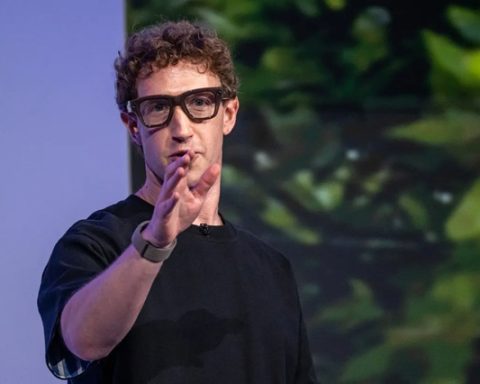
Meta founder Mark Zuckerberg acknowledged in a confidential 2018 email that he had considered spinning off Instagram from the company, a move that could have significantly altered the landscape of social media. This revelation came during the second day of a high-profile antitrust trial that could result in the breakup of the $1.5 trillion tech giant.
The email, presented as evidence by the U.S. Federal Trade Commission (FTC) on Tuesday, revealed Zuckerberg’s concern about increasing pressure from Washington to dismantle large tech companies. “There is a non-trivial chance that we will be forced to spin out Instagram and perhaps WhatsApp in the next five to 10 years,” Zuckerberg wrote to top Meta executives. He further noted that even if the company wanted to keep the apps together, it might not be able to do so.
The testimony comes as the FTC makes its case that Meta is an illegal monopoly, accusing the company of stifling competition by acquiring Instagram in 2012 and WhatsApp in 2014 for $1 billion and $19 billion, respectively. The commission has asked the court to reverse these deals, a step that could force Meta to break up.
Zuckerberg’s concerns, which appear to have been ahead of their time, highlight the growing push against Big Tech. As the FTC continues its crackdown on the sector, the trial could set a precedent for further scrutiny of tech mergers and acquisitions. The FTC has particularly focused on Meta’s acquisitions, claiming the purchases were aimed at quashing potential competitors.
The 2018 email was written as Meta was grappling with how to restructure the company following its acquisition of Instagram and WhatsApp. Zuckerberg noted the operational difficulties of managing multiple apps, with Facebook being tasked with helping Instagram grow. At the time, Facebook’s leadership was concerned that Instagram’s rapid expansion could destabilize the Facebook platform. “Given our concern about these effects, we have reduced our promotions from Facebook to Instagram,” Zuckerberg wrote.
Zuckerberg explained that this led him to consider whether Instagram should be spun off into a separate entity. “We should consider the extreme step of spinning Instagram out as a separate company,” he said in the email. He believed doing so could solve several issues, such as reducing codependency between teams and halting Instagram’s growth in ways that could undermine Facebook’s network.
He also speculated that separating Instagram could help retain Instagram’s co-founder, Kevin Systrom, who left Meta later that year as the company took more control over Instagram. Zuckerberg’s email suggested that a potential spin-off could lead to better performance for both Instagram and Facebook in the long run.
Despite these considerations, Zuckerberg stressed that he was not advocating for an immediate split. “I’m not saying we should actually do this now,” he wrote, acknowledging that a breakup might eventually be inevitable. “We should keep in mind that there’s a real chance that all our work to build a family of apps may be something we don’t get to keep.”
As the trial continues, the question of whether Meta’s dominance in social media is anticompetitive remains central. The outcome of the case could determine the future of not only Meta but also the broader tech industry, as regulators around the world increasingly scrutinize the practices of tech giants like Facebook, Instagram, and WhatsApp.