The International Monetary Fund (IMF) has announced plans to significantly downgrade its global economic growth projections for the year, citing rising inflation and financial market stress fueled by escalating U.S. protectionism. However, the fund stopped short of forecasting a global recession.
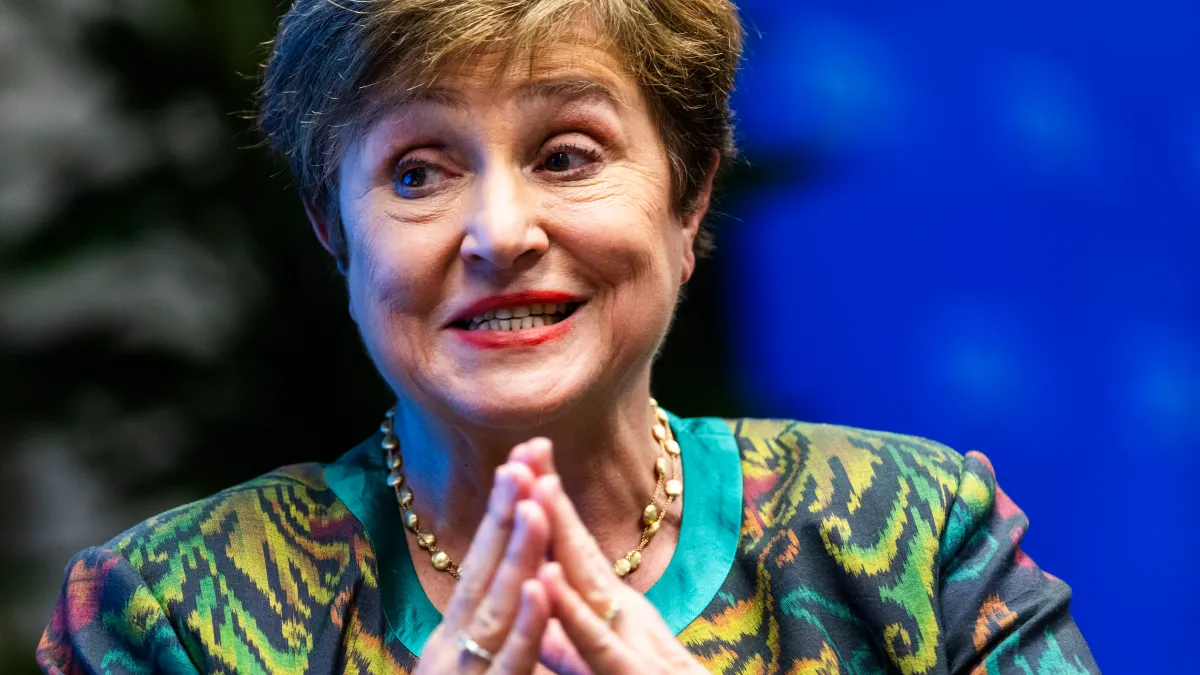
In her first public remarks following President Donald Trump’s move to impose sweeping tariffs on Chinese imports, IMF Managing Director Kristalina Georgieva warned of weakening global growth prospects and heightened inflationary pressures in several countries. The IMF is preparing to release its updated bi-annual World Economic Outlook next week.
“Our new growth projections will include notable markdowns, but not recession,” Georgieva stated. “We will also see markups to the inflation forecasts for some countries.”
The IMF, headquartered in Washington and with the U.S. as its largest shareholder, has been revising its forecasts in response to recent tariff-related uncertainties. The Trump administration has threatened “reciprocal” levies on major trading partners—excluding China for now—further straining global economic stability.
Georgieva described the situation as a fundamental “reboot of the global trading system,” noting that countries have responded to U.S. actions with retaliatory tariffs, intensifying trade conflicts. “Trade tensions are like a pot that was bubbling for a long time and is now boiling over,” she said. “To a large extent, what we see is the result of an erosion of trust — trust in the international system, and trust between countries.”
Prior to the Trump administration’s latest policy shifts, the IMF had projected the U.S. to be the top-performing large economy in 2025, growing at 2.7%. However, with the disruptive impact of tariffs on both consumer demand and business investment, a slowdown now appears inevitable. Financial markets have responded with growing concern, increasing bets on a potential U.S. recession—typically defined as two consecutive quarters of negative growth.
Adding to the growing concern, credit ratings agency Fitch recently downgraded its economic outlook, trimming 0.5 percentage points from U.S. GDP growth and cutting China’s forecast by 0.4 points.
While Georgieva did not urge the U.S. to reverse its tariff policies, she emphasized the pressing need for fiscal reforms. “The government’s core macroeconomic policy challenge will be to put federal government debt on a declining path,” she said. “Achieving this path will require significant reductions to the federal budget deficit, which among other things will necessitate elements of spending reform.”
The IMF’s warning comes as tensions continue to rise between the fund and the Trump administration. Some allies of the president have even called for the U.S. to withdraw from both the IMF and the World Bank to cut spending and further distance the country from multilateral institutions.
In a related development, World Bank President Ajay Banga voiced concern this week over the U.S. commitment to funding programs aimed at alleviating poverty worldwide. “There is real uncertainty,” Banga said, underscoring the fragile state of international financial cooperation in the current political climate.