


Chinese aerospace firm Chang Guang Satellite Technology Co. is setting its sights on expanding international markets with its latest innovation: a powerful, low-cost, and ultra-lightweight remote sensing satellite designed specifically with Belt and Road Initiative (BRI) countries in mind, according to a report by the South China Morning Post.
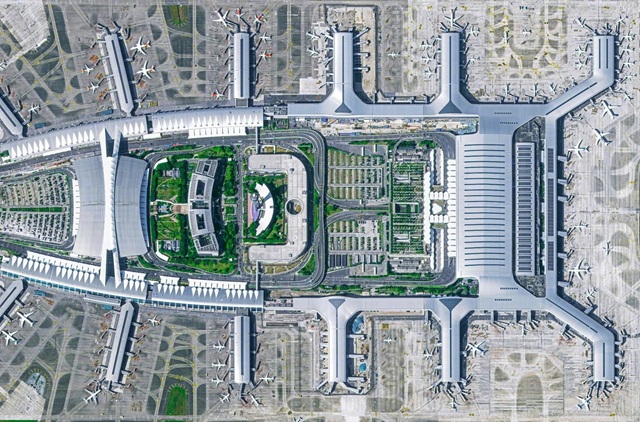
The company’s newly launched Kuanfu 02B series satellite is drawing attention for its unprecedented combination of high performance and compact design. Boasting a sub-metre resolution of 0.5 metres, the satellite can capture detailed imagery over a swath of 150km, allowing it to cover large areas—entire cities like Beijing or Taipei—in a single pass. This eliminates the need for complex image stitching and speeds up large-scale monitoring tasks, making it up to 10 times more efficient than many existing systems.
Significantly, the Kuanfu 02B weighs in at just 230kg, a sharp reduction from the 1,200kg of its predecessor, the Kuanfu 01. This slashing of weight and size not only cuts production and launch costs drastically but also positions the 02B as the lightest satellite of its kind currently on the market.
Chief engineer Zhang Lei told the South China Morning Post that the company’s major engineering challenge over the past decade has been to maintain high specifications while keeping cost, weight, and power consumption low. Their breakthrough came with the development of an off-axis, four-mirror optical camera, which enables high-quality imaging without the traditional bulk.
Backed by over 1.4 billion yuan (US$192 million) in R&D, Chang Guang has made similar weight-saving strides with other satellites, such as reducing the Gaofen-06 satellite’s weight from 420kg to just 22kg, cutting its costs by 95%.
Though smaller in scale than Elon Musk’s Starlink network, Chang Guang has made significant strides in satellite deployment. Its Jilin-1 constellation now includes 117 sub-metre resolution satellites, making it the largest commercial remote sensing satellite network of its kind. The company aims to expand that number to 300 by 2027.
The firm currently serves over 170 countries and regions, and while U.S. sanctions imposed in 2023 accuse it of aiding Russian access to satellite data, Chang Guang remains focused on expanding its commercial reach, particularly in Belt and Road countries like Pakistan and Egypt. U.S. restrictions may limit certain partnerships, but the company says demand remains high among nations looking for affordable, independent satellite capabilities.
Chang Guang’s satellites are being pitched for use in a wide range of fields including land monitoring, agriculture, environmental protection, water management, and emergency response. The company also provides custom orbit configurations, encrypted data options, and client-specific launch services.
“Clients can either order new satellites or purchase data services from our existing satellites,” the company said, noting that six Kuanfu 02B satellites launched in September have already completed testing.
As part of its commercial push, Chang Guang claims it has the capacity to manufacture up to 400 satellites a year, split evenly between communication and remote sensing units. This mass production model is essential to meet demand and maintain a competitive edge in the fast-evolving commercial satellite market.
With its cutting-edge yet cost-efficient approach, Chang Guang Satellite Technology is shaping up to be a major player in the growing race to dominate space-based data services—particularly across emerging markets aligned with China’s global infrastructure ambitions.











