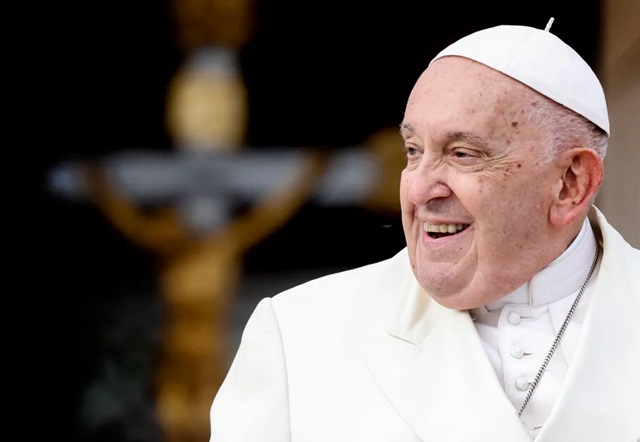
Pope Francis has died at the age of 88 following complications from pneumonia, the Vatican announced today, drawing to a close a 12-year papacy marked by sweeping reforms, global outreach, and internal tensions within the Catholic Church.
The Argentine pontiff, born Jorge Mario Bergoglio, passed away at Rome’s Gemelli Hospital after a series of respiratory crises that began in mid-February. Despite early signs of recovery, his condition rapidly deteriorated in recent weeks, culminating in his death late Tuesday evening.
A Steady Decline in Health
Francis was admitted to Gemelli Hospital on February 14, after suffering from bronchitis that left him gasping for breath. Doctors soon diagnosed pneumonia in both lungs. Over the following weeks, he endured several respiratory crises, including two major episodes on March 3 that required bronchoscopic intervention to clear mucus from his lungs.
The Vatican had broken with tradition by regularly updating the public on the pope’s condition—something Francis himself insisted on. He reportedly told aides he did not want “secrecy or mystery” surrounding his health.
Despite initial optimism from medical staff, Francis experienced a “rapid worsening of his breathing” on February 28, requiring ventilation support. By mid-March, it became clear that his condition was unlikely to improve.
A Pontificate of Compassion and Controversy
Elected in 2013 following the historic resignation of Pope Benedict XVI, Francis became the first Jesuit and first Latin American pope. His pontificate was defined by a pastoral focus and an effort to bring the Church closer to the marginalized.
“Who am I to judge?” he famously said when asked about gay Catholics, signaling a dramatic shift in tone, if not doctrine.
His papacy was also marked by fierce internal debates. Conservatives within the Church criticized his restrictions on the traditional Latin Mass and his open-door approach to divorcees and LGBTQ+ individuals. But supporters hailed him as a reformer who prioritized mercy over rigid doctrine.
Francis’s efforts included an overhaul of the Vatican’s bureaucracy, outreach to non-Christian faiths, and a firm commitment to environmental stewardship, as reflected in his landmark encyclical Laudato Si’.
Global Travels, Even in Declining Health
In spite of persistent health issues—including a painful knee condition, intestinal surgeries in 2021 and 2023, and limited lung capacity due to a youthful bout of pleurisy—Francis remained remarkably active into his later years.
Just months before his death, in September 2024, he embarked on his longest foreign trip yet, visiting Indonesia, Papua New Guinea, East Timor, and Singapore. In Dili, East Timor, he led Mass for an estimated 600,000 people—almost half the country’s population.
In 2023, despite rumors of a possible resignation following a hospital stay for pneumonia, Francis dismissed the idea, stating that while he needed to slow down, he was not planning to step aside.
Legacy of the “People’s Pope”
Known for his humility and accessibility, Francis eschewed many traditional papal trappings. He chose to live in the Vatican guesthouse rather than the Apostolic Palace and regularly mingled with the faithful, even using a wheelchair in public appearances as his mobility declined.
He leaves behind a Church both inspired and divided—praised for its new inclusiveness but challenged by internal dissent.
Tributes have begun pouring in from world leaders, religious figures, and millions of Catholics around the globe. A formal period of mourning has been declared by the Vatican, with funeral arrangements to be announced in the coming days.
As bells tolled across St Peter’s Square and black flags were hoisted above Vatican City, many remembered Pope Francis not just as a spiritual leader, but as a moral compass in an increasingly polarized world.
“He was the shepherd who never stopped walking,” said one cardinal. “Even when the road became steep.”