In a move drawing both international skepticism and internet satire, the U.S. President Donald Trump’s renewed call to bring Chinese factory jobs “roaring back” to America through aggressive new tariffs has reignited debate over the feasibility of reviving U.S. manufacturing at a China-like scale.
As reported by the Financial Times, Trump’s announcement of sweeping “liberation day” tariffs this month was met with disbelief from America’s trading partners and mockery from Chinese netizens. Viral AI-generated videos—widely shared on platforms like Douyin—depicted surreal scenes of Trump and Elon Musk assembling sneakers in sweatshop-like factories, while overweight American workers toiled on iPhone production lines, underlining what many see as a fantasy.
Experts interviewed by the Financial Times argue that replicating China’s vast manufacturing machine in the U.S. is virtually impossible without the very conditions Americans are unlikely to accept—long hours, low pay, and grueling factory routines. Joshua Woodard, founder of supply chain consultancy The Sparrows, noted that Chinese factory workers, especially rural migrants, are still driven by economic necessity to endure 12-hour shifts. “There is a completely different expectation for the working culture,” he said.
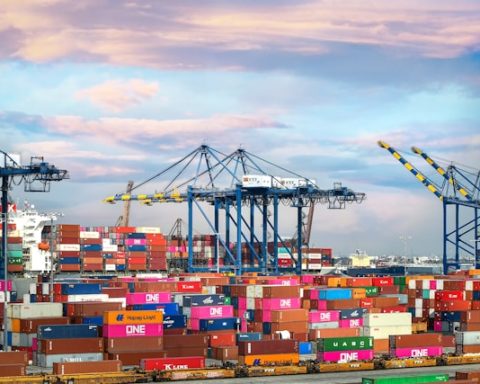
The article details how China became the world’s manufacturing powerhouse starting in the 1980s, aided by a massive influx of cheap labor and bolstered by world-class supply chains following its 2001 accession to the World Trade Organization. However, the allure of factory jobs has faded among China’s youth, many of whom now prefer service sector gigs or join the 200-million-strong informal gig economy.
Factory conditions have not helped retention. The Financial Times interviewed 18-year-old Lu Junhua, who described factory life as “exhausting,” citing overcrowded dorms, poor sanitation, and physically demanding shifts that left him in pain. While factories now struggle to recruit younger workers, enforcement of labor rights remains inconsistent, and many employees lack meaningful legal protections.
Adding to the challenge, Chinese workers now use social media platforms like Douyin and Kuaishou to exchange information about factory conditions, further empowering laborers to seek better jobs or warn others away from exploitative employers.
Even as China transitions to more value-added manufacturing—such as electric vehicles—the global landscape is shifting. Rising labor costs and political risks have pushed companies to adopt a “China plus one” strategy, relocating some production to Vietnam, Bangladesh, and Malaysia. However, these countries still lag in infrastructure and workforce readiness compared to China’s deeply integrated manufacturing ecosystem.
The idea of bringing this scale of manufacturing back to American soil, according to many Chinese industry veterans, is laughable. “With our overtime system, 14 hours a day is very normal,” said Huang Sheng, a recruiter in Guangdong province. “A lot of countries wouldn’t be able to stomach it.”
While Trump’s rhetoric appeals to nostalgia for American industrial might, the Financial Times makes clear: the global manufacturing landscape is far more complex—and resistant to reversal—than a simple re-shoring narrative suggests.