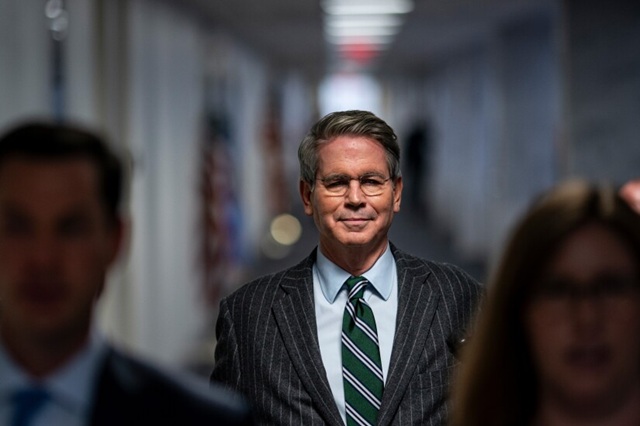
U.S. Treasury Secretary Scott Bessent has launched a sharp rebuke of the International Monetary Fund (IMF) and the World Bank, accusing both institutions of veering off course through “mission creep” into issues like climate change and gender equality. His remarks, delivered in Washington on Wednesday, reflect growing frustration within the U.S. administration over the evolving priorities of these global financial pillars.
As reported by the Financial Times, Bessent stopped short of suggesting the United States — the largest shareholder in both the IMF and World Bank — would withdraw from the institutions. However, he delivered a stern warning that the U.S. would not support what he called “sprawling and unfocused agendas” that depart from the institutions’ original economic mandates.
“The IMF and World Bank have enduring value,” Bessent said during the IMF and World Bank spring meetings in Washington. “But mission creep has knocked these institutions off course.”
His comments come amid rising tensions between Washington and the Bretton Woods institutions, with some conservative voices in the U.S. — including the Project 2025 agenda — pushing for an American exit from both the IMF and World Bank. While Bessent emphasized continued U.S. engagement, he made it clear that reform is now a top priority.
Under fire was the current leadership of IMF Managing Director Kristalina Georgieva, who has championed broader policy concerns like climate change and gender equity. Bessent argued that these topics, while important, are not part of the IMF’s core mandate. “We must make the IMF the IMF again,” he declared.
Bessent also criticized the IMF for what he sees as a lenient stance toward China, Washington’s top economic rival. He pointed to a recent IMF report on global imbalances, calling it “Pollyanna-ish” and claiming it failed to address China’s long-standing policies of currency manipulation and economic opacity.
“We will not abide the IMF failing to critique the countries that need it most — principally surplus countries like China that have pursued globally distortive policies,” he said.
The World Bank also came under fire. Bessent said the institution has drifted from its original mission, and he called for more focus on tangible development goals rather than “vapid, buzzword-centric marketing.” He criticized what he described as half-hearted reform commitments and warned against unchecked spending.
He further urged the World Bank to adopt a more “tech-neutral” stance, including investments in fossil fuels like gas — a position that challenges recent green energy pushes by the bank and its shareholders.
While Bessent’s remarks may please critics who argue the IMF and World Bank have become overly politicized and ideological, they are likely to rattle supporters of recent shifts toward a more progressive development model within the institutions.
The speech reflects a broader debate about the future direction of global economic governance, with the U.S. signaling a desire to reassert influence over institutions it helped create — even as global consensus on the scope of their missions appears increasingly fractured.