
To impeach someone in Iran, it requires a parliamentary vote to declare political incompetence. According to the constitution, declaring political incompetence of a Minister requires a simply majority, meaning, 50% of parliament or more.
When the Minister of Economy, Mr. Hemmati, was impeached, around 250-260 members of parliament were present, and 182 voted in favor of impeachment, which is more than half, and so the motion was accepted.
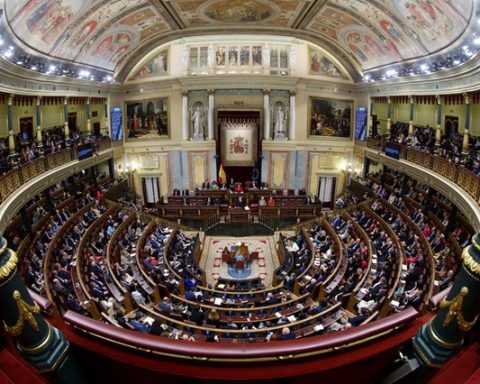
However, when impeaching the President, it’s different. In that case, it requires a two-thirds parliamentary majority in order to be accepted. The Iranian parliament currently consists of 285 active members, so approximately 200 (190 to be precise) would have to vote in favor of impeachment.
The parliament, contrary to what it may seem, is heavily fragmented, and opinions differ. There are some MPs whose position is clear, like my position and the position of my colleague Dr. Mahmoudi. But there is also ‘Mr. Hassan’ and ‘Mr. Hossein’– meaning we do not exactly know the position of many MPs. And to be frank, there simply won’t be a majority to impeach Pezeshkian as of now.
Additionally, even if it was possible, I don’t see the impeachment of President Pezeshkian as being in the country’s interest currently. Holding elections, changing of government, and changing of the President means 6 months of instability. Don’t think that early elections are some kind of achievement: Sure, sometimes things happen, for example when a President is martyred. But generally, a President should serve his term, and if the people demand change, it will be in the next election.
Many have been asking this question: Aren’t negotiations banned by the Supreme Leader? And are the current talks direct or indirect?
To understand this better, we need to recognize something important: The Islamic Republic of Iran, regardless of who is President, follows a core principle — the people’s vote.
For example, before 2013, we had never held direct negotiations at the level of Foreign Ministers with the United States. There were discussions about Afghanistan and Iraq, but those were low-level talks conducted by experts, not high-ranking political officials.
Let me be honest: At the time, President Rouhani (a reformist) went to the Supreme Leader, Ayatollah Khamenei, and negotiated with him until he received permission to enter into direct talks at the Foreign Minister level.
What gave him the leverage to do that? Not just Ayatollah Khamenei’s decision. Rouhani essentially said, ‘I won 18 million votes,’ and with that public mandate, he moved forward. When you think about it, the logic holds — he had a national mandate, whether we liked it or not.
I’ve noticed that some people mistakenly think the Islamic Republic is like a monarchy — that we simply swapped the Shah’s crown for a cleric’s turban. But that’s not the case. Since its inception, the Islamic Republic has taken elections seriously. The foundation of the system is that if people have a certain demand — even if it may not seem wise — it must be respected to some degree.
The same applies to the current government. From the start, Pezeshkian never claimed he wanted to ‘resist the U.S. and neutralize sanctions domestically.’ That wasn’t his message. He brought in Javad Zarif, the former Foreign Minister under the Rouhani administration, and made him part of his campaign. That sent a clear signal: he wanted to revive Rouhani’s eight years of negotiations and attempts to restore relations with the U.S. And some people wanted that. They liked the message — and they voted for it.
You can’t turn around now and ask why people voted for Pezeshkian. They liked him, they voted for him — and that was their right, just as I had the right to vote for someone else (Dr. Saeed Jalili).
That’s what elections are: platforms where people are free to choose, and where different views compete (within certain limits). Some say, ‘They’re all the same; Khamenei makes all the decisions.’ But honestly — is Pezeshkian the same as Raeesi? Was Raeesi the same as Rouhani? I’m not here to say who was good or bad, but elections have consequences, and we must accept that reality.
Whether it’s the hijab, relations with the U.S., or the economy — whatever the issue, the winning slogan moves forward, and the losing one is sidelined for a few years. In the last election, 50% of people didn’t vote. Now they can look and see that their absence mattered — and maybe they’ll vote next time.
The point is this: You can’t demand snap elections every time the President fails to meet your expectations. Stability matters.
Regarding the negotiations, the Supreme Leader has made his position clear many times. He has said that negotiations are neither honorable nor wise. Let’s be honest: If people want to repeat the same mistake a hundred times, then let them do it — until they learn. That’s how people learn.
So, as we’ve said, negotiations are the result of elections. However, the Supreme Leader has imposed two important conditions:
First, there should be no direct negotiations with the U.S., and there’s a reason for that. Just hours ago, Trump was bragging that countries are lining up to kiss his feet. He wants a photo-op with Iranian officials so he can claim victory — that he brought Iran to its knees. That’s why the negotiations must remain indirect.
Second, the talks must only focus on the nuclear issue — not missiles or regional groups. But even with that limitation, I’ll be honest: there won’t be any positive outcome for us. Why? Because Trump is already saying nuclear is just the beginning — that Iran must also limit its missile program, stop supporting regional groups, and so on.
I’m not saying negotiations should never happen. But based on reality — and our experience with the previous deal (the JCPOA) — we didn’t gain anything meaningful then, and we won’t gain anything meaningful now, especially with this U.S. administration.
Even if tomorrow Trump repents, lifts all sanctions, and gives us $500 billion in cash — our economy might improve by 5% at best. Why?
Because the economy is not controlled by you, me, the Parliament, the government, or even the Central Bank. Our economy is controlled by 10 to 20 predatory investors — people who gained wealth through illegal or illegitimate means, often via corruption. These individuals have amassed vast assets and now dictate the direction of the country’s economy.
Take Ayandeh Bank, a major private bank in Iran. It owes hundreds of billions to the Central Bank. Compare that to the $6–7 billion of Iran’s frozen assets in South Korea that were recently released (though now stuck in Qatar). Just compare the scale — it’s not even close.
If we want to build our country and fix the economy, we have to tackle internal corruption and predatory economic behavior first.
Let me tell you this: Just from the news that the first round of negotiations had been completed, the dollar dropped by more than 5,000 tomans [now more than 30,000]. Many people were happy — myself included. But remember: the same way a rumor dropped the dollar by 5,000 tomans, a single headline about negotiations failing could raise it by 50,000 tomans.
Trump has the upper hand. He can manipulate Iran’s exchange rate and inflation with just one interview or tweet — because we’ve made our economy dependent on speculation and negotiations with the West.