by Eric and Durga
Power doesn’t always go to the competent. In fact, history suggests it rarely does. Across corporate boardrooms, government offices, and media empires, we repeatedly see a disturbing pattern: people who lack depth, wisdom, or genuine skill rising to the top—and staying there. Why? The uncomfortable answer is that stupidity and power are not opposites. Sometimes, they’re allies. To understand why, we need to ask a different question—not just “Why are so many leaders incompetent?” but “What makes incompetence attractive to power?” The answer lies in the collision of psychology, social structure, and incentive design. Stupidity—especially when masked by confidence—is not a bug. It’s often a feature.
Human beings evolved in small tribes. In those settings, it was easy to evaluate leadership. Competence was visible. You could observe who hunted well, who resolved disputes, who made wise decisions that helped the group thrive. But we no longer live in tribes. We live in complex societies with millions of people and countless moving parts. In this modern complexity, appearances often matter more than substance. This is where the problem begins. Psychologist David Dunning, of the famous Dunning-Kruger effect, found that incompetent people often don’t realize their own incompetence. Worse, they tend to overestimate their abilities. Meanwhile, highly competent people tend to underestimate themselves. This asymmetry distorts how leadership potential is perceived, especially in environments where surface-level confidence is mistaken for capability.
Moreover, social systems themselves are often designed in ways that reward visibility, charisma, and performative certainty—traits that have little to do with actual competence. In politics, media, and business, systems are not neutral. They are structured environments. And in many of these environments, incompetence isn’t just tolerated—it’s rewarded. Consider how modern political campaigns work. Candidates are rewarded for sound bites, not substance. Debates favour confidence, not nuance. Voters are often left evaluating style over depth. The same pattern repeats in corporate settings, where performance reviews, networking events, and investor relations can elevate those who talk the loudest, not those who think the deepest.
Fourth, economic incentive structures play a decisive role. Systems that reward short-term performance over long-term outcomes create fertile ground for incompetent leadership with superficial charm. The 2008 financial crisis exemplified how incentive structures prioritising immediate profits, regardless of risk, fostered leadership that valued appearance over substance. Ask yourself, in your own life, which environmental factors promote competence and which enable incompetence to thrive? Understanding these structural forces can help you navigate your own path and recognise when systems are vulnerable to manipulation. Even in well-designed systems, incompetent leaders can still rise by employing specific psychological tactics that allow them to manipulate perception and neutralise opposition. Incompetent leaders don’t maintain power by accident.
They deploy strategic psychological methods to solidify their position—tactics that Niccolò Machiavelli would have recognised immediately. One of the most effective is exploiting tribalism and identity politics. By creating clear in-groups and out-groups, they turn substantive criticism into perceived attacks from enemies. This shields them from accountability while deepening their supporters’ emotional investment. Psychologists call this “identity fusion,” where a leader successfully links their personal identity to the group identity of their followers. Once this fusion occurs, challenging the leader becomes psychologically equivalent to attacking the group itself—and by extension, attacking each follower’s sense of self. Consider how cult leaders like Jim Jones or authoritarian figures throughout history cultivated us-versus-them mentalities. In Malaysia, former Prime Minister Najib Razak exploited ethnic divisions to maintain power despite corruption scandals. Brazil’s polarisation under Bolsonaro revealed how tribal identity can override even factual reality.
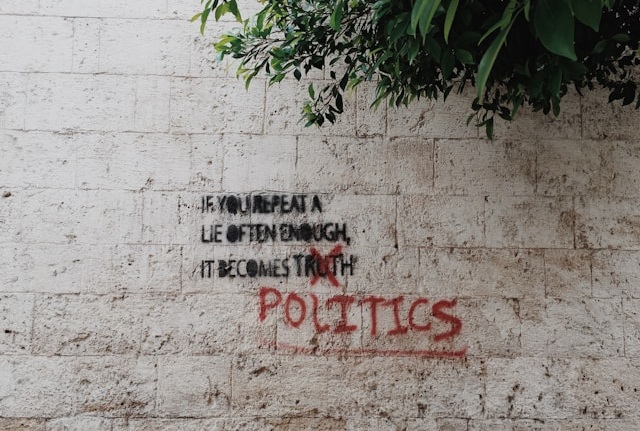
Another tactic is cognitive overload. Incompetent leaders often flood the information space with chaos—controversies, contradictions, distractions. This overwhelms people’s cognitive bandwidth. When we are constantly reacting to a flood of outrage or shifting narratives, we have less mental energy available for critical analysis or sustained resistance. This disorientation is not accidental—it’s strategic. Leaders who lack competence can still survive politically if they ensure no one has the bandwidth to focus on their failures. Third, they employ what George Orwell called “doublethink”—the capacity to hold contradictory beliefs simultaneously. By constantly shifting positions and rewriting history, they create a reality in which truth feels subjective and accountability becomes impossible. “The vulgar crowd always is taken by appearances,” Machiavelli wrote, “and the world consists chiefly of the vulgar.” He wasn’t condemning the masses. He was acknowledging a cognitive vulnerability we all share. Our minds evolved for a simpler world. In today’s information ecosystems—engineered to exploit attention, amplify outrage, and monetise confusion—we are all more susceptible to manipulation.
In addition, incompetent leaders thrive by exploiting economic precarity and structural vulnerabilities. When people feel financially insecure or anxious about their future, they become more susceptible to simplistic answers. In post-industrial regions across the world, economic despair has created fertile ground for leaders who offer easy scapegoats instead of honest analysis. Consider your own media habits. How often do you find yourself reacting to the latest viral outrage rather than focusing on deeper, more consequential issues? That’s this principle in action. But simply recognising these dark patterns is not enough. We need concrete strategies to protect ourselves—and our communities—from their influence.
At the individual level, awareness is our first line of defence. Understanding the hidden forces that shape our perceptions makes us less vulnerable to them. This mental defence rests on three essential practices. First, we must cultivate intellectual humility—the ability to recognise the limits of what we know. Research shows that intellectually humble individuals are better at evaluating ideas based on evidence, not confidence. Intellectual humility functions like a cognitive immune system. It helps us resist manipulation and false certainty in the same way our physical immune system protects us from infection. Second, we need to develop media literacy—the skill of discerning depth from spectacle. This means deliberately curating the information we consume, questioning how it is presented, and favouring quality over quantity. Warren Buffett once said that really successful people say no to almost everything. The same principle applies to information. Wise thinkers reject most noise and focus only on clarity and insight.
Third, we should embrace philosophical reflection—the practice of stepping back from the daily storm to examine deeper principles. The ancient Stoics recommended daily reflection to guard against emotional reactivity. In Francis Bacon’s words, “The wise man will make more opportunities than he finds.” Reflection empowers us to be active agents in shaping our mental environment, rather than passive consumers of it. But personal practice is not enough. At the collective level, we need better systems. Institutional design matters. Systems can be structured to reduce bias, deception, and incompetence. Here too, three pillars are essential. First, we need robust accountability mechanisms—structures that deliver honest feedback, regardless of a leader’s charm or persuasive power. Contrast a company with an independent board to one where the board rubber-stamps executive decisions. The Boeing 737 MAX crisis demonstrated what happens when engineers’ concerns are ignored in favour of short-term profits. Accountability was absent—and tragedy followed.
Second, institutions must foster cognitive diversity—the inclusion of differing perspectives in decision-making. Diverse teams are not just ethically desirable. They are empirically more accurate. They challenge groupthink, surface blind spots, and force critical thinking. Third, we must enforce transparency—rules that prevent complexity from becoming a shield for incompetence. Sunshine laws, public audits, and conflict-of-interest disclosures make it harder for bad actors to hide behind jargon or secrecy. Education ties all these threads together. It’s not enough to teach technical skills. We must prioritise critical thinking, ethical reasoning, and civic wisdom. Athens created the academy. Florence nurtured the humanists. Great civilisations don’t just teach—they cultivate wisdom.
So ask yourself: in your own community, which of these protections are present? Which are absent? And if we redesigned our systems around competence, humility, and truth—what kind of world might we create? As we reach the end of this exploration, we return to the man who inspired it. What would Machiavelli say about our modern predicament? He has been misunderstood for centuries. He wasn’t advocating for the dark patterns he described. He was exposing them. By understanding how power actually works—rather than how we wish it worked—he believed we could build better systems of governance. “It is not titles that honour men,” Machiavelli wrote, “but men that honour titles.” That profound observation reminds us that authority itself deserves no inherent respect. Power must be earned through worthy use—regardless of who holds it.
The intersection of Machiavellian political philosophy and modern psychology reveals uncomfortable truths about human nature and social systems. But uncomfortable truths are exactly what we need if we hope to create better futures. The path forward isn’t pretending these dynamics don’t exist. It’s understanding them deeply enough to transcend them. It’s designing systems that account for human vulnerabilities rather than exploiting them. It’s developing personal practices that strengthen our resistance to manipulation. And most importantly, it’s recognising that while stupidity may sometimes gain power, intelligence—coupled with moral courage—remains our best hope for creating societies where merit truly matters.