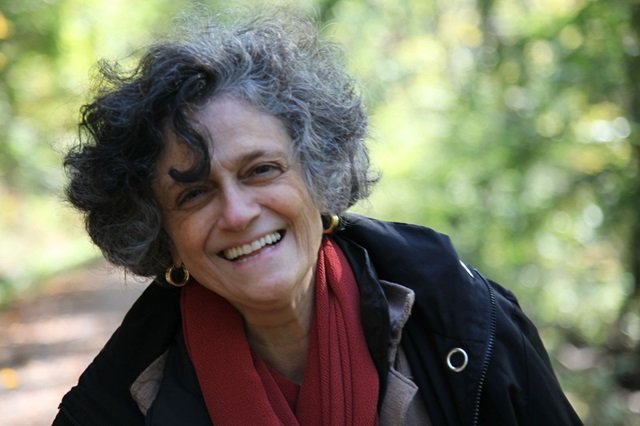
“Identity is all three. It is inherited, it is constructed through experience, and it is unsettled because I am still alive.” With that sentence, Bahiyyih Nakhjavani begins from a position that runs through almost everything she says about literature, history, religion and belonging. Identity, for her, is neither a fixed inheritance nor a finished construction. It remains provisional. She turns to Russell Hoban’s Riddley Walker and its image of “some thing in us” looking through the holes of the eyes and wearing clothes that do not always fit. “I confound the thing with the clothes,” she says. “The clothes are inherited, they are constructed, they are unsettled, and this thing with no name is there, mocking all these costumes.” She then recalls W.B. Yeats and the line that there is “more enterprise / In walking naked”. The same refusal to settle into a single authorised identity appears when she discusses historical truth. If there were one complete and recoverable truth, she says, it would require something like a Miltonic, God’s-eye point of view. Instead, she prefers the Sufi story of the three blind men and the elephant, each touching a different part and describing the animal according to what each has encountered. “The single truth is too huge for us to recover,” she says. Human beings are only partially sighted, and history is correspondingly fragmented. This becomes particularly important in her treatment of women whose lives were recorded principally by men. “We need symbols. They outlast time,” she says of Táhirih, the nineteenth-century Persian poet and religious figure at the centre of The Woman Who Read Too Much. But the symbol is not necessarily the person. The historical Táhirih has been represented in radically different ways, as heresy and prostitution in her own period, as an emblem of female emancipation among Western suffragettes, and more recently as a figure reclaimed by some Iranian women associated with the Women, Life, Freedom movement. “Maybe that will go on,” Nakhjavani says, “because we don’t really know who she actually was.” Her insistence on uncertainty is not an evasion of history. It is the condition from which she approaches it.
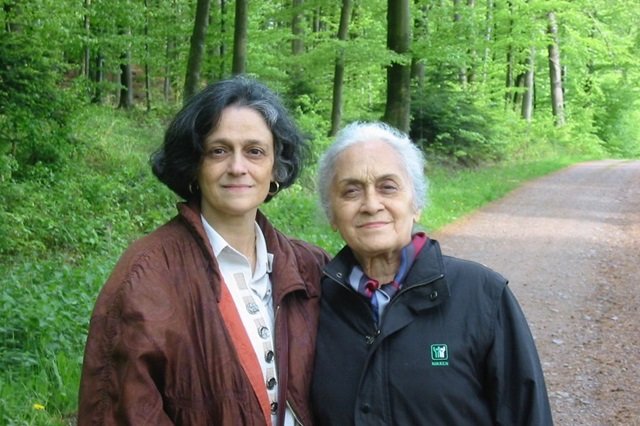
Nakhjavani was born in Iran in 1948 and left the country as a young child, growing up in Uganda before being educated in Britain and the United States and subsequently living and working in Europe. She became a writer, translator and teacher of European and American literature, and her fiction has repeatedly crossed geographical, religious and historical boundaries. Her major works include The Saddlebag, Paper, The Woman Who Read Too Much and Us & Them, alongside earlier literary and critical works such as Asking Questions, whose title already anticipates one of the central intellectual principles that runs through her thinking. Her writing has been shaped by displacement, multilingual experience, Bahá’í history, questions of authority and the problem of representing people whose voices have been obscured or mediated by others. She describes herself, provocatively, as “illiterate” in Persian because she left Iran so young and did not acquire direct access to its literary tradition. “The British put their stamp on my tongue,” she says, invoking Caliban and the experience of being taught language by a colonial culture. Yet she absorbed something of Persian allegory, mysticism and poetry indirectly through the Bahá’í Writings, which she describes as being “redolent with the attar of rose, fragrance of hyacinth, melody of nightingales”. Her novels therefore emerge from a complicated position between languages and traditions rather than from a secure literary inheritance. She has written historical fiction not because she believes fiction can restore an inaccessible past with certainty, but because the gaps themselves demand imaginative attention. She spent approximately two and a half years writing The Woman Who Read Too Much, followed by years of publication and translation before the English edition appeared. The novel emerged from her recognition that the documentary record surrounding Táhirih was insufficient for a conventional biography. Recently, I sat down with Bahiyyih Nakhjavani to talk about identity, historical memory, the ethics of writing about the dead, religious authority, fundamentalism, persecution, displacement, translation, Iran, literature and the continuing necessity of asking questions.
Identity is inherited, it is constructed through experience, and it is unsettled because I am still alive.
The problem of historical truth is particularly acute in The Woman Who Read Too Much. Nakhjavani says that the records surrounding Táhirih are “male-dominated and contradictory”. Nineteenth-century Iranian women rarely survived in historical documentation except when they belonged to royal families or became notorious enough to attract condemnation. Táhirih was one of those exceptional women, but the very intensity of the historical argument surrounding her makes recovery more difficult. In Bahá’í accounts she could appear as a saintly and courageous figure, while hostile accounts could portray her as morally corrupt. Nakhjavani did not attempt to resolve the contradiction by selecting one version and discarding the others. Instead, she constructed a circle around Táhirih using four female perspectives, mother, sister, daughter and wife, drawing on historical women of the period and giving them roles rather than simply treating them as documentary witnesses. “The only way to do justice to her,” she says, was to “weave a circle around her”, allowing the reader to approach her indirectly. The result is not a biography disguised as a novel. It is a novel built around the impossibility of biography. “We don’t really know who she actually was,” Nakhjavani says, and the sentence has consequences beyond Táhirih. It raises the question of what happens when the archive preserves the public accusations made against a woman more clearly than it preserves the texture of her actual life. Fiction then becomes neither an alternative archive nor a substitute for evidence. It becomes an acknowledgement of what evidence cannot provide.
That uncertainty also imposes an ethical obligation on the novelist. Nakhjavani is unusually severe with herself on this question. “The dead have human rights,” she says. Writing historical fiction means entering the lives of people who cannot answer back. “I walk among them,” she says, describing the experience of approaching the dead with “trepidation” and choosing words almost as if asking permission. She repeatedly returns to images of corpses, corpse-washers and grave watchers in her books. Washing, embalming, perfuming and wrapping the dead become metaphors for the novelist’s responsibility towards history. The writer cannot restore the dead to life, but can decide whether to treat their remembered lives with care or exploit their silence. “I have an eternity of sleepless nights” over that boundary, she says. This is also why she rejects the idea that historical accuracy and artistic freedom are necessarily enemies. “They depend on and qualify each other,” she says. Historical inspiration creates responsibility because certain things can be established. But beyond what can be established are “gaps” and “spaces”, and those are where imagination begins to move. The unknown is not an unlimited territory in which a novelist can invent without restraint. Even the unknown contains what she calls “hidden strictures”. “Morality is everywhere,” she says. Artistic freedom exists within that recognition rather than outside it.
Her approach to religion follows a similar distinction between inherited forms and deeper principles. Nakhjavani speaks as a Bahá’í, but is careful to distinguish her personal position from institutional authority. “As an individual, I have no authority,” she says. She is not an appointed representative, and her writing does not carry the authority of a Bahá’í institution. This distinction matters because one of the principles she identifies most strongly with the Bahá’í tradition is the freedom and obligation to question. “Questioning is a tradition,” she says. The free use of the rational faculty is not a luxury but a responsibility. Belief should not simply be inherited “along with the size of your nose”. One must investigate, question and examine inherited assumptions. She refers to a Bahá’í calendar month associated with questions and repeatedly returns to the principle of independent investigation of truth. For her, this creates an unusual relationship between religious commitment and intellectual freedom. Faith does not require the novelist to stop questioning. It gives her a framework within which questioning can continue. “I scribble,” she says of her writing process, “and I discover patterns, ironies, metaphors.” There is no programme that she is required to impose on the reader. The freedom comes partly from the absence of personal authority. She can explore because she is not claiming to speak for an institution.
Her definition of fundamentalism grows directly from this concern with authority and certainty. She describes it as something like “bacteria in our gut”. In controlled quantities, the instinct to believe in one’s purpose, identity or excellence may provide energy and direction. When it becomes excessive, it becomes disease. She calls this the “Supremacy Fallacy”, the belief that one is not merely part of a group but belongs to the first, last, only or chosen group and is therefore entitled to superiority. The category can be religious, racial, national, intellectual, economic or political. It can be attached to gender, class, education, inherited wealth, technology or even access to artificial intelligence. “Currently we are suffering from this disease rather badly,” she says. Her proposed antidote is humility. The problem is not conviction itself but the transformation of conviction into entitlement. Once a person or institution assumes that its own identity gives it superior rights, the language of truth can become a mechanism for exclusion. She sees the same pattern operating at both individual and institutional levels. Institutions can become weapons when constitutions and structures are used to suppress those who fall outside the authorised category. Reform, therefore, cannot be reduced to changing external arrangements while leaving the underlying impulse towards supremacy untouched.
This is why Nakhjavani is sceptical of reform that merely rearranges structures. She distinguishes spiritual faith from the traditions and social practices that human beings construct around it. Marriage customs, food rules, clothing, ceremonies and institutional habits can become identified with religion even when they are historically contingent. “Traditions create differences and widen distinctions,” she says. They can therefore become obstacles to reform, particularly when people holding power have an interest in preserving them. Within the Bahá’í understanding she describes, the “changeless Faith of God” is repeatedly renewed by great teachers, with religions understood as chapters in one continuing book rather than isolated systems competing for exclusive possession of truth. Reform in that sense is not simply institutional replacement. It is a renewal of vision. “We don’t have springtime at our command,” she says. Spiritual renewal cannot be mechanically scheduled. External changes may be necessary, but without an alteration in the human beings who operate those structures, old patterns can return under new names.
The single truth is too huge for us to recover
She applies the same scrutiny to literature. Writers, she says, inevitably carry the prejudices of their time, sometimes without recognising them. Rudyard Kipling cannot be read without recognising the racism, imperialism and jingoism embedded in parts of his work. Ernest Hemingway and Philip Roth, she says, can make her “cringe” because of their representations of masculine power and the macho culture of their periods. Virginia Woolf’s call to “kill the angel in the house” becomes relevant not simply as a feminist literary slogan but as a demand that writers destroy inherited expectations about how women should appear in literature. The transformation of Muslim women’s representation, she argues, has increasingly come from women writing from within those societies and experiences rather than being represented exclusively through external expectations. She points to Forough Farrokhzad as a figure who transformed the narrative of Iranian women decades ago. The point is not that Western literature is uniquely prejudiced or that Muslim literature is automatically authentic. It is that literature is historically situated, and later generations inevitably discover assumptions that earlier writers regarded as normal.
Her treatment of persecution introduces another dimension of this problem. Nakhjavani questions the tendency of literature about persecuted communities to organise identity permanently around suffering. Victimhood can become a powerful identity because it provides moral clarity and a recognisable narrative. But she draws attention to Mahvash Sabet, the Iranian Bahá’í poet and prisoner of conscience, whose memoir she helped bring into English. Sabet, Nakhjavani says, refused to understand herself simply as a victim. She was living with the possibility of being returned to Evin prison and carried a packed bag, but she could still think about what she could contribute. If she returned voluntarily, she said, perhaps she could help. For Nakhjavani, this illustrates what she calls “constructive resilience”. The response to persecution is not merely resistance directed against the persecutor. It can involve turning outward, strengthening social relationships and finding ways of contributing despite confinement. She believes this has become an important feature of the Bahá’í community in Iran. She describes small acts of cohesion, neighbourhood support and education as forms of resilience that are not dependent on political power. The Bahá’í Institute of Higher Education, established after Bahá’í students were excluded from Iranian universities, is one example she gives. Educated people became teachers, students continued studying outside the formal university system, and graduates pursued further education internationally. For Nakhjavani, this is not political opposition in the conventional sense. It is “civilisation building”.
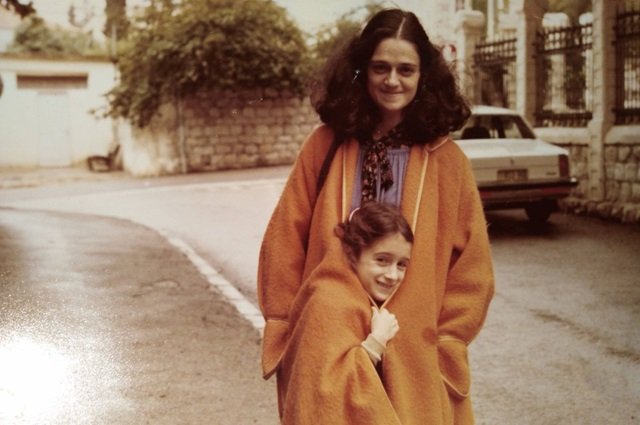
Her understanding of displacement emerges from the same refusal to treat identity as a fixed possession. As a child in a Welsh boarding school, she was the “forrin gel”, the foreign girl, and found herself between groups. Welsh girls were themselves mocked by girls from Wolverhampton and Birmingham, partly because of language and regional identity. Her own difference in skin colour made her foreign, while the Welsh girls were treated as outsiders in another hierarchy. She remembers her father telling her to “kick it away”, but also giving her a distinction that stayed with her, that it was better to be raised among racial ignorance than racial prejudice. In Africa, she had encountered prejudice. In Wales, she encountered ignorance. The distinction allowed her to use humour rather than simply resentment. She recalls children asking whether she lived in a treehouse or an oasis, while her British geography lessons had led her to imagine Britain as an impossibly cold place. A Kenyan school once offered admission on the condition that her name be changed to Smith. Her father declined. These experiences became the basis for what she calls the “corridor”. She does not see displacement simply as loss. The corridor is the space between rooms, where a person can have a foot in several worlds without being completely contained by any one of them. “We nobodies are actually becoming the majority,” she says, invoking Emily Dickinson’s “Hush, don’t tell”. Migration, mixed marriages, education, economic necessity, war and personal choice have produced millions of people whose identities are similarly composite.
The dead have human rights.
The corridor also explains something about The Saddlebag. The physical object at the centre of the novel has a historical basis. According to the tradition on which Nakhjavani drew, the saddlebag belonged to the Báb and was stolen by a Bedouin thief during the pilgrimage journey. Its contents included writings, but the precise details provide a space for the novelist’s imagination. Nakhjavani follows the saddlebag from hand to hand and allows people from different religious and cultural backgrounds to interpret what they encounter according to their own hopes, fears and traditions. The object becomes a vehicle for examining the human need to believe. “Human need to believe is fundamental to language and storytelling,” she says. The question is not simply what the object contains. It is what people make of what they cannot completely understand. That is also what literature does with history. Toni Morrison’s Beloved, she says, reclaimed the reality of slavery while forcing readers to encounter it through a perspective that destabilised familiar narratives. She places Arundhati Roy’s The God of Small Things within a similar tradition of recovering experience through unexpected narrative forms. Literature preserves cultural memory, but it also disturbs memory by refusing to leave inherited interpretations intact.
Nakhjavani does not believe that this process has a final conclusion. She invokes W.H. Auden’s “rearrange, oh, rearrange” to describe the human impulse to retell, reinterpret and reconstruct. Every generation rearranges the materials inherited from the previous one. The historian rearranges evidence into an account. The novelist rearranges experience into a story. The translator rearranges one language into another. None can claim absolute possession of the original. Her reflections on translation become particularly personal because she worked on the English translation of Mahvash Sabet’s Persian memoir. The original author had written notes on illicit pieces of paper years after the events described. Even the first written record was therefore already retrospective. Nakhjavani then received a faithful word-for-word translation from another translator and worked with it in English. She was outside the prison, free to move, living in another country and thinking in another language. “Wonder anything gets across,” she says. Translation can therefore be “extraordinary hubris or pure folly”. Yet something can cross the distance. If a translation touches the heart or stimulates the mind, she considers that a kind of miracle.
Her definition of universal literature follows from the same belief in particularity. A story needs protagonists, a place, a time, tensions, mysteries, confusion, alternatives and uncertainty. It needs a world that is sufficiently particular to become believable. If the writer is fortunate, something in that particular world reaches beyond its immediate boundaries. “If it touches something universal, it is light upon light,” she says. But universality cannot be measured simply through commercial success. “Sales figures may pulp them,” she says, distinguishing popularity from literary endurance. A book can sell enormously and disappear from serious cultural memory, while another may speak to readers across time without ever becoming a commercial phenomenon. The universal is not a marketing category.
Her reflections on the Bahá’í persecution in Iran bring these literary questions into a political and religious history that she knows intimately through her family and faith. She argues that persecution has been fundamentally religious wherever the Shi’a establishment has held power, because the Bahá’í claim to continuing revelation challenges an interpretation of Islam according to which Muhammad is the last prophet. But she also sees politics and religion operating together. The persecution of the early Bábís occurred during a period of political instability surrounding the Qajar monarchy, and political calculations could reinforce religious hostility. “Sometimes politics has been used to veil religious zeal and sometimes religion has covered a political agenda,” she says. “They are symbiotic.” She identifies the abolition of priesthood, collective administrative decision-making, universal participation and the equality of people across race, class and gender as principles capable of unsettling conventional hierarchies. The conflict, in her account, is therefore not only theological. It concerns who has the authority to interpret, govern and define legitimate belonging.
The accusation that Bahá’ís are foreign agents has also changed according to political circumstances, she says. In earlier periods they were accused of serving Russian or British interests during the Great Game, later of being connected to American interests, and after the Iranian Revolution of serving Israel or Mossad. Nakhjavani rejects these accusations and points to the historical reason the Bahá’í spiritual and administrative centre is located in present-day Israel. Bahá’u’lláh was exiled by the Ottoman authorities to Acre in 1868, and he died there. The geographical location of the Bahá’í holy places, she argues, is therefore the consequence of nineteenth-century exile rather than evidence of an Israeli political connection. For her, the accusation of espionage obscures the deeper religious dispute. The Bahá’í community, she insists, is “homegrown” in Iran. Its origins are Iranian, and its historical presence predates the modern state of Israel.
We nobodies are actually becoming the majority.
Nakhjavani also describes Bahá’í political non-involvement through the idea of two opposing currents, integration and disintegration. Bahá’ís, she says, understand their role as contributing to integration and civilisation building rather than joining partisan political struggles. This position can expose them to contradictory accusations. They can be accused of political motives precisely because their activities affect society, while their refusal to participate in partisan politics can be interpreted as apathy. Her example of the Bahá’í response is again constructive rather than confrontational. Education, neighbourhood support, social cohesion and the creation of institutions such as the Bahá’í Institute of Higher Education become ways of responding to exclusion without reproducing the political structures that exclude them. She also speaks of Iran as a society carrying profound trauma, affecting both victims and perpetrators. Her confidence in Iran is not presented as a prediction about political succession. She refuses to predict precisely what will happen because she has lived outside Iran for most of her life and cannot speak for its millions of inhabitants. “I cannot speak for 92 million Iranians,” she says. What she can speak about is the capacity of people, particularly women and members of the Iranian diaspora, to create something different.
The refusal to predict is consistent with her wider resistance to certainty. She does not claim that Iran will inevitably experience a particular political transformation, nor does she present spiritual awakening as something that can be commanded. Asked whether humanity is experiencing such an awakening, her answer is characteristic. “I’m still fast asleep.” She remains grateful to literature because it allows her to dream about universal questions without taking herself too seriously. Literature creates a space in which the largest questions can be approached without pretending to possess their final answers. The same curiosity extends to artificial intelligence and younger generations. She speaks about her granddaughter, Faith, an Oxford student growing up alongside AI, and worries about the disruption of employment, particularly for writers and editors. She does not believe human beings will simply become unnecessary, but she recognises that adaptation may be preceded by a period of darkness and uncertainty. The technological question, like the historical and religious ones, returns her to the problem of human judgement. Machines may generate language, but the question of what deserves to be believed, remembered, valued or questioned remains.
For Nakhjavani, curiosity is not an ornamental quality of the literary life. It is an intellectual discipline. It protects against the “Supremacy Fallacy”, against the seduction of victimhood, against the certainty that one inherited tradition possesses the final truth, against the temptation to convert historical fragments into unquestionable narratives and against the assumption that translation can reproduce experience without loss. It also explains the strange continuity between the foreign girl in a Welsh school, the novelist moving through Persian and English, the writer reconstructing Táhirih through four women, the translator working on the testimony of a prisoner and the Bahá’í thinker insisting on independent investigation. The corridor remains the governing space. It is neither a place of permanent exile nor a place of complete belonging. It is where different worlds meet, collide and become intelligible to one another without becoming identical.
Near the end of our conversation, Nakhjavani returns to literature and mortality. She speaks of being grateful for the people she encounters through books and conversations and hopes to remain curious as she approaches what she calls the “great door of death”. There is no claim here to have solved the questions that have occupied her life. The writer who began by saying that identity is inherited, constructed and unsettled ends in the same condition of uncertainty with which she approaches history. She does not want the last word. Human beings, she suggests, have too cramped an idea of time to know whether any word can ever be the last. The dead remain beyond our reach, history remains larger than our archives, translations remain imperfect, religions remain vulnerable to the institutions built around them, and identities continue to change while people are alive. Her answer is not withdrawal from these difficulties. It is to remain inside them, questioning, writing, translating, remembering and continuing to look through the holes of the eyes while knowing that the clothes will never quite fit.