China’s military has framed its intensifying anti-corruption campaign as a vital step in preparing for future conflicts, drawing direct parallels with historic “political rectification” campaigns that preceded major wars in the country’s modern history.
In a series of editorials published this week by the PLA Daily, the official newspaper of the People’s Liberation Army (PLA), the military stressed that purging corruption and strengthening political loyalty are not only internal priorities, but essential to ensuring combat readiness amid rising security challenges.
“Looking back on the history of development of our military, we have carried out major rectification every time before a key war,” one commentary stated, referencing the Second Sino-Japanese War, China’s civil war, and the Korean War. It argued that such internal overhauls ensured military cohesion and mission success during those conflicts.
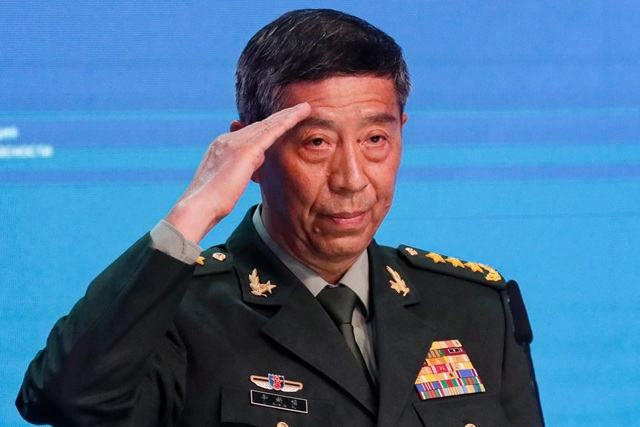
The latest campaign, which state media calls “deepening political rectification,” has already resulted in the removal of several high-ranking military leaders. General Miao Hua, a former top member of the Central Military Commission (CMC), was dismissed this week amid a corruption probe. He is the latest in a string of senior officers, including former Defense Minister Li Shangfu, to fall under scrutiny since 2023.
The PLA Daily emphasized that “falsified rectification” must be “resolutely cracked down on,” acknowledging that some units remain weak in their combat planning and political discipline. “At key historical intersections,” another article noted, “rectification has always played a pivotal role in unifying ideology and eliminating corrupt practices.”
The campaign is being portrayed as part of broader efforts to achieve the military modernization goals laid out by President Xi Jinping: to build a “fully modern army” by 2027 and a “world-class military” by mid-century. However, the PLA Daily warned that time is short and the path ahead remains arduous, citing “deep-rooted issues” in military discipline and leadership integrity.
The emphasis on political loyalty and discipline also comes amid growing speculation about instability within the upper ranks of the PLA. General He Weidong, the PLA’s second-highest-ranking officer and a member of the Politburo, has not appeared publicly for weeks, fueling rumors of further internal investigations.
While the PLA insists that the anti-corruption efforts are part of routine discipline enforcement, the scale and frequency of purges suggest a broader push to tighten control over the military during a period of rising geopolitical tensions. “Soldiers should not expect to be officers of peace time,” the PLA Daily warned.
As China approaches the PLA’s 100th anniversary in 2027, the message from Beijing is clear: political purity and internal discipline are seen as essential conditions for military strength and strategic readiness.