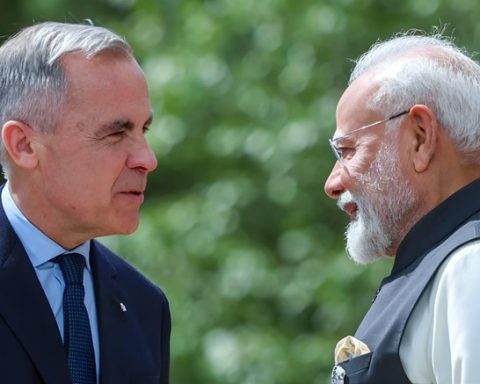
Poland and India are seeking to deepen their strategic partnership at a time of mounting geopolitical uncertainty, shifting global alliances and growing pressure to diversify trade, technology and defence relationships. Polish Prime Minister Donald Tusk’s visit to India in October 2026 marked an important step in this process, building on the Strategic Partnership established during Indian Prime Minister Narendra Modi’s visit to Warsaw in August 2024. The two countries have pledged to double bilateral trade by 2030 and expand cooperation in defence industries, advanced technologies, space, critical minerals and counter-terrorism. The latest diplomatic engagement also reflects a broader economic calculation: Poland is seeking new markets and investment opportunities, while India is looking for technology, capital and stronger access to European markets. Yet the relationship is developing against a complex international backdrop, particularly the war in Ukraine, Poland’s security concerns over Russia and India’s longstanding political, economic and defence ties with Moscow. How the two countries manage these differences while pursuing common interests will help determine the substance and durability of their partnership.
The relationship, however, extends well beyond contemporary geopolitical and economic calculations. India and Poland established formal diplomatic relations in 1954, following earlier intellectual exchanges shaped by Polish scholarship on Indian languages, philosophy and culture. One of the most enduring chapters in their shared history emerged during the Second World War, when India provided refuge to thousands of Polish civilians displaced by the conflict. The Maharaja of Nawanagar, Jam Saheb Digvijaysinhji, offered shelter and care to Polish children at Balachadi, while a larger Polish refugee settlement operated at Valivade in present-day Maharashtra. These humanitarian connections remain an important part of the historical relationship and were recalled during Modi’s 2024 visit to Poland. Since Poland’s transition from communist rule in 1989, its accession to the European Union in 2004 and India’s economic liberalisation, bilateral relations have increasingly encompassed trade, investment, education and technology. The elevation of ties to a Strategic Partnership in 2024 provided a framework for expanding this cooperation, while Tusk’s 2026 visit brought renewed attention to the opportunities—and strategic differences—that accompany closer engagement.
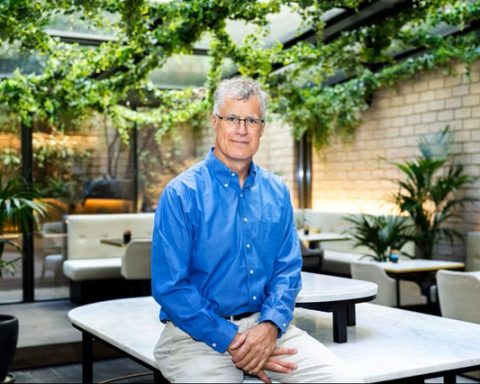
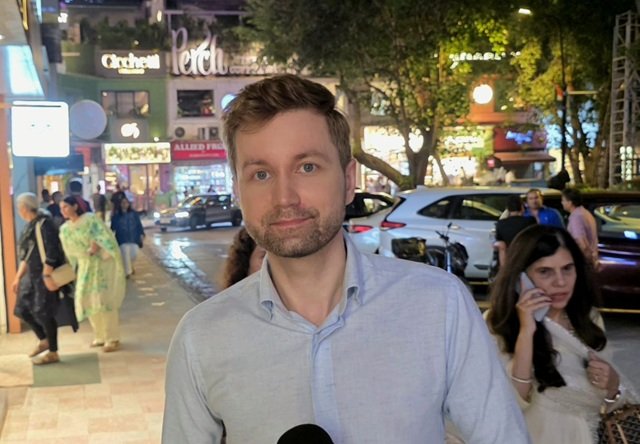
In this interview, Tomasz Augustyniak, a Polish journalist and geopolitical analyst based in Asia, examines the evolving relationship from Warsaw’s perspective. He discusses whether Poland’s security concerns over Russia continue to constrain trust in India, the prospects for defence-industry cooperation and technology sharing, and the extent to which New Delhi and Warsaw can pursue common objectives without abandoning their distinct foreign-policy priorities. He also considers Poland’s growing importance within the European Union, the potential implications of closer India–EU economic ties, and the practical measures needed to turn the latest diplomatic commitments into lasting commercial and strategic outcomes. His assessment offers insight into how two countries with different historical experiences and geopolitical alignments are seeking to build a more substantial partnership amid an increasingly uncertain international order. The following are the excerpts,
Question: Poland sees Russia’s war against Ukraine as a direct security threat, while India maintains longstanding defence and diplomatic relations with Moscow. From Warsaw’s perspective, how much does this difference limit the trust required for a genuine strategic partnership with India?
Answer: That obviously used to be an issue but now, I see the trust growing. For that trust to be established, it took several candid, behind-the-closed door talks. It’s true that the war raging next door and the hybrid threat from Moscow create major problems for Poland. That goes even deeper as Warsaw sees Russia as its former coloniser and a historical threat to its development. You will understand what I mean when you look at the economic figures from the years after breaking free from the Moscow’s orbit. It served us rather well.
At the same time Polish leaders understand that India has its own, quite different story with Russia and its own interests, especially in energy security. There is a growing level of acceptance of that on both the sides. Ironing the differences out took some minor clashes and master-level diplomacy but it seems successful.
The strategic partnership agreement that you mentioned was signed in 2024, when prime minister Narendra Modi visited Poland. Right after that, Modi went straight to Kyiv and personally saw the level of destruction caused by Russian attacks in Ukraine. Before and after that he repeatedly told Putin to stop the endless war – most recently just last month, during the BRICS summit. It shows that Indian stance towards Russia is nuanced.
For the past two years, Polish officials, including the deputy foreign minister, travelled back and forth between Warsaw and New Delhi to understand Indians better. Now Poland clearly means business. Prime Minister Donald Tusk who visited this week, took along with him the finance and economy minister, major banks, credit institutions and investment companies along with around 150 CEOs and business representatives. There were two business summits in Delhi and Bangalore. Even astronaut Sławosz Uznański-Wiśniewski showed up. That’s the same guy who last year flew to the orbit in Axiom Mission 4 along with India’s Shubhanshu Shukla.
I’d say there’s a true willingness to deepen ties. Modi and Tusk praised each other country’s economic growth. Top Indian officials repeatedly said how they admire Poland for becoming a 1 trillion-dollar economy. They acknowledged its growing importance within the European Union and its place as a non-permanent G20 member. There also seems to be lots of curiosity about Poland’s development path in the past three decades as one of the fastest growing European economies and India being on the track to become the third largest economy in the world.
When you look at Indian media coverage and analyse official speeches, you see that both the parties have clearly realised how much they are actually aligned in their goals. Polish companies need new markets to expand. India needs more technology and investment to become a developed nation. The world has become more volatile, so both the parties want to secure their supply chains and diversify partnerships. That all comes in the backdrop of the EU-India free trade agreement that is set to come into force next year.
Q: Poland wants to expand defence cooperation with India, including joint production and technology development. Given the pressure to strengthen its own military capabilities because of the war in Ukraine, is Warsaw genuinely seeking a long-term strategic partnership, or is India also being viewed as a major market to support Poland’s defence industry?
A: It is definitely viewed as a long-term relationship. Decades ago, Poland upgraded India’s Soviet-made tanks. Very recently, the Indian army successfully used Polish-made drones and loitering munitions in its clashes with Pakistan. The company that makes them, earlier set up a joint venture in India and plans production in Uttar Pradesh. There seems to be interest in specialized Polish platforms, while Polish companies eye collaborative manufacturing and satellite deals. The numbers show that India is diversifying away from Russia when it comes to weapon procurement. But, of course, nobody in Europe expects them to cut ties completely.
As you rightly pointed out, Poland is under great pressure after Russia’s full-scale invasion of Ukraine. That’s why it is creating the largest army in the European Union and spends over 4.5 percent of GDP on its defence. That’s what you must do when you have an aggressive neighbour. Warsaw security analysts think of India as a major partner to diversify supply chain linkages beyond Europe.
Q: Poland is a NATO and EU member, while India pursues so-called “strategic autonomy” and maintains relationships with countries that Poland and its Western allies view as security challenges. What concrete limits, if any, would Poland place on defence technology-sharing with India, and what would New Delhi need to demonstrate for Warsaw to trust it with sensitive technologies?
A: Whenever I talk to senior diplomats in Warsaw, it is quite clear that they accept India’s balancing of its relationships. Poland often uses the EU membership as a leverage to its foreign policy and sees being part of NATO as an ultimate security guarantee. But at the same time, it has a functional relationship with countries such as Iran. Despite of what Moscow often claims – that the Western allies form some sort of a ‘collective’ – the truth is much more complex, and it allows for autonomy and independent diplomacy.
As for the defence technology-sharing, there is a Defence Industry Dialogue being established and negotiations of an agreement on the mutual protection and exchange of classified information are ongoing. It is supposed to establish the rules for transferring confidential state and military information. It will be useful in the joint development of armaments. What limits there will be – it remains to be seen.
Q: As Europe seeks to reduce strategic vulnerabilities exposed by the Ukraine war and global supply-chain disruptions, India is positioning itself as an independent international actor. Does Poland see closer relations with India as a way to build a more balanced international order, or does it primarily want India to align more closely with European strategic priorities?
A: Both Europe and India are vulnerable to pressures caused by Russia’s invasion of Ukraine, America’s war in the Middle East and the US-China rivalry. That’s why New Delhi and Brussels want to trade and deal with each other more. Poland and India are also already aligned. Both the economies are quickly growing, both the countries want to become richer and more prosperous, and they both seek more influence, in their own ways. The Polish government backed India’s membership in a future, expanded UN security council. A senior Indian diplomat publicly said this week that Poland should play a greater role in global economic governance, including G20.
For India there is one more important factor. That is the increasingly important role that Poland plays in the European Union. Donald Tusk himself was the president of the European Council, there are 53 Polish members of the European Parliament, and no major decision can be made in Brussels without a nod from Warsaw. Indians want more access to the European common market, so they need Poland to be their friend.
But Polish diplomats have done enough dealings with them to be aware that while India wants to be Europe-friendly, it won’t become Europe. It is crystal clear that New Delhi cannot openly condemn Russia. It has already gone out of its way when it stressed its concern over the war in Ukraine and its support for the principles of the UN Charter, respect for sovereignty and territorial integrity included.
Prime Minister Modi stressed on Thursday, that both Poland and India are democracies, they believe in the rule of law and international order. So, the short answer is that it is a more balanced and just order that they both seek.
Q: India and Poland have pledged to double bilateral trade by 2030 and deepen cooperation in defence, space and advanced technologies. Looking beyond the summit announcements, what specific agreement, investment or policy change would convince Polish observers that this partnership is producing tangible results—and what could cause it to fail?
A: Frankly, I don’t see how this relationship would fail. There are simply too many common interests and values. When you look at the mere 6.4 billion euros of annual trade exchange, you realise that there’s plenty of room to expand it. Poland has been trading with India less than it does with Vietnam. I’m not very surprised that after having met with the Indian counterparts, the Polish finance minister said that even tripling the trade isn’t out of question. Especially since next year, when the EU-India free trade agreement comes to force, many barriers will evaporate. Historically Poland’s trade always benefited from European FTAs.
As for deliverables, expanding trade and investment, more MOUs and business agreements would be concrete proofs that the partnership works. I spoke this week with several Polish and Indian businesspeople who are genuinely excited about the upcoming deals. As Donald Tusk put it, Poland and India have become true friends, and it is a friendship that will prove beneficial to everyone.