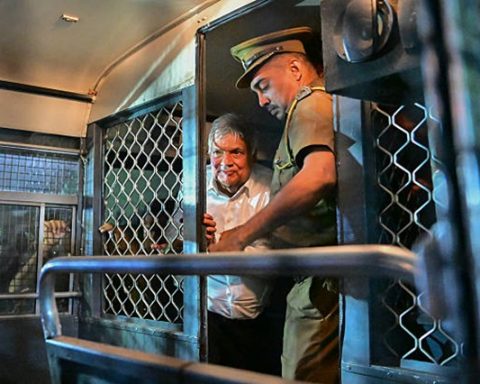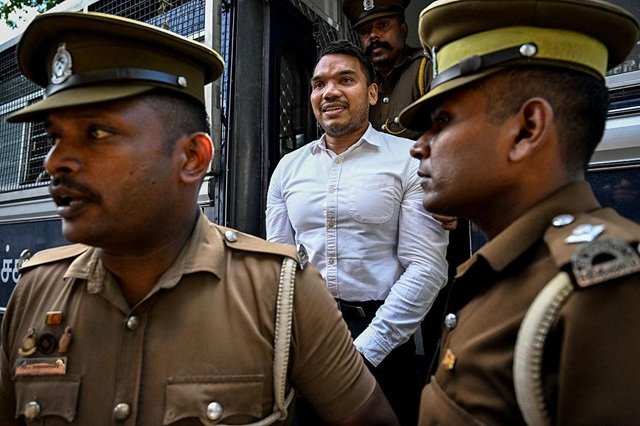
Sri Lankan parliamentarian Namal Rajapaksa has said he is prepared to spend 500 days in prison, rather than the 50 days he says he has already spent in custody, if his continued detention would bring economic relief to the public and protect the country’s cultural heritage.
In a letter issued from custody, Rajapaksa, the eldest son of former president Mahinda Rajapaksa, criticised what he described as attempts to place responsibility for the country’s problems on a single family. He also expressed confidence that he would eventually be acquitted by the courts.
“Even if I am imprisoned for 50 days, or even 500 days, I can remain in prison if it brings benefits to my country and protects its culture,” he wrote, listing a series of economic measures he said should be possible if his detention served those purposes.
Among the measures he cited were reducing electricity bills by two-thirds, supplying fuel at the price paid for imports, increasing salaries every six months, providing bank loans without collateral or interest, and making Vitz cars available for about 1.2 million rupees. He also called for lower rice prices and the complete removal of taxes imposed on healthcare, education and essential goods.
Rajapaksa said the public was enduring a difficult period, with serious problems requiring urgent attention across multiple sectors. He questioned claims that government revenue was accumulating while ordinary people received no relief, and said the country was losing investment opportunities.
“At such a serious time, attempting to hide the burden of a country’s problems behind one family is ridiculous,” he wrote, adding that he regarded this as a sign of the government’s inability to address those problems.
The MP also described his 50 days in prison as a period of personal reflection rather than lost time. Although prison walls surrounded him, he said he remained conscious of public support outside. He suggested that his detention might be connected to pressure from certain groups and to his position as Mahinda Rajapaksa’s eldest son.
“Politics is not meetings, impassioned speeches and applause,” he wrote. “Although I have been imprisoned, my thoughts are free. These words are free.”
A substantial part of the letter focused on cultural heritage and religious respect, particularly in relation to the death of an elephant named Kavanthissa. Rajapaksa said the failure to protect the animal, which he described as part of a revered heritage, had caused public pain. He argued that a country’s leader had a responsibility to safeguard all living beings and preserve the nation’s natural and cultural inheritance for future generations.
He praised his father as a political figure who had earned enduring public affection and said Mahinda Rajapaksa had understood that service to the country could bring suffering, pain and humiliation. He also suggested that his father might not have anticipated the extent of criticism directed at the country’s national identity, religion and values.
Rajapaksa distinguished between legitimate criticism and what he characterised as insult, distortion of facts and the spread of hatred and violence. While acknowledging that democratic societies could accommodate civil debate about religion and culture, he argued that Buddhism and its associated traditions deserved respect in Sri Lanka.
He described religion as a matter of coexistence and understanding rather than competition or display, and said cultural disputes should be addressed through respect for the law and greater understanding.
Concluding his letter, Rajapaksa said that, if the country benefited from his continued imprisonment, the prison walls and iron gates around him would become an open sky. He maintained that his political camp’s popular aspirations could not be imprisoned, adding that his father had taught him that genuine victory lay not in power but in winning a place in the hearts of the people.