The International Court of Justice (ICJ) has dismissed a high-profile case brought by Sudan against the United Arab Emirates (UAE), which sought to hold the UAE accountable for allegedly arming and financing the Rapid Support Forces (RSF), a paramilitary group accused of committing ethnic killings in Sudan’s war-torn Darfur region. The court ruled on Monday that it lacked jurisdiction to hear Sudan’s claims under the Genocide Convention due to a reservation previously made by the UAE, limiting the ICJ’s ability to adjudicate state-to-state disputes under the treaty.
The case, filed by Sudan in March 2024, accused the UAE of supporting the RSF, which has been engaged in a brutal conflict with the Sudanese Armed Forces (SAF) since April 2023, following a power struggle over the country’s transition to civilian rule. The allegations focused on the UAE’s alleged role in supplying arms and military resources to the RSF, which has been accused of committing atrocities, particularly against the Masalit community in West Darfur.
In its ruling, 14 of the ICJ’s 16 judges determined that the court could not proceed with the case due to jurisdictional limitations. Sudan’s request for provisional measures to halt the alleged violence was also rejected. The decision followed a 9-7 vote to remove the case from the court’s docket entirely.
ICJ President Yuji Iwasawa acknowledged the grave humanitarian situation in Sudan but reiterated that the court’s jurisdiction was constrained by Sudan’s legal argument. “The Court is deeply concerned about the unfolding human tragedy in Sudan… However, the scope of the case before the Court is necessarily circumscribed by the basis of jurisdiction invoked in the Application,” Iwasawa stated in a press briefing following the ruling.
The UAE welcomed the ICJ’s decision, categorizing Sudan’s claims as “baseless” and politically motivated. Reem Ketait, Deputy Assistant Minister for Political Affairs in the UAE, emphasized that the ruling clearly affirmed that the Sudanese case was without merit. “This decision represents a decisive rejection of the Sudanese Armed Forces’ attempt to exploit the court to spread misinformation and divert attention from its responsibility in the conflict,” Ketait said.
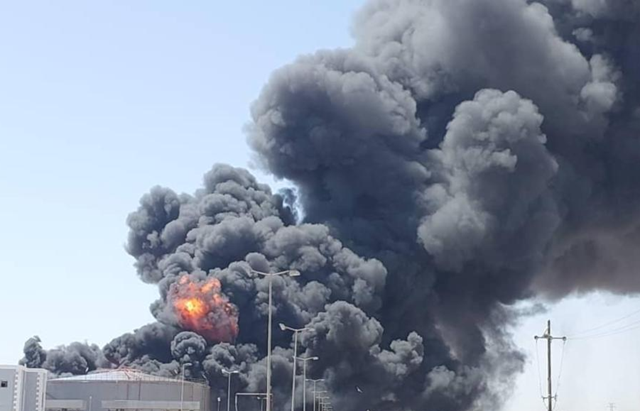
Meanwhile, Sudan’s government swiftly responded to the ruling by severing diplomatic ties with the UAE, accusing the country of violating Sudan’s sovereignty by backing the RSF. In a televised statement, Defense Minister Yassin Ibrahim Yassin condemned the UAE for supplying advanced weaponry to the RSF, including drones and missiles used in recent attacks on Port Sudan’s vital infrastructure, including the port, airport, and power stations.
Sudan’s Ministry of Defense characterized the UAE’s actions as a “clear act of aggression,” and asserted Sudan’s right to self-defense under Article 51 of the UN Charter. “Sudan reserves the right to respond to the aggression by every means to preserve the country’s sovereignty and territorial integrity,” the statement declared.
The conflict in Sudan, which erupted in April 2023, has devastated the country, leaving over 24,000 people dead and 14 million displaced. The war between Sudan’s armed forces and the RSF has torn apart cities, leaving half of Sudan’s population—approximately 25 million people—facing dire humanitarian conditions. The United Nations has confirmed famine in parts of Darfur, and rights groups estimate that tens of thousands of people have lost their lives, while millions remain displaced, seeking refuge across the region.
The international community has expressed concern over the escalating violence in Port Sudan, a critical port city located on the Red Sea. The recent bombardment of Port Sudan’s infrastructure has drawn strong condemnation from Egypt and Saudi Arabia, as well as increasing alarm from humanitarian organizations. The International Committee of the Red Cross (ICRC) has warned that the ongoing bombardment, along with widespread power outages, has exacerbated an already catastrophic crisis, leaving millions of displaced people in desperate need of aid.
As Sudan braces for continued turmoil, international advocacy groups are calling for accountability through alternative channels, such as investigations by the International Criminal Court (ICC). War crimes and human rights violations in Darfur and other conflict areas of Sudan remain a source of global concern, even as the ICJ ruling closes one legal avenue for justice.
The UAE continues to deny any complicity in the conflict, stating that the allegations brought by Sudan are “utterly baseless.” However, Sudan’s Defense Council has made it clear that it will take all necessary steps to defend its sovereignty and will not allow any foreign powers to interfere with its internal affairs. No immediate response has been received from the RSF, which has not publicly commented on the ICJ ruling or the recent military escalation.
The ICJ’s ruling has raised significant questions about the limitations of international legal frameworks in addressing cross-border conflicts, particularly those involving proxy groups and state actors with complex political interests. As the situation in Sudan continues to deteriorate, the global community remains focused on finding ways to support the Sudanese people, whose lives have been torn apart by violence and displacement.