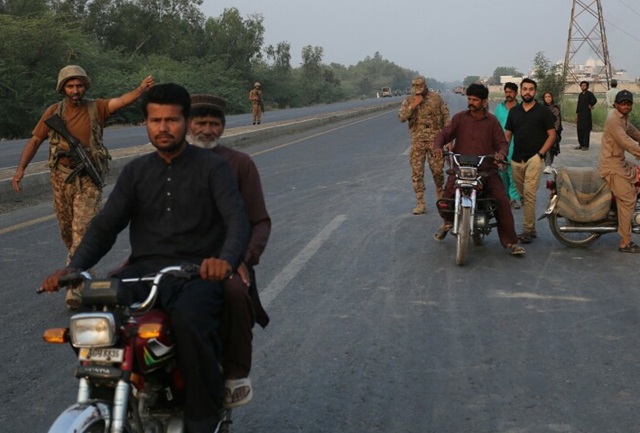
Pakistan’s military has strongly condemned recent Indian airstrikes across several locations in the country, reporting the death of at least 26 civilians and injuries to 46 others. According to Lt General Ahmed Sharif, Director General of the Inter-Services Public Relations (ISPR), the Indian forces targeted civilian areas under the cover of darkness, causing what he described as “heavy and tragic losses” among non-combatants.
In a press briefing, Lt Gen Sharif provided details of the attacks, stating that mosques and densely populated residential areas were among the sites struck in six separate incidents. The most severe casualties were reported in Ahmedpur East, where Masjid Subhanallah was hit, killing 13 people — including children and women — and injuring 37 more.
Other attacks included:
- Masjid Bilal near Muzaffarabad, where three people were killed and two children injured.
- Masjid Abbas in Kotli, where a 16-year-old girl and an 18-year-old youth were killed. A mother and her daughter were also wounded.
- Muridke, where three men lost their lives in a mosque strike.
While strikes were also reported in Sialkot and Shakargarh, authorities confirmed minimal damage, with only a dispensary affected in Shakargarh and no reported casualties.
India, in contrast, defended the operation as a targeted counterterrorism measure. During a joint media briefing in New Delhi, Indian Wing Commander Vyomika Singh, alongside Foreign Secretary Vikram Misri and Colonel Sofiya Qureshi, described the military operation — codenamed Operation Sindoor — as a response to the brutal Pahalgam terror attack, which left Indian civilians dead in what Misri called “barbaric executions.”
“Nine terrorist camps were targeted and destroyed with precision,” said Wing Commander Singh, claiming the operation was carefully planned to avoid civilian casualties and damage to non-military infrastructure.
Colonel Qureshi presented video evidence of the strikes, naming targeted locations such as the Muridke camp, where 2008 Mumbai attack planners David Headley and Ajmal Kasab allegedly trained. Other camps struck include Sarjal in Sialkot, Markaz Ahle Hadith, Markaz Abbas in Kotli, and Mehmoona Joya camp in Sialkot.
Foreign Secretary Misri emphasized that Indian intelligence agencies had identified further impending terror threats and insisted the response was “measured, non-escalatory, and proportionate,” aimed solely at preventing future attacks.
International Reactions
China has expressed concern over the escalation, urging both India and Pakistan to exercise restraint. “India and Pakistan are and will always be each other’s neighbours,” said a spokesperson for China’s Foreign Ministry. “We urge both sides to remain calm and resolve the matter through dialogue in the interest of regional peace and stability.”
The United States has also stepped in diplomatically. Secretary of State Marco Rubio held talks with officials from both countries, according to a White House statement. “He is encouraging India and Pakistan to re-open a channel between their leadership to defuse the situation and prevent further escalation,” said National Security Council spokesperson Brian Hughes.
As both nations exchange sharply contrasting narratives — one asserting a counterterrorism justification, the other mourning civilian losses — the specter of further confrontation looms, with international powers calling for calm and a return to dialogue.