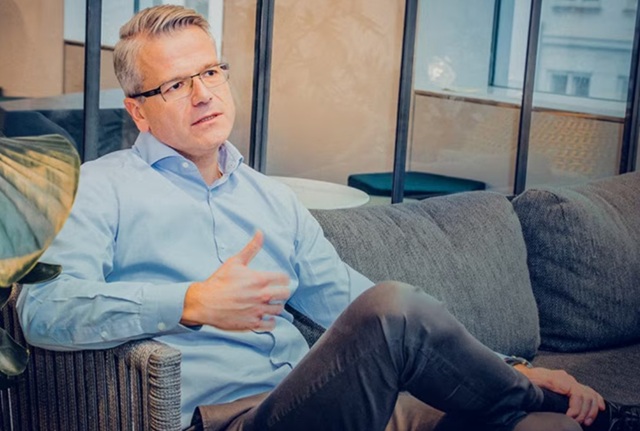
Vincent Clerc, the CEO of AP Møller Maersk, the world’s second-largest container shipping group, has warned that using tariffs to reshape global supply chains would be a slow and unrealistic process, requiring “a decade or two of persistent effort.” In an interview with the Financial Times, Clerc commented on the ongoing effects of US President Donald Trump’s trade policies, particularly the tariffs imposed on China, which have caused a sharp decline in trade volumes between the two nations.
According to Clerc, trade between the US and China dropped by 30-40 per cent in April due to the tariffs, but other trade routes, such as those connecting Asia with emerging markets, remained resilient. He emphasized the longstanding nature of global supply chains, stating that it would be extremely difficult to alter them quickly. “The supply chain today around the world is something that has been built over decades. If you want to upend it or change it in a deep way, it will take decades,” he said. “It takes time for companies to make decisions, for factories to be built. It’s very unrealistic for supply chains to be changed very quickly due to tariffs.”
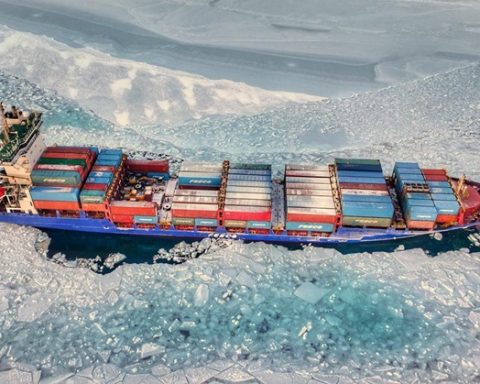
Maersk, as a key player in global trade, provides a unique perspective on the situation, given that it transports about one in five containers worldwide. Clerc noted that while global trade is currently facing disruptions, particularly in China-US relations, the company’s strategic response has helped mitigate some of the negative impacts. He highlighted that Maersk had shifted almost 20 per cent of its capacity from China-US routes to other emerging markets, a move that has been beneficial so far.
The Maersk CEO also expressed concerns about the broader economic consequences of the ongoing trade war. He warned that if inflation continues to rise and the risk of a US recession increases, trade volumes could decline further in the second half of the year. “If things become entrenched, inflation keeps increasing, and we see a risk of recession in the US, then volumes will suffer,” he stated, underlining Maersk’s role in supporting its customers through these economic challenges.
Clerc was sceptical about President Trump’s goal of bringing manufacturing back to the US, particularly given the country’s lack of available labour. He pointed out that industries such as snowboard boot production are currently reliant on Chinese manufacturing, and changing that would take time or require giving up certain products. “There is no production of snowboard boots outside China. If you want to change that, it will take time—or you need to stop snowboarding,” he said.
While expressing concerns over the global trade outlook, Clerc welcomed recent diplomatic efforts, including talks between US and Chinese officials and the upcoming US-UK trade deal, as promising signs of potential de-escalation in trade tensions.
Maersk’s first-quarter results exceeded analysts’ expectations, with revenues rising by 8 per cent to $13.3bn, and operating profits jumping more than seven-fold to $1.2bn. Despite the challenges, the company maintained its full-year guidance and expects an underlying operating profit ranging from zero to $3bn.