The European Union has taken a significant step in expanding its strategic presence in the Indo-Pacific by strengthening security cooperation with the Philippines through a new maritime assistance package, reflecting Brussels’ growing determination to play a larger role in a region increasingly shaped by geopolitical competition and maritime disputes.
On the sidelines of the Association of Southeast Asian Nations (Asean) foreign ministers’ meeting in Pasay City on Friday, Philippine Foreign Secretary Maria Theresa Lazaro and Kaja Kallas, the European Union’s High Representative for Foreign Affairs and Security Policy and Vice-President of the European Commission, signed a joint statement establishing an enhanced partnership between the two sides.
As part of the agreement, the Philippines will receive a €15 million (US$17 million) package under the European Peace Facility to strengthen its maritime domain awareness, particularly through improved surveillance and monitoring capabilities. According to Kallas, the initiative marks the first European Peace Facility support programme to be implemented in the Indo-Pacific.
“This is the first ever European Peace Facility support to be implemented in the Indo-Pacific and the clear demonstration that Europe is stepping up as a security partner in the region,” Kallas said.
The agreement represents a notable evolution in the European Union’s Indo-Pacific strategy, which analysts say is increasingly extending beyond trade, development and connectivity towards a broader security role.
Manuel Enverga III, Jean Monnet Chair of European Studies and director of the European Studies programme at the Ateneo de Manila University, described the Philippines as a “test case” for the European Union’s effort to transform its Indo-Pacific strategy from “a connectivity agenda into a genuinely geopolitical one”.
According to Enverga, the Philippines occupies a strategically significant position because it lies along one of the Indo-Pacific’s principal geopolitical fault lines, making it an increasingly important partner as the European Union places greater emphasis on maritime security and regional stability.
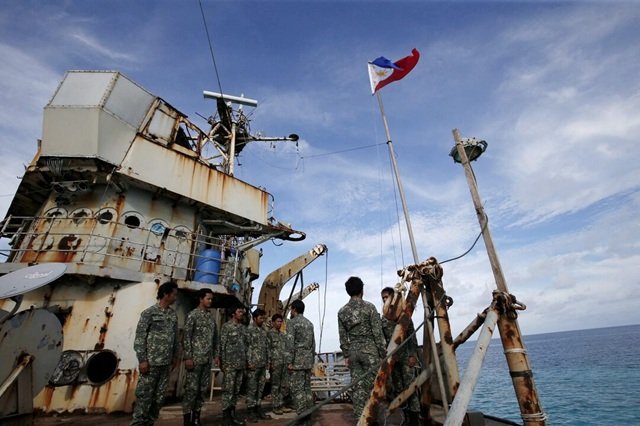
Dindo Manhit, president of the Manila-based Stratbase Institute, said the Philippines plays “a significant, if not among the most important” role in Brussels’ Indo-Pacific strategy due to its location along some of the world’s busiest maritime routes and its direct exposure to tensions in the South China Sea.
He argued that the country’s security and stability have implications extending well beyond Southeast Asia, influencing Europe’s own economic and strategic interests. Manhit also noted that the European Union recognises the Philippines’ expanding network of bilateral, minilateral and multilateral partnerships, which distinguishes it from many other countries in the region.
The enhanced relationship also reflects a longer-term trajectory in EU-Philippines ties. Matteo Piasentini, a geopolitical analyst for the Italian think tank Geopolitica.info and a lecturer in international relations at the University of the Philippines Diliman’s political science department, said the strengthening of relations began with European Commission President Ursula von der Leyen’s visit to the Philippines in 2023.
Given the complexity of the European Union’s external relations architecture, Piasentini said Brussels’ continued engagement with Manila demonstrates growing interest and steadily deepening cooperation.
Although analysts noted that the €15 million assistance package alone would not fundamentally transform the Philippines’ maritime capabilities, they viewed it as laying the foundations for more substantial security cooperation in the future.
Manhit described the funding as an important starting point for broader European assistance, while Enverga characterised it as a “down payment” that could lead to deeper security cooperation between the two partners. He added that the deployment of the European Peace Facility in the Philippines represents a significant departure from the European Union’s traditional identity as primarily a trade, regulatory and development actor.
Piasentini likewise described the initiative as “a stepping stone”, suggesting that Brussels would likely evaluate how the assistance is utilised before considering more extensive cooperation.
Beyond bilateral relations, analysts believe the enhanced partnership could strengthen the European Union’s wider engagement with Southeast Asia. Zsuzsa Anna Ferenczy, a member of the Academic Council at the Wilfried Martens Centre for European Studies, said cooperation with Manila could serve as a springboard for expanding relations with Asean as a whole.
According to Ferenczy, the European Union has elevated Asean on its strategic agenda as it seeks greater diversification and prepares for an increasingly uncertain international environment.
The joint statement also reflects the European Union’s growing concern over challenges to the rules-based international order, including Russia’s invasion of Ukraine and continuing tensions in the South China Sea.
Enverga argued that developments in Europe and the Indo-Pacific have become increasingly interconnected, saying the war in Ukraine and uncertainty surrounding long-term United States commitments have reinforced the view that the security of both regions can no longer be treated separately.
He added that while trade remains central to the European Union’s engagement with Asia, Brussels increasingly views the protection of its economic interests and the defence of the rules-based international order as mutually reinforcing objectives.
Enverga also noted the European Union’s emphasis on respecting the 2016 arbitral ruling in favour of the Philippines, arguing that Brussels views the South China Sea disputes as a critical test of whether international law can constrain the behaviour of more powerful states.
Piasentini similarly said the European Union recognises that the rules-based order “can no longer be taken for granted” and regards tensions in the South China Sea as a matter of growing importance, both for upholding international law and for mitigating the potential economic consequences of changes to the regional order.