by Our Diplomatic Affairs Editor
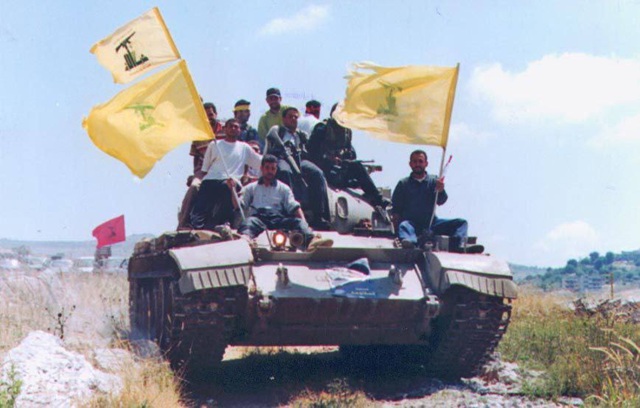
Twenty-five years ago, jubilation rippled through the hills of southern Lebanon as Israeli tanks vanished across the Blue Line, pursued not by bullets but by chants of liberation. The departure of the Israeli Defence Forces on 25 May 2000, after a protracted occupation, was hailed as a defining victory for the so-called “Axis of Resistance”. Hezbollah, then still liminal in the national imagination, arrogated to itself the mantle of liberator, ascendant in prestige and cloaked in Shia martyrdom. It was a symbolic moment—one that promised sovereignty and self-assertion but delivered, in time, something altogether more sordid: the mortgaging of Lebanon’s future to regional adventurism and sectarian paralogism.
Two and a half decades hence, the euphoria has curdled into malaise. What was once a triumphant resistance has, in the eyes of many Lebanese, metamorphosed into an entrenched politico-military caste, unaccountable to state or society. And what of Lebanon, that erstwhile jewel of the Mediterranean? Today, it is a carcass animated only by memory—of cosmopolitanism, intellectual vitality, economic ambition. All supplanted now by subsistence, cynicism, and sectarian entropy. One need not search the ruins of Beirut long to find the remnants of squandered promise.
The irony is grotesque: a liberation movement that bequeathed a new kind of occupation, not by foreign boots but by domestic impunity and ideological hegemony. Hezbollah, empowered by its 2000 victory, burgeoned into an extraterritorial apparatus, beholden less to the Lebanese state than to the ideological and logistical prerogatives of Tehran. Its entanglement in Syria, its meddling in Iraq and Yemen, and its de facto veto power over Lebanese statecraft have transmogrified it from resistance to regime—part of a regional consortium of non-state actors who wield guns more fluently than governance.
It is not Hezbollah alone, of course, that bears responsibility for Lebanon’s cataclysm. The entire edifice of post-Taif Lebanon—a grotesque simulacrum of democracy, partitioned along confessional lines—was an exercise in institutionalised dysfunction. The warlords of yesteryear exchanged fatigues for suits but retained the same atavistic loyalties. Michel Aoun, Nabih Berri, Walid Jumblatt, Saad Hariri: names less of leadership than of dynastic repetition. Together, they presided over the collapse of the Lebanese lira, the implosion of its banking sector, and the detonation of its capital.
As the late Samir Kassir once lamented, “Lebanon is a message.” But today, the message is one of warning, not hope.
The people have not merely been failed—they have been abandoned, bartered, betrayed. In the midst of economic ruination, with poverty surpassing 80% in some districts and youth unemployment at apocalyptic levels, the political elite continues its danse macabre. Parliament, ossified and recalcitrant, has failed to elect a president for over a year. The state functions, if at all, through the grudging inertia of interim mandates and foreign largesse. Schools have shuttered. Hospitals ration electricity. Waste festers on streets where once poets and philosophers walked.
Meanwhile, in Dahiyeh and Baalbek, young men die not for Lebanon but for metaphysical frontiers drawn in Quds and Quneitra. The latest escalation along the southern border has seen Hezbollah once again invoke its “resistance” mandate, ostensibly in solidarity with Gaza. But many Lebanese ask: solidarity with whom, and at whose cost? Hundreds of thousands have fled the south. Farmers cannot access their lands. Towns lie abandoned. And for what? To advance an Iranian strategy of “multi-front attrition”? To remind Tel Aviv that Hezbollah still possesses rockets and resolve?
There is a sinister continuity here. For all their sectarian rivalries, Lebanon’s political and religious elites are united by one unwavering conviction: that the people exist to serve the faction, not the reverse. The Maronite Patriarchate, the Grand Mufti, Hezbollah’s clerical echelons—each speaks the language of moral guardianship but acts with the cynicism of entrenched power. The August 4, 2020 port explosion, that grotesque emblem of elite negligence, has yielded no accountability. Not a single minister has faced trial. Truth, in Lebanon, is perpetually suspended in the amber of “national unity.”
The recent targeted assassinations of Hezbollah commanders by Israel—many via precisely timed strikes following intercepted communications, including old-school pager signals—have exposed the group’s vulnerabilities. Once seen as an invincible militia capable of disarming the myth of Israeli military supremacy, Hezbollah is now bleeding slowly under a shadow war it cannot openly acknowledge nor decisively retaliate against. The losses are cumulative, not just in bodies but in credibility.
And yet, its rhetoric remains undaunted. “Any Israeli misstep will be met with devastation,” late-Nasrallah, who was killed by Israel in September last year, intoned in an address. But the ground realities suggest otherwise. The group has neither launched a full-scale offensive nor stopped the incremental erosion of its strategic depth. Perhaps it cannot. Perhaps it dare not. The very impunity it enjoyed for decades may now be the ballast dragging it into strategic irrelevance.
For ordinary Lebanese, this powerplay is neither romantic nor ideological—it is existential. They face not geopolitics but hunger, not resistance but rot. Their banks absconded with their savings; their leaders absconded with their future. The streets once vibrated with revolution—October 2019, that brief efflorescence of civic awakening—but have since fallen into an exhausted silence. Even hope seems in recession.
One might ask: what is liberation when the liberated become captives of their own liberators? What is resistance when its logic becomes indistinguishable from domination? When the supposed custodians of sovereignty answer not to Beirut but to Qom or Riyadh or Washington?
George Orwell once wrote, “In a time of deceit, telling the truth is a revolutionary act.” In Lebanon today, even remembering the truth is subversive. That the resistance once promised dignity. That the republic once promised equality. That the revolution once promised change. All these promises are now ruins—much like the nation that held them.
And so, as Lebanon marks 25 years since its so-called liberation, it is not a moment of celebration but of sorrow. Not for the defeat of an enemy, but for the defeat of a dream. The dream of a Lebanon that was free not merely from occupation, but from the more insidious tyrannies of sect, of silence, of servility.
In the end, it was not just Israel that occupied Lebanon. It was ambition without vision, resistance without restraint, politics without ethics, and religion without grace.
And these, unlike foreign armies, do not withdraw.