Tensions between China and the United States have flared once again, as Beijing accused Washington of “seriously violating” a recently agreed trade truce and warned of strong retaliatory measures to defend its economic and strategic interests.
As reported by the Financial Times, the dispute centers on a fragile agreement struck in Geneva in early May, in which both countries pledged to scale back tit-for-tat tariffs that had surged to as high as 145%. The May 12 deal was widely viewed as a tentative step toward stabilizing deteriorating trade relations — but optimism has quickly faded.
On Friday, U.S. President Donald Trump accused China of “totally violating” the agreement, citing frustration over the slow resumption of rare earth mineral exports to American industries. These critical materials, essential for everything from electronics and electric vehicles to defense systems, have been a key pressure point in the broader U.S.–China rivalry.
In a sharply worded statement released Monday, China’s commerce ministry claimed that the U.S. had introduced “a series of discriminatory and restrictive measures” in recent weeks that undermined the Geneva accord and infringed on China’s “legitimate rights and interests.”
“If the U.S. insists on going its own way and continues to harm China’s interests, China will continue to take strong and resolute measures to safeguard its legitimate rights,” the ministry warned.
Chinese officials pointed to several recent U.S. actions as evidence of bad faith: increased global warnings against using Huawei semiconductors, new restrictions on the sale of advanced chip design software to Chinese companies, and the cancellation of visas for Chinese students. These steps, Beijing argued, violated the spirit of cooperation agreed to in Geneva.
U.S. officials, meanwhile, maintain that China has failed to uphold its end of the deal by keeping its rare earth export restrictions in place. Although some shipments have been approved since the truce, the pace remains well below expectations, raising alarms across U.S. manufacturing sectors that rely on steady supplies of these strategic minerals.
Industry insiders warn that work stoppages could soon ripple across the American auto and electronics supply chains if the issue is not resolved swiftly.
“The U.S. has unilaterally provoked new trade frictions,” China’s commerce ministry declared. “Instead of reflecting on its own actions, it has groundlessly accused China of breaching the consensus.”
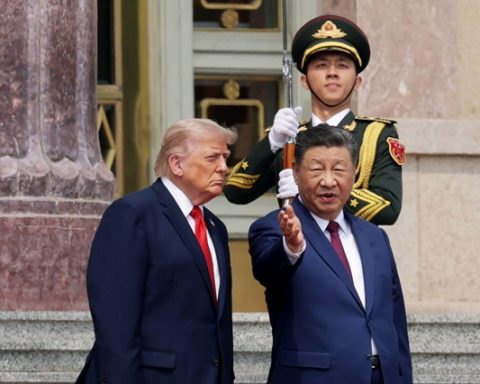
Despite the rising tensions, President Trump indicated he still hopes to resolve the standoff through direct talks with Chinese President Xi Jinping — an offer he has repeated in recent months, but which has yet to materialize into a formal dialogue.
The renewed rift underscores the fragile nature of U.S.–China trade diplomacy, especially with both sides increasingly weaponizing critical technologies and raw materials in their broader strategic rivalry. Analysts warn that unless significant progress is made soon, the breakdown of the Geneva truce could lead to a new cycle of punitive tariffs and export controls — further destabilizing the already strained global trade environment.