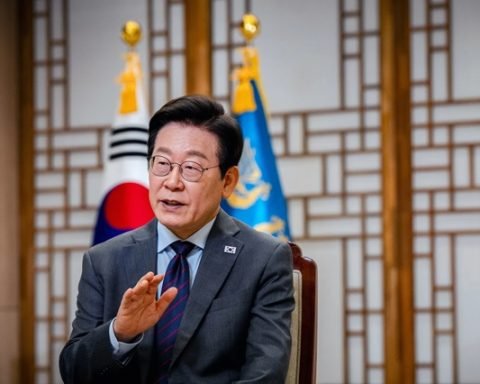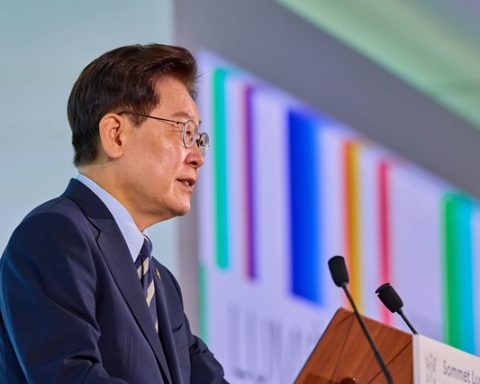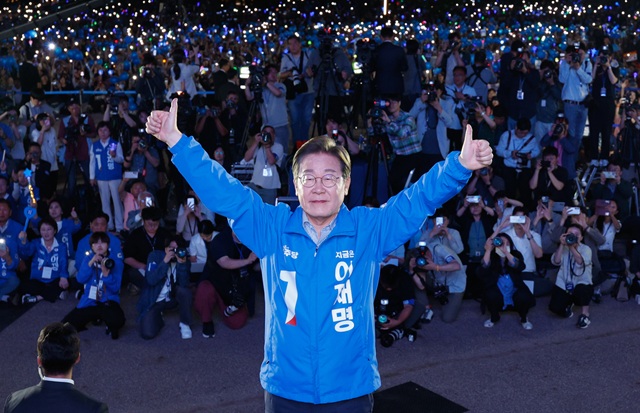
Lee Jae-myung of the Democratic Party of Korea is set to become South Korea’s next president, according to exit polls and partial vote counts reported by the Korean Herald. His victory brings an end to six months of political chaos and fills the leadership vacuum left by the impeachment and removal of former President Yoon Suk Yeol.
The early election—triggered by Yoon’s failed attempt to invoke emergency martial law and his subsequent ousting—marks only the second of its kind in South Korea’s democratic history. Lee’s win not only shifts power from the conservative People Power Party to the liberal Democratic Party, but also symbolizes a broader return to constitutional order amid national uncertainty.
Exit polls conducted by the Korea Election Pool showed Lee securing 51.7 percent of the vote, defeating conservative rival Kim Moon-soo, who garnered 39.3 percent. Lee Jun-seok of the minor New Reform Party followed with 7.7 percent, failing to meet the 10 percent threshold required for partial reimbursement of campaign expenses.
Speaking shortly after broadcasters declared his victory likely, Lee said, “I express my respect for the people’s great decision,” and pledged to uphold the trust placed in him. This win comes on Lee’s third presidential attempt—after a failed primary run in 2017 and a razor-thin loss to Yoon in 2022.
Lee’s projected majority makes him only the second candidate since South Korea’s democratization in 1987 to win over 50 percent of the vote—joining Park Geun-hye in 2012. By around 12:35 a.m. Wednesday, with roughly 63 percent of votes counted, Lee had amassed more than 10.7 million votes, leading Kim by nearly six percentage points.
The Korean Herald notes that the June 3 election was not just a procedural necessity but a pivotal moment in South Korea’s democratic trajectory. The record-high voter turnout of 79.4 percent—surpassing that of the 2022 election—demonstrates the electorate’s heightened engagement during this turbulent period.
The new president will take office immediately upon certification of the results, bypassing the usual 60-day transition period. Full presidential powers, including military command, will be transferred at once. Lee is expected to swiftly appoint key figures, including the prime minister and senior aides, to begin shaping his administration.
Lee’s ascent means a consolidated liberal government, with the Democratic Party also holding a majority in the National Assembly—171 of 300 seats. This marks a sharp contrast to the divided government under Yoon and positions the new administration to wield significant legislative power.
Yet Lee’s presidency begins under legal clouds. He faces five ongoing criminal trials, including a retrial for alleged election law violations scheduled for June 18. The Democratic Party is already moving to pass bills that could suspend or limit these proceedings, prompting debate over legal immunity for sitting presidents.
As the country confronts deepening economic stagnation, demographic challenges, and rising global uncertainty—including from renewed U.S. trade protectionism and evolving security dynamics in the Indo-Pacific—Lee inherits a formidable to-do list.
Nonetheless, his election is widely seen as a stabilizing force in a democracy tested by crisis. As Korean Herald underscores, this election wasn’t just about choosing a new leader—it was a referendum on the country’s resilience, unity, and democratic integrity.