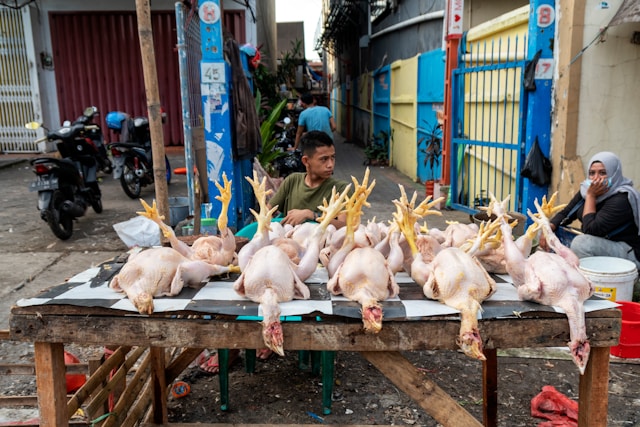
In Jakarta’s Jatinegara market, cages are stacked three metres high, holding bats, raccoon dogs, monkeys, and birds — all crammed together and sold as pets or food. The air is thick with the stink of urine, faeces, and fear. These scenes are not unique to Indonesia. They’re part of a vast, mostly unregulated global wildlife trade worth hundreds of billions of dollars.
Experts have long warned that such markets are hotspots for zoonotic diseases — infections that jump from animals to humans. The risk is amplified in massive cities like Jakarta, which are densely populated and globally connected. James Wood, a veterinary epidemiologist at the University of Cambridge, told Nature that these markets remain “the best way of transmitting diseases.”
Even after COVID-19 — which many scientists believe began or escalated at a live animal market in Wuhan — the wildlife trade continues with little effective oversight. China banned such trade in 2020, but it quickly went underground. “We are back to business as usual,” said conservation biologist Vincent Nijman in the Nature report, referring to the ongoing daily trafficking of millions of animals.
The trade acts like a massive natural laboratory where viruses mix, mutate, and spread — often ending up in cities. Andrew Cunningham, a wildlife epidemiologist, called it “the scariest thing we are doing.” Before the pandemic, efforts focused on identifying new viruses in the wild. But as Nature reports, scientists now recognize the need to study the risky places where humans and wildlife interact — markets, trade routes, and hunting networks.
One such frontline is Cuc Phuong National Park in Vietnam, where rescued pangolins — heavily trafficked for their meat and scales — are tested for disease. Researchers have found that some carry coronaviruses closely related to those that cause COVID-19 and MERS. Although not the source of the pandemic, pangolins highlight how disease risks increase along the supply chain. Studies cited in Nature show that animals tested in the wild often have no viruses, while those closer to market often do.
Across Southeast Asia and Africa, scientists are tracing how viruses move from forests to markets to people. But studying this trade is dangerous and politically sensitive. Traders often hide sick animals or sell them in distant markets, fearing punishment. Researchers told Nature they must build trust just to collect basic data. In many places, fear of blame or economic harm leads governments to block or hide important findings.
New technologies — from CRISPR-based diagnostics to genetic sequencing tools — are helping scientists identify unknown viruses more safely. But funding is drying up. Programs aimed at stopping the next spillover have been cut or cancelled, especially in the U.S., leaving a dangerous gap in global disease surveillance. “Half the sky has fallen,” one ecologist told Nature, referring to the collapse of monitoring efforts and the loss of international cooperation.
Despite knowing what needs to be done — better hygiene in markets, protective gear for workers, bans on high-risk species — political will is fading. Meanwhile, the trade in wild animals continues, often in secret, and the world edges closer to the next spillover. As Nature makes clear, this isn’t just a wildlife issue. It’s a human one. And the clock is still ticking.