In a landmark moment for British intelligence, MI6 has named Blaise Metreweli as its first-ever female chief, signaling a seismic shift in a historically male-dominated institution. The announcement, reported by The Independent UK, marks a turning point for the Secret Intelligence Service, long known for its secrecy—and its sidelining of female operatives.
Metreweli, 47, is a seasoned intelligence officer who joined MI6 in 1999. Known by her codename “Q” in her current role as head of technology, she has spent decades in operational roles across the Middle East and Europe. Her promotion comes as Richard Moore steps down, ushering in a new era where women are not only part of the agency—but are now leading it.
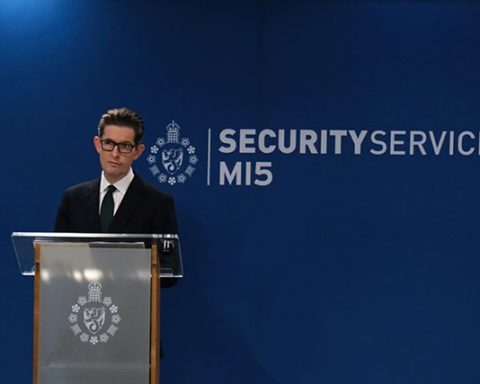
While this is a first at MI6, MI5 has had two female directors in the past—Dame Stella Rimington and Eliza Manningham-Buller—pioneers who helped push for greater transparency and inclusion. Yet, as journalist and author Charlotte Philby writes in The Independent, the representation of women in espionage remains long overdue.
Philby—granddaughter of infamous double agent Kim Philby—offers a personal and poignant look into this evolution. Recounting her travels to Moscow and reflections on her grandfather’s complicated legacy, she notes the glaring absence of women in spy narratives. “Where were all the women?” she asks, recalling the male-centric portrayals of Cold War espionage in books, plays, and films.
Philby’s new book, The Secret Lives of Women Spies, aims to change that. It chronicles the untold stories of female operatives from the 19th century to today, from Harriet Tubman’s espionage during the American Civil War to French Resistance fighter Josephine Baker and Soviet spymaster Ursula Kuczynski, also known as Agent Sonya. These women, Philby argues, were not exceptions—they were central to the spy game, even if history has failed to recognize them.
As Metreweli steps into her new role, she joins an increasingly female leadership team—three of the top four positions at MI6 are now held by women. In a 2022 interview with the Financial Times, the agency’s female director of operations noted that being a woman is often a strategic advantage. “Women tend to be underestimated and therefore perceived as less threatening,” she said. It’s a subtle power that many female spies have long wielded to their advantage.
The rise of women in British intelligence has been gradual. MI5’s Dame Stella Rimington recalled that in 1969, women were limited to support roles. It wasn’t until the late 1970s that women began to be regularly recruited as intelligence officers. And even then, their stories remained largely hidden from the public eye—until now.
Perhaps the most profound takeaway from Philby’s work, as published in The Independent, is that the exclusion of women from historical narratives is not an oversight, but a reflection of who holds the pen. Fortunately, as researchers and authors like Shrabani Basu, Clare Mulley, and Dr. Helen Fry help rewrite the record, women in espionage are finally being brought out of the shadows.
Blaise Metreweli’s appointment is more than a first—it’s a long-overdue acknowledgment of the essential role women have always played in the secret world of intelligence. And as Philby’s book reminds us, it’s about time they were recognized not just for being spies—but for being some of the best.