Behind the polished headlines and orchestrated political theatrics, a different Balochistan exists—one that the mainstream media refuses to show. For years, we’ve been fed a carefully curated narrative: a land of “development,” “patriotic fervour,” and “national unity.” But scratch beneath the surface, and the cracks are undeniable.
Are its politicians genuine representatives, or scripted actors in an establishment-sponsored drama?
Is the media’s portrayal of progress a mirage, masking systemic neglect? And most importantly—who benefits from this manufactured reality?
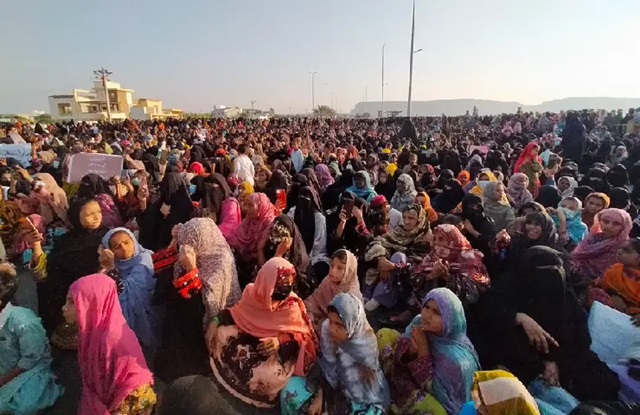
The truth is far from the fairy tale sold to the public. While TV screens show flower-waving crowds greeting officials, schools crumble without electricity, students protest for basic education, and newspapers are silenced for daring to report the truth.
So we must ask: Why does Balochistan have only two allowed narratives—blind loyalty or outright rebellion? Why are universities underfunded, journalists harassed, and protests labelled as “foreign conspiracies”?
The real Balochistan isn’t found in government press releases. It’s in the silenced protests, the shuttered newspapers. The same few establishment-backed politicians or a handful of nationalist party leaders are always highlighted.
Concerns about media representation in Balochistan reflect well-documented patterns of press restrictions and government control over information flow. Recent reports from international press freedom organisations confirm systematic censorship efforts targeting Balochistan’s media.
The Daily Intikhab Hub, the most authentic newspaper with the largest readership in the province, is now facing serious difficulties. Increasing financial pressure—especially the halting of government advertisements—has strained its operations. When Editor-in-Chief Anwar Sajidi refused government requests to remove coverage of Baloch demonstrations, authorities withdrew government ads from the paper. This tactic exploits the heavy dependence of Pakistani media outlets on government advertising revenue, creating economic vulnerability that is weaponised against critical reporting.
The controversy over shifting advertisements to “B-paper” publications represents another mechanism through which the government controls media narratives—rewarding compliant outlets while punishing independent journalism.
Secondly, according to the Economic Survey 2025, Balochistan’s educational infrastructure reveals catastrophic deficiencies:
- 79% of government schools lack electricity,
- 71% have no access to drinking water,
- 52% operate without boundary walls, and
- 51% lack toilet facilities.
These statistics position Balochistan as the most educationally deprived province in Pakistan, with conditions far worse than Punjab, where 100% of schools have drinking water and 99% have electricity.
The scale of educational exclusion is staggering. Over 2.8 million children in Balochistan are out of school—approximately 69% of school-aged children. This includes 78% of girls and 63% of boys, with rural female literacy rates as low as 2%. The province has over 7,000 single-room, single-teacher schools serving multiple grades—without basic facilities or security.
Higher education institutions reveal similar patterns of neglect. The University of Balochistan faces a severe financial crisis.
On 16 June, the Federation of All Pakistan Universities Academic Staff Association (FAPUASA) Balochistan Chapter and the Academic Staff Association of the University of Balochistan observed a “Black Day” in protest. Faculty members and staff wore black armbands while continuing classes and office work.
Bolan Medical College, once the premier educational institution in Balochistan, has been suffering from administrative incompetence for months. A minor scuffle among students was used as an excuse to close the college and hostels indefinitely overnight. Under the pretext of “renovations,” the institution remained shut for months. A staged ceremony with provincial ministers was held—completely detached from reality.
Millions have been embezzled in the name of “beautification,” while students are deprived of basic educational facilities. The closure of hostels and the college has resulted in the loss of an entire academic year. Bolan Medical College has been turned into a prison under the guise of “security.”
The main hostel has been closed for over a year, forcing hundreds of students into private hostels. Medical education requires access to hostels and libraries—yet both remain shut. First-year classes for merit-based admissions have not even started.
The statistics on school infrastructure, the documented cases of media censorship, and the closure of educational institutions represent policy failures that no amount of narrative management can obscure.
Addressing these concrete problems would do more to counter separatist narratives than any amount of controlled media coverage or forced displays of patriotism.