The UN Population Fund’s (UNFPA) latest 2025 report, “The Real Fertility Crisis,” points to a bigger problem behind South Korea’s extremely low birth rate. A total of 14,000 adults in 14 countries representing more than 37% (approximately) of the global population were surveyed. According to the UNFPA and YouGov survey cited in the report, 58% of respondents from Republic of Korea, cited financial limitations, as a major factor preventing them from having the number of children they want, the highest among all surveyed countries. Other significant obstacles include high housing costs (31%), lack of affordable childcare (28%) and job insecurity (26%). These figures underscore why many Koreans are delaying or forgoing parenthood altogether. The survey report clearly indicates that structural and economic barriers rather than individual choice play a greater role in hindering family formation.
Despite government attempts to reverse the trend, including cash subsidies and fertility promotion campaigns, the report finds that these measures often fall short or backfire when they fail to address the deeper issues of gender inequality, work-life imbalance, and insufficient public services. South Korea’s strong gender norms further complicate reproductive choices. Women remain primarily responsible for domestic duties, and paternity leave uptake is low despite legal provisions. For example, in South Korea, parents are legally permitted to take up to one year of leave within the first eight years of their child’s life. However, data from the 2022 Korean Statistics Report reveals a significant disparity: while 70% of new mothers utilized at least part of their leave entitlement, only 7% of new fathers did the same. This highlights the persistent traditional expectations that place a disproportionate burden on women to raise children. Incidentally, a staggering 19% (highest among the surveyed countries) of the surveyed Koreans answered insufficient involvement of partner in housework or childcare as a likely factor to have fewer children. In addition, the highly competitive school system in Korea has also been linked to delayed workforce entry, poorer mental health and life satisfaction among adolescents, growing inequality of opportunity, and lower fertility rates.
The report emphasizes the importance of building trust through stable, rights-based policies. It warns against treating fertility rates like a faucet that can be turned on or off at will. Many countries now attempting to raise fertility levels had, just a few decades ago, implemented policies to suppress birth rates. For instance, in 1986, China, Japan, the Republic of Korea, Thailand, and Türkiye all aimed to lower their national fertility through policy interventions, viewing their birth rates as “too high.” By 2015, however, all five had reversed course and adopted pronatalist policies. Despite this shift, all these countries now have total fertility rates below two children per woman, underscoring the long-term impact of policy instability and the need for consistent, rights-focused approaches.
Korea is one of the world’s most advanced economies, yet it ranks among the lowest in terms of reproductive satisfaction, significantly below all countries average (14 countries). In contrast to the European countries (Italy, Hungary, Germany and Sweden) where more equitable caregiving roles and robust welfare systems help sustain relatively higher fertility, the rigid gender dynamics and competitive labour market suppress reproductive agency of individuals in Korea. The data on the ideal number of children according to Korean respondents shows that the majority (Male: 42%; Female: 40%) believe two children to be ideal. A smaller proportion indicated a preference for one child (Male: 8%; Female: 11%) or none at all (Male: 6%; Female: 9%). These figures suggest that most women in Korea do desire to have children, countering the biased claims by some conservative voices that women are unwilling to become mothers. Although, the survey highlights that both men and women face major obstacles in achieving their fertility goals, the public discourse often blames women alone for declining marriage and fertility rates. Media and policymakers continue to frame fertility decline as a matter of female choice. For instance, global headlines reinforce this bias, suggesting women are rejecting motherhood, marriage, or both. These narratives overlook the structural and societal factors influencing personal decisions. Efforts to shape fertility through policy or pressure are frequently met with resistance.
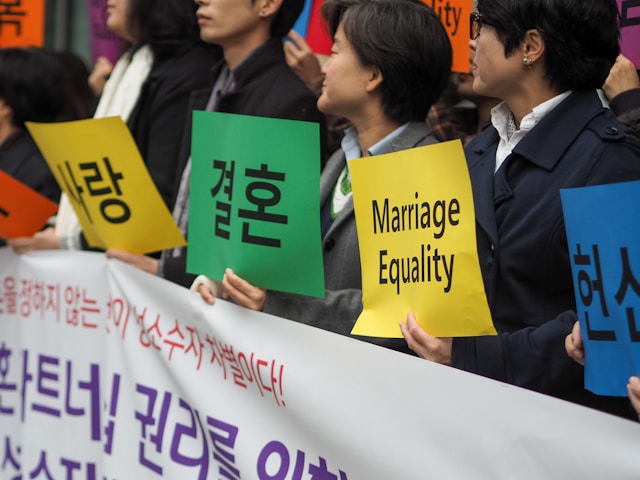
In response, individuals and groups have created movements to assert control over their reproductive choices. South Korea’s real issue isn’t just how few babies are being born it is about people being unable to have the families they desire. The UNFPA’s 2025 report rightly argues that governments should stop fixating on demographic numbers and instead ensure true reproductive freedom. This means investing in affordable childcare, housing, education, and flexible work policies that support not just traditional families but also single parents, young adults, and marginalized groups.