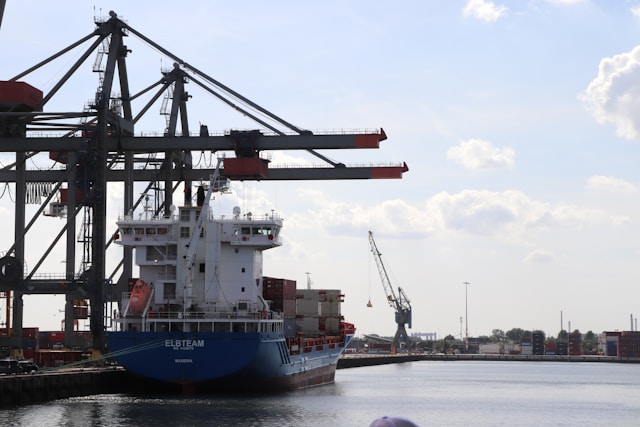
Europe’s busiest seaport, the Port of Rotterdam, is taking significant steps to prepare for the possibility of a war with Russia, including reserving dock space for NATO military supply ships and planning amphibious exercises, as tensions continue to rise across the continent. The preparations come amid growing concern that Russia could target NATO members by the end of the decade, according to Financial Times reporting.
Port of Rotterdam Authority CEO Boudewijn Siemons confirmed that the port—already a vital logistics hub—has begun coordinating with neighboring Port of Antwerp to ensure both can handle the influx of military cargo if needed. “Not every terminal is fit for handling military cargo,” Siemons noted, adding that the two ports now cooperate more than they compete, especially when it comes to strategic readiness.
These measures are part of broader European efforts to ramp up defense preparedness. The European Union is working on a massive €800 billion rearmament plan to improve defense self-sufficiency and reduce reliance on external powers like the United States. The Dutch government, alongside NATO allies, has pledged to boost defense spending to 5% of GDP.
In May, the Netherlands’ defense ministry formally designated space at Rotterdam for hosting NATO military vessels. Siemons said that under this plan, multiple ships will dock at the port for weeks at a time, several times per year. Rotterdam’s container terminal is currently the only location where ammunition can be safely transferred between ships.
Additionally, the port is expected to host amphibious military drills multiple times annually. While the port did handle a spike in military cargo during the 2003 Gulf War, and played a role during the Cold War, it has never before had a dedicated quay for such purposes.
Antwerp, Europe’s second-largest port, already serves as a logistics hub for U.S. military operations in Europe. The growing partnership between Rotterdam and Antwerp marks a shift in strategic alignment within Europe, emphasizing cooperation over competition in areas vital to continental security.
The urgency of these efforts has been heightened by recent warnings from NATO Secretary-General Mark Rutte, who cautioned in June that Russia could attack a NATO country by 2030. The invasion of Ukraine, now in its fourth year, continues to drive much of Europe’s new security calculus.
The Port of Rotterdam, stretching 42 kilometers along the river Meuse, handles around 436 million tonnes of freight annually and sees nearly 120,000 ship movements. However, it has lost around 8% of trade—primarily oil—due to EU sanctions on Russian exports.
Siemons emphasized that port authorities are also collaborating to improve Europe’s overall resilience. “Our teams are working more and more closely together on a number of topics, including on resilience,” he said.
He highlighted the need for Europe to stockpile more than just oil—suggesting the EU should expand its strategic reserves to include critical materials like copper, lithium, graphite, pharmaceuticals, and even food and water. Drawing a comparison to the EU’s 90-day oil reserve mandate, established after the 1973 oil crisis, he argued for a similar system across a wider array of essential goods.
“The world is becoming more and more volatile,” Siemons said. “We should look at a wider spectrum of strategic resilience… and how resilient are you as a society?”
The EU is expected to unveil a new “stockpiling strategy” this week that will address exactly these concerns, covering key categories including medical supplies, raw materials, energy infrastructure, shelter, and essential food and water supplies.
Rotterdam’s strategic location and robust distribution network make it an ideal site for building and maintaining such reserves. The port already stores some of the Netherlands’ strategic oil supply and could be instrumental in safeguarding Europe’s supply chains in times of conflict or crisis.