In one of the largest mass deportations in recent history, Iran has begun forcibly expelling millions of undocumented Afghan migrants, with over 1.1 million deported this year alone — half of them in just the past five weeks.
According to a detailed report by The Times UK, the Iranian government has vowed to remove all undocumented Afghan nationals from the country, a number estimated at around four million. On some days, more than 40,000 Afghans have been pushed across the border in a matter of hours, with scenes of chaos unfolding in extreme summer heat exceeding 50°C.
For many Afghan refugees, including women, children, and longtime residents of Iran, the deportations are not just an upheaval — they are a return to persecution and life-threatening danger under Taliban rule.
Bamin Bahmani, a 29-year-old former teacher and Kabul University graduate, is among those living in fear. She fled Afghanistan after being arrested for secretly teaching girls and protesting against the Taliban. After finally reuniting with her husband in Iran last December, she now faces deportation. “We dare not go out,” she told The Times. “We have nowhere to go in Afghanistan. The Taliban will arrest us.”
The crackdown intensified following Iran’s recent conflict with Israel, during which Iranian authorities accused Afghan nationals of espionage. State media aired a coerced confession from an alleged Afghan spy working for Israel, stoking further suspicion and hostility.
Fatemeh Mohajerani, an Iranian government spokeswoman, defended the expulsions, stating: “National security is a priority, and naturally illegal nationals must return.”
The humanitarian fallout has been staggering. The International Organization for Migration (IOM) reported that between June 1 and July 9 alone, more than 546,000 undocumented Afghans were returned. Aid groups warn they are reaching only 10 percent of those in need due to the sheer volume of displaced families.
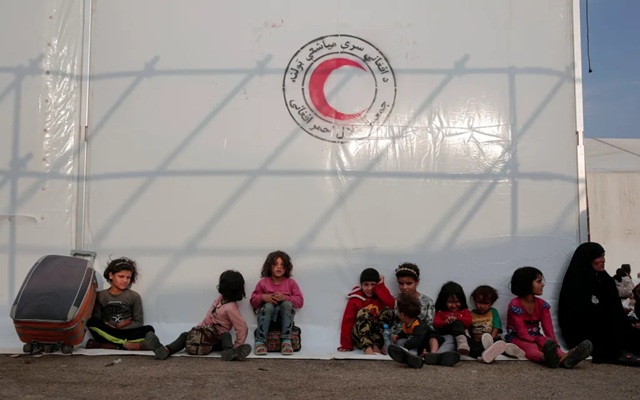
Afghans expelled from Iran often arrive in border provinces like Herat with no shelter, food, or protection. Many have lived in Iran for decades, some since the Soviet invasion of Afghanistan in the 1980s. They have lost homes, businesses, and any sense of stability — only to face Taliban reprisals upon return.
The forced returns extend beyond Iran. Pakistan, also home to around four million Afghans, is implementing a parallel expulsion campaign. After expelling nearly a million Afghans last year, the Pakistani government has deported another 323,581 since April 2025, according to the IOM. Many of those targeted fled to Pakistan after the Taliban regained control in 2021.
Among those hiding in fear is Yasemine “Jellybean” Khodadi, an 18-year-old Afghan refugee and guitarist with the Miraculous Love Kids, a band formed to give hope to girls through music. Now in hiding with her family in Islamabad, she said: “If we go back to Afghanistan, our lives will be terrible. If we show our faces, immediately we will die.”
The band, created by American musician Lanny Cordola, has gained international attention, including support from music legends like Brian Wilson and Peter Gabriel. Still, despite global awareness, the girls remain at risk, their appeals for asylum trapped in bureaucratic limbo.
The UN Refugee Agency estimates that over 1.4 million Afghans have been either returned or forced to return from Iran and Pakistan so far this year.
“This is unconscionable,” said Richard Bennett, the UN’s special rapporteur on human rights in Afghanistan. “Forcing Afghans back to a country experiencing a humanitarian crisis, which systematically persecutes women and girls and where there is a very real risk of violence and reprisals … is unconscionable. Other governments should not look away — they have a responsibility to protect.”
As deportations escalate and international agencies struggle to respond, countless Afghans now face a future of uncertainty, fear, and statelessness — driven from countries they once called home, and returned to a regime that considers them enemies.