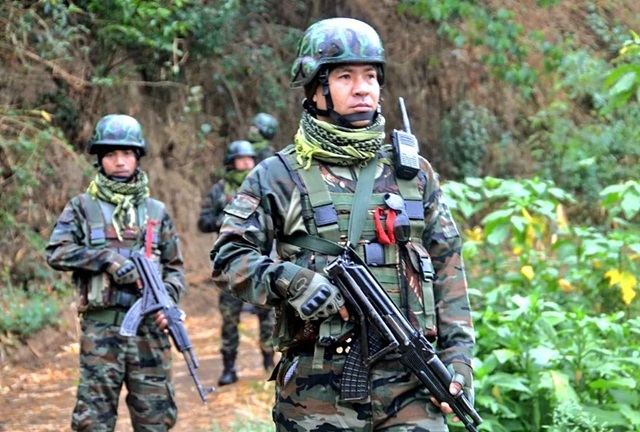
The Indian Army has launched a drone strike on militant camps belonging to the United Liberation Front of Asom – Independent (ULFA-I) in Myanmar, dealing what is believed to be one of the most significant blows to northeast India’s insurgent networks in recent years. The strike, conducted in the early hours of July 13, reportedly targeted four separate ULFA-I installations located just across the international border.
Preliminary reports suggest multiple casualties among the militants, including what could be the death of ULFA-I’s top military commander, Lt Gen Nayan Asom. While official confirmation from Indian authorities is pending, sources familiar with the operation describe the strike as “surgical and highly effective,” using precision drone technology to minimize collateral damage while dismantling key rebel infrastructure.
ULFA-I, a banned insurgent outfit, has long operated from Myanmar’s remote jungles, beyond the reach of Indian law enforcement. The group is a hardline splinter faction of the original United Liberation Front of Asom (ULFA), formed in 1979 with the objective of carving out a sovereign Assam, independent from India. While the main ULFA body entered peace talks with New Delhi in recent years, ULFA-I under the leadership of Paresh Baruah has continued armed struggle and retained bases in Myanmar’s Sagaing and Kachin regions.
This operation signals a decisive shift in India’s counter-insurgency doctrine in the northeast, which has traditionally avoided deep incursions into foreign soil. While past operations have been largely defensive or confined to border management, this strike mirrors the Indian Army’s evolving strategy of taking pre-emptive action to neutralize threats at their source—often deep inside hostile or ungoverned foreign territories.
It also reflects tightening regional security cooperation, as India’s eastern borderlands grow increasingly entangled with transnational insurgency dynamics and illicit networks stretching from Myanmar to Bangladesh and beyond. For years, ULFA-I and similar groups have benefited from safe havens in Myanmar, often shielded by difficult terrain and complex political realities within the country. This strike sends a clear message that India’s military is now willing to act unilaterally if necessary to protect its national security.
The fallout of the operation remains to be seen, both in terms of ULFA-I’s operational capability and the broader geopolitical impact on India-Myanmar relations. But for now, the Indian Army’s July 13 strike stands as a significant milestone in the decades-long effort to dismantle militancy in the northeast and restore lasting peace to Assam.