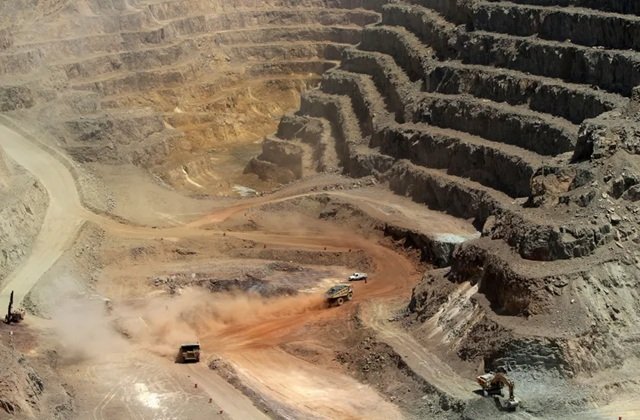
At least 72 workers have been killed in an airstrike on a gold mine near the disputed border between Sudan and Egypt, according to Sudanese human rights activists. The organisation Emergency Lawyers said the Egyptian air force carried out the attack, but the reported death toll and responsibility for the strike could not immediately be independently verified. Egypt had issued no statement on the incident.
Two survivors described their escape from the mine to Agence France-Presse (AFP), recounting an attack on Saturday evening that sent workers fleeing the remote site. One worker said a fighter aircraft fired on the mine five times.
“Many people were killed,” the survivor said. “Fearing another attack, we ran up the mountain.”
The full scale of the casualties remained unclear, partly because thousands of people were reportedly working at the isolated location when the strike occurred. One survivor said workers scattered in different directions after the attack, with some heading towards the Al-Ansary gold market and others fleeing elsewhere.
“As a result, nobody knows exactly how many were killed,” the survivor said.
Both witnesses told AFP that they had seen bodies while escaping. Further fatalities are feared, with reports suggesting that additional victims may be buried beneath the rubble of the mine. The reported death toll of at least 72 therefore remains subject to independent verification.
The incident follows an earlier attack in June on an unlicensed gold mine in the Jabal al-Uqaydat region near the Egyptian border, in which 23 workers were killed. That strike was also attributed to Egypt.
At the time, the Egyptian military said it had conducted a “large-scale operation” against illegal gold mining on Egyptian territory. However, its statement did not refer to an attack on a mine. The circumstances of the earlier incident and the latest reported strike have renewed attention on the risks facing workers involved in gold extraction in the border region.
The border between Sudan and Egypt is disputed, with both countries claiming the resource-rich Halaib Triangle. The wider area has strategic significance because of its mineral resources and the competing territorial claims.
Egypt is also an important ally of the Sudanese army, led by military ruler Abdel Fattah Burhan. The army has been fighting the Rapid Support Forces (RSF), a paramilitary force led by Burhan’s former deputy, Mohammed Hamdan Daglo, for more than three years.
The conflict has devastated Sudan, Africa’s third-largest country, with more than 200,000 people reported killed. The fighting between the Sudanese army and the RSF forms the wider context of the continuing instability in the country, although the reported attack on the gold mine was attributed by Emergency Lawyers to the Egyptian air force.
The latest strike’s precise location, the circumstances surrounding the reported air operation and the final number of casualties had not been independently established. Egyptian authorities had not publicly commented on the allegations at the time of the report.