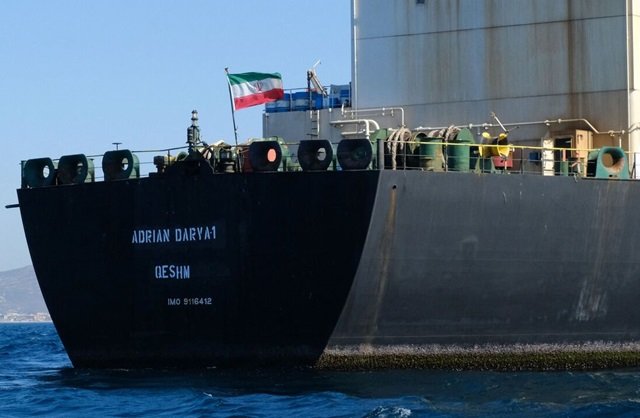
The National Shoora Council (NSC) has urged Sri Lankan President Anura Kumara Dissanayake to provide immediate humanitarian assistance to Iranian vessels stranded south of Galle within Sri Lanka’s Exclusive Economic Zone (EEZ), warning that civilian seafarers and workers aboard the ships are reportedly facing acute shortages of drinking water, food and medicine.
In an urgent letter sent to the President on Friday (9), the council called for official search-and-rescue operations, medical assistance for those in need and the delivery of essential supplies, arguing that Sri Lanka’s territorial waters should not be treated as a limit on humanitarian obligations. The letter was signed by NSC President M M Zuhair, PC, and General Secretary Rashid M Imthiyaz, Attorney-at-Law, and copied to the Minister of Foreign Affairs, the Human Rights Commission of Sri Lanka, the Secretary of Defence and the Commander of the Sri Lanka Navy.
The NSC said the vessels carried civilian seafarers and workers who were nationals of Iran, India, Bangladesh and other neighbouring countries. According to the council, the Iranian civilian vessels were unable to return to their home destination because of a continuing naval blockade and unilateral sanctions announced by US President Donald Trump. The letter asserted that these measures lacked endorsement or authority from the United Nations or the UN Security Council.
The council expressed grave concern over what it described as the position that no supplies would be provided while the vessels remained beyond Sri Lanka’s 12-nautical-mile territorial sea. It also criticised the government for allegedly making no effort to facilitate or encourage Sri Lankan shipping agents, ship chandlers and private companies to deliver basic provisions officially.
“We submit that this position is not consistent with Sri Lanka’s obligations under international law, nor with the humanitarian traditions of our nation,” the letter stated.
To support its appeal, the NSC cited several areas of international law, beginning with Sri Lanka’s obligations as a United Nations member state. It referred to repeated expressions of concern by the UN General Assembly and the UN Human Rights Council over unilateral coercive measures that obstruct access to essential goods, including food and medicine. It also cited UN Security Council Resolution 2664 (2022), which provides protections for humanitarian assistance within UN sanctions regimes, and noted that US sanctions practice exempts food and medicine.
On maritime responsibilities, the council invoked Article 98 of the UN Convention on the Law of the Sea, which applies in the EEZ through Article 58(2). It said the provisions require coastal states to maintain adequate and effective search-and-rescue services regardless of the nationality or status of people in distress or the circumstances in which they are found.
The letter also referred to Article 6 of the International Covenant on Civil and Political Rights, arguing that Sri Lanka must take reasonable measures to protect the right to life, including where lives are directly and foreseeably affected beyond its territory. On neutrality, the NSC maintained that restrictions on military or commercial support to a belligerent state did not prohibit feeding civilians. It cited the International Court of Justice judgments in Corfu Channel (1949) and Nicaragua (1986) in support of its position on humanitarian obligations and assistance.
The council further pointed to Sri Lanka’s conduct in March 2026, when the country rescued survivors of IRIS Dena in international waters and escorted IRIS Booshehr from the EEZ to harbour. It said the President had described that action as a humanitarian responsibility and argued that withholding essential supplies from civilian crews would conflict with that precedent and Article 27(15) of Sri Lanka’s Constitution.
The NSC asked the President to direct MRCC Colombo, the Sri Lanka Navy and Coast Guard, working with the Sri Lanka Red Cross Society and the International Committee of the Red Cross, to assess the crews’ needs, deliver essential supplies and evacuate sick or injured people for immediate treatment. It also called for diplomatic engagement with Iran, India, Bangladesh and relevant flag states to arrange provisioning, crew welfare and repatriation, alongside a standing policy ensuring that humanitarian relief at sea is not obstructed by unilateral measures.