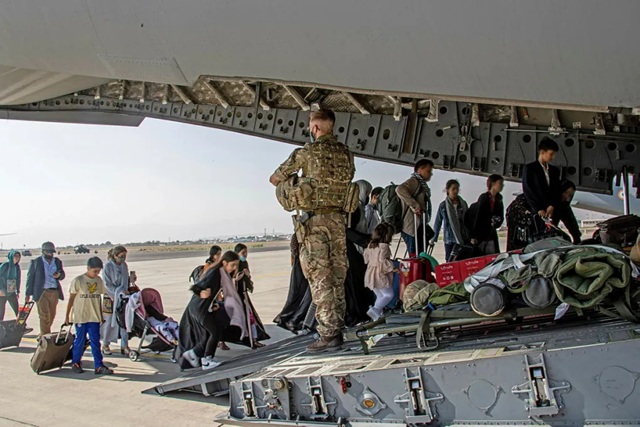
An explosive revelation, first reported by The Times UK, has rocked Westminster and reignited debate over secrecy, national security, and accountability within the UK government. Nearly 18 months after a top-secret superinjunction was issued to prevent public disclosure, the government has admitted to a catastrophic data breach involving almost 19,000 Afghans who were seeking sanctuary in Britain after the Taliban’s return to power.
The scale and secrecy of the incident have stunned both parliamentarians and the public. The original breach occurred in February 2022, when a Ministry of Defence (MoD) official mistakenly leaked sensitive information about thousands of Afghans—many of whom had worked alongside British forces. More shockingly, the leaked data also included the names of over 100 British special forces operatives, MI6 intelligence officers, and senior military figures who had vouched for those Afghans.
The previous Conservative government responded by obtaining a superinjunction, effectively gagging media outlets, including The Times UK, from publishing details of the breach. The injunction also barred opposition figures from speaking about the incident—even within private circles. Shadow Defence Secretary at the time, John Healey, was brought into a secure MoD briefing room in December 2023 and handed a brown envelope detailing the crisis. Bound by legal restrictions, he couldn’t speak a word of it—not even to his wife—until this past week.
Healey, now serving as Defence Secretary under Prime Minister Sir Keir Starmer’s Labour government, delivered a sombre statement to Parliament on Tuesday, outlining the full extent of the breach and the controversial decisions made to manage it in secret. The briefing confirmed that a secret Afghan Response Route (ARR) was quietly launched, spending an estimated £850 million to relocate several thousand affected Afghans and their families to the UK without informing Parliament or the public.
Superinjunction Fallout
The Times UK, which had previously tried to report the story, revealed that the government not only withheld the breach from the public but also from key parliamentary oversight bodies, including the Intelligence and Security Committee (ISC). The ISC, furious at being kept in the dark, is now demanding answers from MI6 and plans to summon either the outgoing intelligence chief Sir Richard Moore or his successor, Blaise Metreweli—the first female head of MI6—to explain the agency’s silence.
Commons Speaker Sir Lindsay Hoyle has ordered a separate review into how the government bypassed parliamentary conventions, calling it a potential constitutional crisis. “Gagging the Commons Speaker and Lord Speaker on a matter of such national consequence is unprecedented and demands thorough scrutiny,” a parliamentary official told The Times UK.
Culture of Secrecy
Healey’s own frustration with the MoD’s handling of Afghan evacuations began long before he was let into the inner circle of the scandal. As early as 2021, he had questioned then-defence secretary Ben Wallace over earlier, smaller breaches under the Afghan Relocations and Assistance Policy (ARAP). By 2023, Healey had identified at least four data breaches and published a “Dossier of Failure” criticising Conservative ministers for systemic mismanagement.
In one of the most damning aspects of the leak, officials failed to act with urgency even after the gravity of the situation was clear. An internal reassessment of Taliban threats to the individuals named in the leak took months to launch, further prolonging the superinjunction. A review led by retired Deputy Chief of Defence Intelligence Paul Rimmer eventually concluded that the leak had not spread as widely as feared, and that the threat level had decreased enough to allow the secret relocation programme to end.
Yet critics, including some senior former officials in No 10, accuse the Conservative-led MoD of prioritising political protection over transparency. Former defence secretary Grant Shapps—who appealed to extend the superinjunction during the 2024 general election campaign—has faced accusations of “rewriting history” in recent days.
Public and Political Consequences
The wider fallout continues to unfold. According to government data, around 24,000 Afghans and their families are expected to arrive in the UK under various schemes. Many were initially housed in army barracks under the secretive “Operation Lazurite” and later moved into military family housing. Local councils, including Bracknell Forest in Berkshire, have reported significant surges in Afghan arrivals, at times straining public services and stoking local tensions.
A year after riots in Southport following unrelated immigration-related violence, concerns about community cohesion are resurfacing. Violent protests erupted in Epping, Essex, just this week after the unrelated arrest of an asylum seeker, underscoring the fragile climate.
Despite the controversy, public opinion is somewhat sympathetic to the government’s need for secrecy. A YouGov poll published Wednesday showed that 49% supported the superinjunction as a necessary tool to protect Afghans and national security, though 20% disagreed.
Still, many are demanding accountability. No one has been dismissed over the breach, leading to renewed calls for systemic reform. Healey has since appointed a new Chief Information Officer, rolled out secure data systems within the MoD, and is advancing the largest overhaul of defence governance in 50 years—including the creation of a new strategic headquarters and the appointment of RUSI’s Malcolm Chalmers as strategic director.
The Road Ahead
As Parliament heads into summer recess, inquiries by both the Defence Select Committee and ISC are expected to intensify. Whether this scandal will prompt a full public inquiry remains uncertain, though Prime Minister Starmer’s team has not ruled it out.
For many observers, the scandal highlights not just a failure of data protection or ministerial oversight—but a deeper crisis in democratic accountability. As Luke Tryl, director of think tank More in Common, warned: “The leak is likely to deepen voters’ frustrations about the competence of government and the civil service, confirming their suspicions that they are just not up to the job.”