by Our Correspondent in Colombo
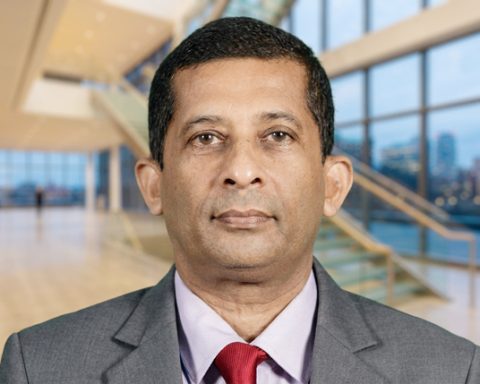
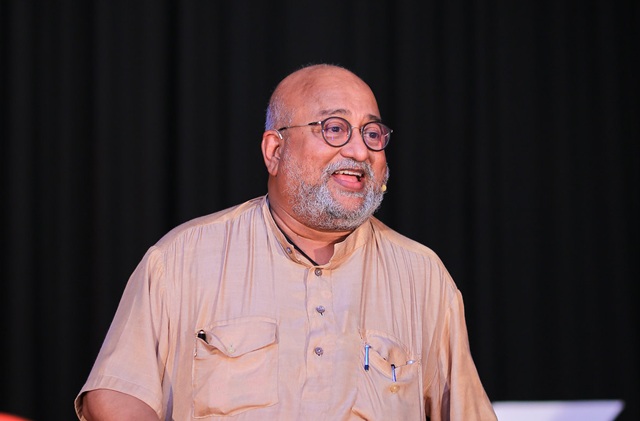
Professor Arjuna Parakrama has issued a sharp and deeply critical response to the education reforms proposed by Prime Minister Harini Amarasuriya, calling them hollow, unoriginal, and dangerously lacking in transparency. Speaking at a press conference earlier this week, the respected academic and human rights advocate accused the government of recycling the same failed policies introduced by previous administrations—despite coming to power on a platform promising radical change.
Speaking at a press conference, Professor Parakrama highlighted that the entire process has been marked by a disturbing absence of transparency. “There is no transparency in these reforms. Nothing is being done in the open, and no one knows who is making these decisions or why,” he said. “What we are seeing is not education reform—it is a backroom exercise, with no accountability to the public.”
The most damning revelation in his remarks came when he pointed out that the Prime Minister had invited private tuition masters to sit with her and help finalise the national education reform plans. “This shows the pathetic level at which decisions are being made,” he said. “Instead of consulting experienced educators, school leaders, or academics, she turns to tuition providers—those who profit from the very system these reforms claim to fix. It’s absurd, and it’s deeply troubling.”
Parakrama also questioned the government’s priorities in regulating private education. He noted that there are currently 397 registered international schools in Sri Lanka, with several others operating unofficially. Of these, only seven fall under the oversight of the Board of Investment. The rest are registered simply as companies, free to operate with minimal scrutiny. “These schools aren’t even required to prove they have qualified teachers. All they need is to submit an audit report. That’s all. Meanwhile, the government is aggressively trying to reshape public education as if that’s where the crisis lies,” he said.
He criticised the reform proposals as a mere repetition of old, failed ideas. “This is not new thinking—it’s a copy of what the last government tried to do. The same language, the same structure, the same blind spots. The only thing different is the face on the poster,” he said. “The irony is that this government came to power saying it would be different, that it would break from the past. But now it’s clear—they are just continuing what came before, with the same tired logic.”
He described the situation using sharp language that reflected a deeper sense of betrayal. “Even Karl Marx got it wrong about Sri Lanka. It’s not farce after tragedy here—it’s tragicomedy after tragedy. We keep repeating the same failures and pretending we’re doing something new.”
Professor Parakrama’s remarks come at a time when the government is trying to frame the reforms as transformative and inclusive. But his words cut through the official optimism, exposing what many see as a top-down, disconnected approach that leaves out the very people it claims to serve. By highlighting the lack of transparency, the questionable influence of private tuition providers, and the neglect of real regulation in the private sector, he has raised serious questions about the motivations behind these reforms.
As the government continues to promote its plan, voices like Parakrama’s are forcing the public to look deeper—not just at the content of the reforms, but at the troubling way they are being developed. Without genuine transparency, independent expertise, and a clear commitment to equity, these reforms risk becoming yet another episode in a long history of political theatre dressed up as progress.