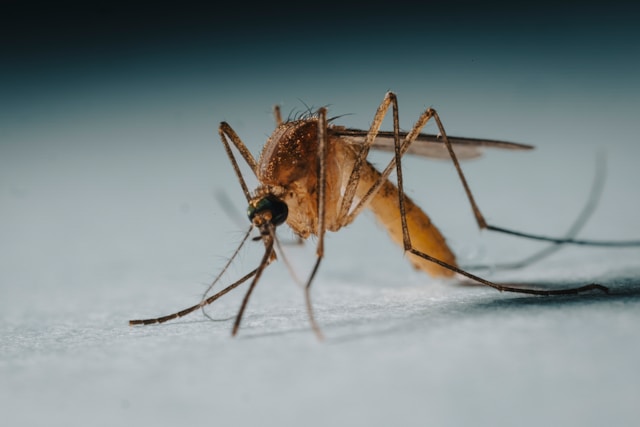
In a dramatic and unconventional move to curb China’s largest-ever chikungunya outbreak, scientists in the southern province of Guangdong are deploying swarms of “elephant mosquitoes” — giant, non-biting insects whose larvae feast on the disease-spreading mosquitoes responsible for the surge in infections.
Measuring nearly two centimeters in length, these Toxorhynchites splendens mosquitoes are being released across Foshan, where more than 6,000 cases of chikungunya have been reported in just three weeks. The outbreak has alarmed public health authorities and pushed the city to adopt both cutting-edge and familiar containment measures.
The mosquito release is part of a broader campaign led by researchers at Sun Yat-sen University’s Zhongshan School of Medicine. Unlike typical mosquitoes, elephant mosquitoes do not bite humans. Instead, their larvae prey on Aedes mosquitoes — the primary vectors for chikungunya, as well as dengue, Zika, and yellow fever.
“One larva can consume up to 100 Aedes,” said Zhang Dongjing, associate professor and technical director of the university’s mosquito-rearing facility, often referred to as a “mosquito factory.” The same facility also breeds and releases millions of sterile male mosquitoes to help suppress wild populations.
Alongside the scientific efforts, local authorities have revived strategies reminiscent of the COVID-19 pandemic response: mass PCR testing, isolation of infected individuals, and widespread disinfection of neighborhoods.
Foshan is also turning to nature for help, releasing more than 5,000 mosquito-eating fish into ponds and rivers throughout the city. Health officials have designated 53 hospitals for chikungunya treatment, offering over 3,600 mosquito-net-equipped beds, with plans to expand capacity as the outbreak evolves.
In nearby Guangzhou, authorities have published a detailed risk map of 120 communities and launched a week-long mosquito eradication campaign involving bi-daily spraying.
Chikungunya, first identified in Tanzania in 1952, causes high fever, joint pain, headaches, and vomiting. Though the virus was first detected in China in 2008 and caused a minor outbreak in 2010, major outbreaks have been rare — until now.
The unprecedented scale of the current epidemic has attracted international attention. The U.S. Centers for Disease Control and Prevention (CDC) is preparing to issue a travel advisory for China, a spokesperson told Bloomberg News.
As Guangdong battles the outbreak on multiple fronts, officials hope the giant mosquito army — once considered a scientific curiosity — could now prove to be a surprising and effective weapon in the fight against one of the world’s fastest-spreading tropical diseases.