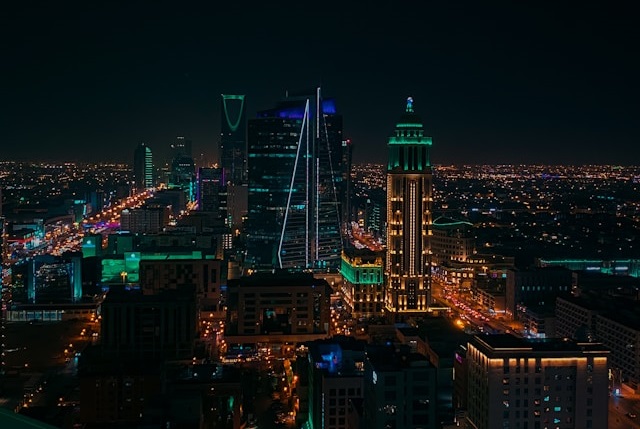
Saudi Arabia is making bold moves to position itself as the next hotspot for global property investors, particularly those from Hong Kong and mainland China, following a landmark policy shift that will allow non-Saudis to own real estate in designated areas starting January 2026.
According to a report by the South China Morning Post, industry experts believe the Gulf kingdom could emulate — and potentially rival — Dubai’s success in drawing international property buyers, as it continues its ambitious push under the Vision 2030 economic diversification plan.
“Saudi Arabia can absolutely succeed at making itself a major destination for investment and residency,” said Kashif Ansari, CEO and co-founder of real estate brokerage Juwai IQI. “The new law will give non-resident foreigners a clear path to own property in Saudi Arabia for the first time.”
Experts highlight the competitive affordability of Saudi cities like Riyadh and Jeddah compared to the United Arab Emirates. Ansari noted that while the average residential price per square foot in Riyadh is US$123 and just US$100 in Jeddah, the same figure soars to around US$400 in Dubai.
Dubai’s own meteoric rise has been powered by global interest: foreigners currently own 43 per cent of its homes, and high-end property sales surged tenfold from 2020 to 2024. Chinese buyers accounted for 14 per cent of Dubai property sales so far this year, up from 13 per cent in 2024, according to real estate consultancy Savills.
Saudi Arabia, meanwhile, is undergoing rapid transformation. Its real estate market is expected to nearly double by 2033, reaching US$133 billion, according to Patricia Casaburi, CEO of Global Citizen Solutions. Casaburi emphasized the kingdom’s lucrative rental yields — averaging 6.75 per cent and reaching nearly 9 per cent in Riyadh — outpacing most developed markets.
“These returns, paired with no personal income, capital gains, or inheritance taxes, make the net returns even more attractive,” she said.
The new homeownership policy is being seen as a cornerstone in Saudi Arabia’s larger plan to modernize its economy and society. That includes massive infrastructure projects like the Riyadh Metro, King Salman Park — set to be the world’s largest urban park — and Neom’s futuristic “The Line” city.
“There’s significant pent-up demand among high-net-worth Muslims,” Ansari said, adding that investors from Greater China with existing business ties in Saudi Arabia may be especially interested.
“Chinese companies are actively engaged in projects across the kingdom, and the local Chinese expat population is growing,” he added. Between 2005 and mid-2024, China invested US$53.85 billion in Saudi infrastructure projects, according to the Carnegie Foundation.
Analysts also expect future adjustments to Saudi residency laws, potentially mirroring Dubai’s golden visa schemes to make the country more competitive for global investors and relocating families.
“Riyadh can unlock demand at scale from Greater China with more inviting residency rules,” Ansari said. “Beijing and Hong Kong buyers will be comparing Saudi Arabia’s entry terms with Dubai’s.”
Casaburi echoed this, noting that while Dubai remains a hub for lifestyle-focused investors and international communities, Saudi Arabia is strategically positioning itself to attract institutional capital and family offices.
Jihad Elabbas of Henley & Partners, a global citizenship and residency consultancy, said the kingdom is steadily evolving into a destination for wealthy families, though it will need time to catch up to its neighbor, the UAE.
As Saudi Arabia opens its doors to foreign homeowners, it marks a pivotal shift in the region’s real estate landscape — one that may soon see Riyadh standing alongside Dubai as a global magnet for international investment.