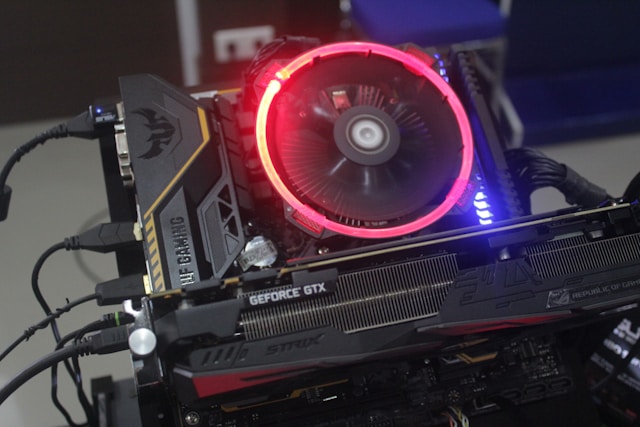
Nvidia and AMD have agreed to hand over 15 per cent of their revenues from chip sales in China to the US government, marking an unusual financial arrangement tied to export licences granted by the Trump administration.
According to sources familiar with the deal, Nvidia will share 15 per cent of its revenues from H20 chip sales in China, while AMD will provide the same percentage from its MI308 chip revenues. This quid pro quo deal was a condition for the companies to obtain export licences for the Chinese market, issued last week.
The Financial Times reported that Nvidia’s licence approvals came shortly after CEO Jensen Huang met with President Donald Trump at the White House, signalling a rare moment of cooperation amid escalating US-China tech tensions. The Commerce Department also began issuing export licences for AMD’s chips soon after.
Export control experts say this revenue-sharing agreement is unprecedented. No US company has previously been required to pay a portion of their earnings to obtain export licences. The deal reflects a broader Trump administration pattern of leveraging corporate measures — such as domestic investment or revenue-sharing — to protect American jobs and revenue.
Bernstein analysts estimate that Nvidia could generate about $23 billion in revenue from selling approximately 1.5 million H20 chips to China in 2025, based on guidance issued before export controls were tightened earlier this year.
The H20 chip has been at the centre of controversy. Nvidia designed it specifically for the Chinese market after President Joe Biden imposed strict export controls on more advanced artificial intelligence chips. While the Trump administration initially banned H20 exports in April, the policy reversed in June following Huang’s White House visit. The Bureau of Industry and Security (BIS), responsible for export controls, began issuing licences days after Huang’s discussions with Trump.
The revenue-sharing deal has drawn criticism from US security experts who warn that the H20 chip could bolster China’s military capabilities and undermine American AI dominance. “Beijing must be gloating to see Washington turn export licences into revenue streams,” said Liza Tobin, a China expert at the Jamestown Foundation. “What’s next — letting Lockheed Martin sell F-35s to China for a 15% commission?”
Concerns within BIS and from former national security officials, including Matt Pottinger and a coalition of 19 security experts, have called for a halt on H20 licences, citing risks that the chip would accelerate China’s frontier AI technology.
Nvidia rejects these claims, stating the fears of military use are “misguided.” In a recent statement, the company expressed hope that export rules would allow American firms to compete globally and maintain leadership in AI, warning that “America cannot repeat 5G and lose telecommunication leadership.”
The debate over export controls comes amid ongoing US-China trade talks, which the Trump administration hopes will culminate in a summit with Chinese President Xi Jinping. The Financial Times has reported that the Commerce Department has been instructed to freeze new export controls to avoid worsening tensions with Beijing.
Meanwhile, China continues to push for eased restrictions on high-bandwidth memory (HBM) chips, a critical component in advanced AI chip manufacturing, intensifying the delicate balance between national security and commercial interests in the tech rivalry between the world’s two largest economies.