A relatively unknown South Korean artificial intelligence start-up, Upstage, is making waves in the global AI race by developing a large language model (LLM) that rivals advanced systems from the United States and China, according to the Financial Times.
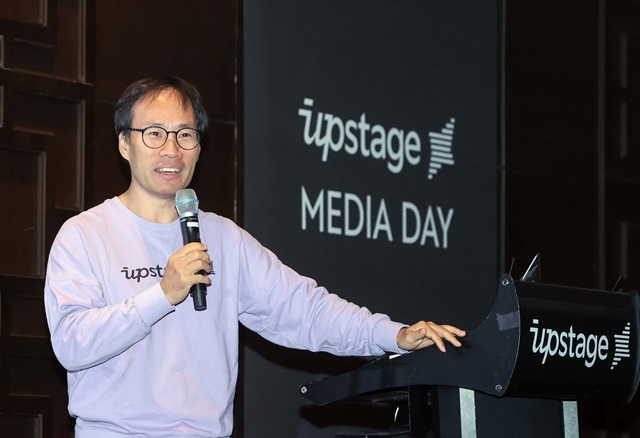
Sung Kim, CEO of Seoul-based Upstage, told the Financial Times that “American and Chinese LLMs used to be way out in front of everyone else, but that is no longer the case.” This bold claim follows the July release of Upstage’s Solar Pro 2 model, which was recognized by the independent benchmarking provider Artificial Analysis as a leading-edge “frontier model” — a status previously held only by AI leaders such as OpenAI, Google, and China’s DeepSeek.
Solar Pro 2’s achievement places South Korea among a select group of countries housing advanced AI models, alongside the US, China, France, and some Middle Eastern state-backed enterprises. This marks a significant leap for South Korea, which had lagged behind in AI development due to cautious approaches at established tech firms.
The Financial Times reports that Solar Pro 2 outperformed other prominent models, including Anthropic’s Claude 3.7 Sonnet Thinking and OpenAI’s GPT-4.1, according to Artificial Analysis’ Intelligence Index. Remarkably, it achieved this with just 30 billion parameters — far fewer than typical frontier models, which usually range between 100 billion and 200 billion parameters. For comparison, the xAI’s Grok 4 model, topping the index, boasts 1.7 trillion parameters.
Kim explained that Upstage’s competitive edge comes from a training technique called “Depth-Up Scaling,” which optimizes model efficiency by adding and removing layers of information. This allows Upstage to develop top-tier AI with only 10% of the AI chips used by larger competitors, significantly reducing costs.
Solar Pro 2 is already deployed in South Korea’s financial, legal, and medical sectors, with clients including Intel and subsidiaries of Samsung and Hanwha. The model is also attracting interest from five major American insurance companies aiming to enhance underwriting processes.
Upstage’s rise provides a boost to South Korea’s broader AI ambitions, which until recently relied heavily on hardware supply such as memory chips and data center components. The company is actively collaborating with local chip design start-ups Rebellions and Furiosa AI to integrate their neural processing unit chips for AI inference tasks.
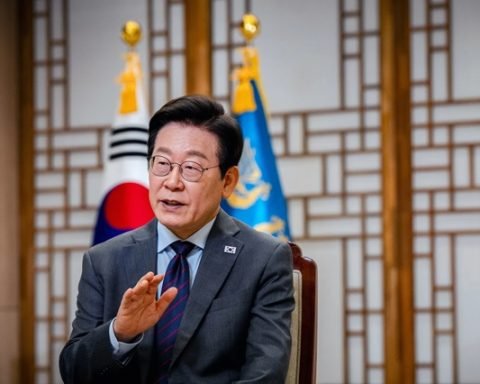
Kim highlighted the growing domestic AI ecosystem, emphasizing close cooperation between software and hardware developers. This momentum aligns with South Korea’s new government under President Lee Jae Myung, who has pledged over $70 billion in investments and created a dedicated ministerial position for AI, aiming to position the country among the world’s top three AI powers.
Despite progress, experts note challenges remain, including limited data center infrastructure and a brain drain of AI talent to Western countries. In response, the government has launched programs covering up to 85% of salaries for AI specialists working at leading Korean companies to retain talent.
Kim also suggested that South Korea’s position outside the intense US-China rivalry offers a strategic advantage. By building local data centers in partner countries, South Korean firms hope to access markets hesitant to align exclusively with either global power.
“We tell them we can build data centres locally and they love it,” Kim said, pointing to new opportunities for South Korea on the international stage.