Chinese companies in the electric vehicle (EV) supply chain invested more overseas than domestically in 2024, marking a historic shift in strategy, according to a report from the Rhodium Group cited by Bloomberg.
Firms poured around $16 billion into foreign projects last year — mostly in battery production — just ahead of the $15 billion they invested at home. For years, about 80% of industry investment had been directed domestically. Rhodium described the change as a turning point driven by overcapacity and a prolonged price war in China’s auto sector, which has squeezed margins across the supply chain.
“The fact that overseas investments now outpace domestic ones reflects a saturated Chinese market and the strategic appeal of expanding abroad for higher returns,” said Armand Meyer, senior research analyst at Rhodium and co-author of the report.
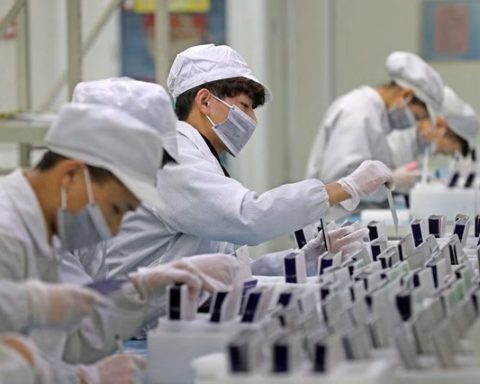
Major battery producers led the trend, accounting for roughly three-quarters of outbound investment. Contemporary Amperex Technology Co. Ltd. (CATL), Envision Group and Gotion High-Tech Co. have followed global automakers such as Tesla and BMW into overseas markets, responding to high transport costs and foreign customers’ demands for localized supply.
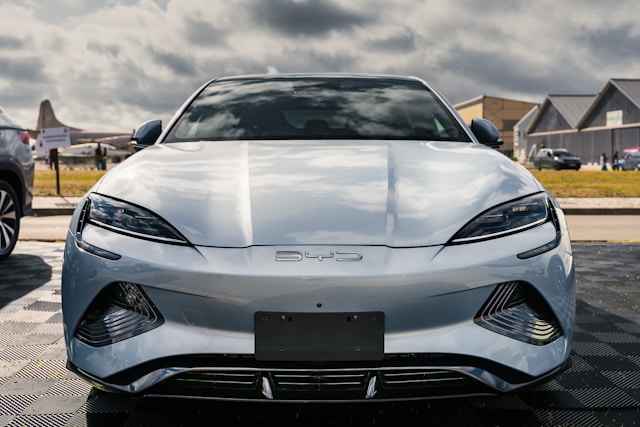
CATL, the world’s largest EV battery maker, declared in June that global expansion is now its “No.1 priority.” Meanwhile, BYD Co., China’s top-selling automaker, already operates factories in Brazil and Thailand and is pursuing facilities in Turkey and Indonesia. Chery Automobile Co. has pledged to establish a $1 billion EV factory in Turkey.
Still, foreign projects come with challenges. According to Rhodium’s data, only 25% of overseas EV manufacturing investments have been completed, compared with 45% of projects at home. Factories abroad take significantly longer to get off the ground — often 10 to 24 months before construction begins — versus just three to 12 months in China.
Political and regulatory risks also weigh heavily. BYD shelved a planned factory in Mexico last month amid uncertainty over US trade policies under President Donald Trump. Svolt Energy Technology Co., another Chinese battery maker, has canceled nearly all of its overseas investment announcements, the report noted.
The wave of overseas expansion reflects both opportunity and risk. On one hand, Chinese EV companies are looking to avoid steep tariffs in Europe and the US while tapping new markets. On the other, they face political pushback in the EU and increasing concerns in Beijing about technology transfer, job losses, and industrial hollowing out — issues that could prompt tighter restrictions on outbound investment.