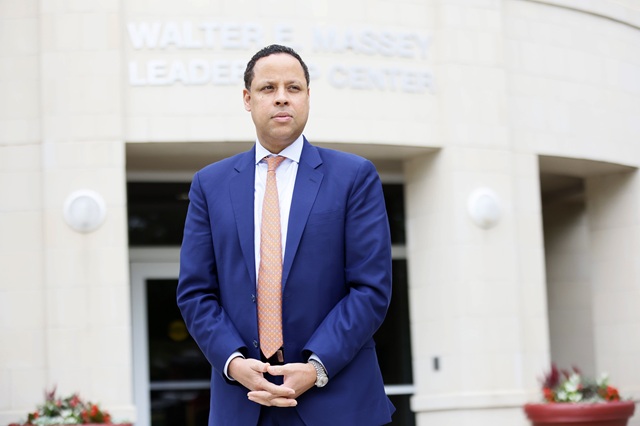
Blackstone Inc.’s head of secondaries, Verdun Perry, called the buying and selling of existing private assets “the most underutilized tool” in private markets, forecasting that secondaries deal volume could surge to $400 billion by 2030.
“Whether it’s a slow market or a robust market, the secondary role is going to increase over time as a solution to private market investors,” Perry said in a Bloomberg TV interview. He added that this year’s volume could exceed $220 billion.
Secondaries activity has accelerated in recent years as a prolonged deal slowdown and limited initial public offerings have made it more difficult for investors to exit private holdings. This, in turn, has slowed cash distributions to fund investors and complicated capital raising for new funds.
In the first half of 2025, secondaries transactions hit a record $103 billion, a 51% increase from a year earlier, according to Jefferies Financial Group Inc. Continuation funds—vehicles that transfer existing assets into new funds to extend ownership—accounted for the majority of that volume, led by private equity firms.
Perry noted that continuation funds typically fall into two categories: those where general partners genuinely want to retain prized assets longer, and those where firms resort to continuation vehicles because they failed to sell certain portfolio companies. “The former continuation funds will continue to attract investor capital,” he said.
Institutional investors, meanwhile, are expected to continue selling private-market stakes on the secondary market as part of “active portfolio management,” Perry added.
In May, Blackstone agreed to purchase $5 billion of private equity holdings from the New York City pension system in one of the largest-ever secondary transactions, undertaken as part of the pension fund’s “portfolio strategic alignment.”