China has sharply criticized the United States for deploying naval forces near Venezuela, backing President Nicolas Maduro in a tense standoff that is drawing global attention.
Foreign Ministry spokesperson Mao Ning condemned Washington’s actions, stating that China opposes “any move that violates the purposes and principles of the UN Charter and a country’s sovereignty and security.” She urged the U.S. to take steps conducive to peace and security in Latin America and the Caribbean, while rejecting “the interference of external forces in Venezuela’s internal affairs under any pretext.”
The remarks came as Maduro met with China’s ambassador in Caracas, Lan Hu, praising the “notable advances” in joint projects between the two nations. “China is without a doubt the country that leads the world with the concept of human development,” Maduro wrote on Telegram. The meeting was also attended by Vice President Delcy Rodriguez.
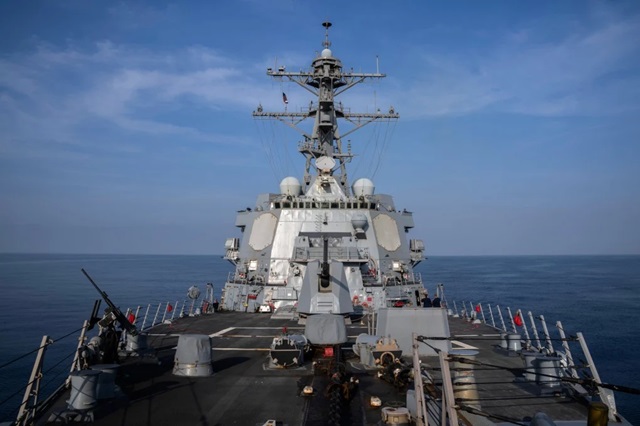
The show of support from Beijing comes as the U.S. escalates its pressure campaign. The White House confirmed that three destroyers and an amphibious squadron carrying roughly 4,000 Marines have been sent to the Caribbean. Washington cited the mission as an effort to disrupt drug cartels, while Venezuelan officials and allies labeled the patrols a direct threat to sovereignty.
White House press secretary Karoline Leavitt described Maduro’s government as a “narcoterrorist cartel” and noted the reward for his capture has risen to US$50 million. In response, Maduro mobilized 4.5 million members of the Bolivarian Militia and ordered a 30-day suspension of drone flights nationwide. “We defend our seas, our skies and our lands. No empire will touch the sacred soil of Venezuela,” he said in a televised address.
China, Venezuela’s largest creditor, has invested about US$67 billion in the country since 2007, tying loans to oil and building a strategic partnership that has endured sanctions and debt disputes. While direct Chinese purchases of Venezuelan crude have slowed, Beijing continues to provide diplomatic support, including early recognition of Maduro’s contested third term.
Regional reactions to the U.S. military presence have been mixed. Mexican President Claudia Sheinbaum urged dialogue over intervention, while Colombian President Gustavo Petro warned of “grave regional consequences.” Brazil expressed concern over unilateral action, emphasizing cooperative approaches to organized crime.
Other countries, including Ecuador and Paraguay, are taking measures related to drug cartels, while Argentina’s President Javier Milei largely aligned with U.S. messaging.