
“I think we need to have a more robust understanding of our own history,” says Tricia Aurand, explaining why Judith Exner’s story deserves renewed attention. Mark Allen, a retired federal attorney who spent years investigating Exner’s account, is equally direct about its historical significance. “Time and time again, her story checked out,” he says, recalling the years he spent corroborating what she told him. Between these two observations lies the central argument of the newly released A Dangerous Beauty: The Kennedys, the Mob, the FBI, and Judith Exner, their book examining the relationship between Exner, President John F. Kennedy, organised crime and the intelligence operations directed against Fidel Castro. They are challenging the historical treatment of a woman whose proximity to political power became the defining burden of her life, while the men surrounding her retained much greater control over their public reputations. Last week, I sat down with Mark and Tricia to discuss their work. Tricia’s smile and sense of accomplishment are readily visible, while Mark appears intensely focused and investigative. The combination itself is fascinating, bringing together the conviction of a researcher who knew Exner personally and the perspective of a screenwriter determined to examine the historical record critically.
Judith Exner occupied an extraordinary position in American political history, although the public image attached to her name has rarely reflected the full significance of that position. She was romantically involved with Kennedy before and during his presidency and moved within social circles that included Frank Sinatra, the Chicago mobster Sam Giancana and organised crime figure Johnny Roselli. Her later account was that Kennedy used her as an intermediary in communications connected to the CIA’s efforts to assassinate Castro, bringing her into contact with individuals whose activities carried consequences far beyond her private relationships. For decades, however, public discussion concentrated on her sexual relationship with Kennedy and her associations with organised crime. The political implications of her claims received comparatively little serious examination. Mark and Tricia argue that this distortion was not incidental to her story. It shaped how her testimony was received, how her credibility was assessed and how her place in history was subsequently defined.
Mark’s involvement began long before the book took shape. His interest in Kennedy’s assassination dates to 1974, and his subsequent work brought him into contact with journalist Anthony Summers. By 1991, Mark and Summers believed Exner had more information to disclose about her role as an intermediary. She had publicly acknowledged the relationship in 1988, but Mark considered the account incomplete. After months of attempts to arrange a meeting, he travelled from Washington, DC, to Newport Beach, California, where he interviewed her over three days. Their reporting appeared in October 1991. Summers eventually moved on to other subjects, but Mark continued investigating. He describes the distinction between accepting a compelling personal account and establishing its reliability as essential to the work. Exner might have been protecting herself, shielding other people, misremembering events or withholding information for reasons that were not immediately apparent. Mark therefore sought evidence that could corroborate or contradict what she told him. His conclusion was emphatic. Her story repeatedly survived examination. That conclusion provides the foundation of the book, although the historical importance of his investigation lies not merely in his confidence in Exner, but in the attempt to test her account against evidence rather than judge it through the assumptions surrounding her character.
Tricia approached the material from a different professional background. A Los Angeles screenwriter whose work centres on historical and research-based projects, she became involved through her late mentor, Steve Revell, an Oscar-nominated screenwriter who connected her with Mark before his death in 2024. What struck her was both the evidence Mark had assembled and the implications of Exner’s story for the broader understanding of the Kennedy presidency. Tricia believes the Kennedy family occupies an unusually powerful position in the American imagination, where admiration can become an obstacle to historical scrutiny. “I feel like that in itself can be dangerous to believe in,” she says of the family’s enduring mythology. Exner’s story becomes important precisely because it unsettles a familiar narrative. It requires a closer examination of the relationship between private conduct and public responsibility, between political loyalty and concealment, and between the historical reputations of powerful men and the treatment of the women who knew them intimately.
Mark and Tricia’s account of Exner’s feelings for Kennedy is more complicated than a straightforward story of exploitation. Tricia observes that Exner was only twenty-six when she met him in 1960, when he was a senator, and believes her romantic attachment endured long after the relationship ended. Exner understood that Kennedy had other partners and that his decisions had exposed her to danger, yet she did not regard herself as someone he had callously used. Mark recalls her conviction that J. Edgar Hoover, rather than Kennedy, Sinatra or Giancana, had ruined her life. “She told me that J. Edgar Hoover was the person who ruined her life,” he says, describing the FBI’s treatment of her and the consequences that followed. Exner gave up her infant son in 1965, an event Mark associates with the pressures and distress surrounding her circumstances. He remembers her belief that Kennedy cared for her, while acknowledging that he was emotionally distant. She considered what happened a tragedy, but did not direct her principal anger towards the man she had loved.
The relationship between Exner’s personal life and her political significance is central to the authors’ argument. Mark describes her as someone positioned between entertainment, politics and organised crime, worlds that were less separate in practice than conventional accounts might suggest. “These were people who all knew each other,” he explains. “These were people of great influence who knew each other for a reason.” Sinatra and Giancana could appear together as two well-dressed men in conversation, rather than as representatives of supposedly incompatible social spheres. Exner moved among these circles without attracting the same immediate suspicion that might have followed a man travelling between Kennedy and organised crime figures. Tricia argues that her position as a woman of independent means, whose movements could be explained as social engagements, gave her a form of access that also concealed the purpose of her contacts. Her romantic relationship with Kennedy made that cover more credible. Yet the same circumstances that enabled her to move between these men left her exposed when their interests diverged.
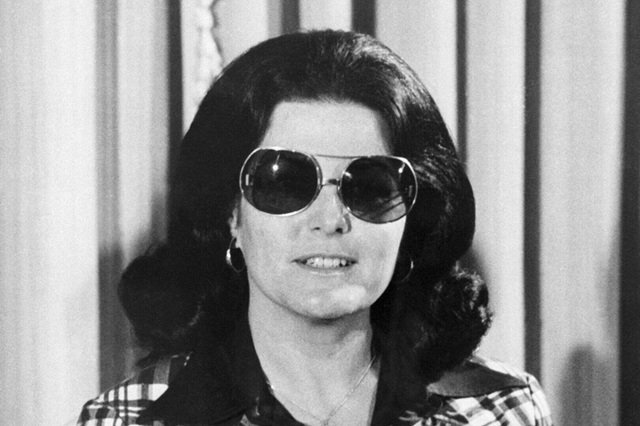
This imbalance also shaped her decision to remain silent about her alleged intermediary role. Mark and Tricia describe Exner’s fear as a significant factor, particularly after Giancana was murdered in 1975 and Roselli was killed shortly before her book appeared. At her press conference, Exner acknowledged her affair with Kennedy and her associations with organised crime but denied acting as a go-between. Mark believes she wanted those responsible for the killings to understand that she was not revealing the sensitive part of the story. Her silence, however, carried a lasting cost. Without the political context, her relationships appeared purposeless, and her public image became that of a woman trading on an illicit affair and questionable associations. When she disclosed her intermediary role in 1988, the response was muted. Mark recalls little serious effort by the press to investigate whether her account was true. This was the gap he and Summers wanted to address. The issue was not whether Exner could tell a dramatic story, but whether the evidence supported it. Mark’s continued research led him to conclude that it did, while the public narrative remained largely unchanged.
The treatment of Exner by Kennedy’s loyal aides presents another difficult question. Mark identifies Dave Powers and Evelyn Lincoln, alongside Kenny O’Donnell, as figures whose loyalty to Kennedy contributed to the denial or concealment of her significance. He argues that these associates knew about her relationship and intermediary role but were unwilling to say anything that might damage the president’s reputation. Their own standing, he suggests, was connected to Kennedy’s image. Tricia places this behaviour within a wider effort to preserve the Kennedy family’s public mythology. Exner’s existence complicated the story they wanted to maintain, while Bobby Kennedy’s reputation as an opponent of organised crime could also be damaged by revelations about CIA plots against Castro involving mob figures. The authors interpret the denials as self-interested, although their account also raises a broader historical question about the distinction between loyalty and the deliberate management of a public legacy. Once prominent figures deny a relationship repeatedly, their statements can acquire authority through repetition, even when the underlying evidence has not been properly examined. Exner’s death in September 1999 did not resolve that imbalance. Her obituary could still repeat the denials, leaving readers with an apparent contest between competing accounts rather than a fully investigated historical question.
The Church Committee’s investigation into intelligence abuses provides one of the clearest examples of what the authors regard as a failure to pursue Exner’s significance. Mark argues that the inquiry, established during a period of intense political conflict, initially focused on exposing CIA abuses associated with the Nixon administration. As the investigation developed, however, the evidence also pointed towards activities connected to Kennedy. According to Mark, the committee’s work was consequently constrained by the political sensitivity of the material and by the considerable goodwill that Kennedy retained after his assassination. Exner appeared before committee staff in September 1975, late in the investigation, when much of the report had already been drafted. Mark says investigators had not thoroughly examined her movements or the available FBI records and instead concentrated on telephone logs. Her testimony lasted little more than an hour and was not given before the senators themselves. Tricia adds that Exner’s assigned lawyer advised her to answer questions narrowly rather than volunteer information. The authors argue that the committee was poorly prepared to investigate her account and did not seriously pursue the possibility that she had acted as an intermediary. They interpret the episode as evidence of institutional reluctance, although the precise balance between political caution, investigative shortcomings and deliberate concealment remains a matter requiring careful assessment.
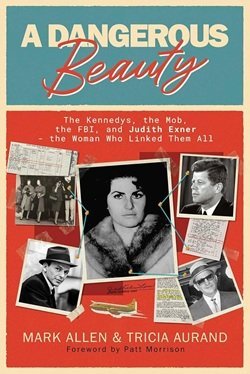
The media’s role in shaping Exner’s reputation is equally important. Mark points to the Church Committee report’s cautious language, which referred to her as a close friend of Kennedy and of Roselli and Giancana without directly naming her or explaining the full nature of the relationships. That euphemistic formulation encouraged speculation while withholding the information needed to understand her position. Her own press conference compounded the problem. By publicly acknowledging her relationship with Kennedy while withholding the intermediary role she feared would endanger her, she allowed the sensational details to dominate. Tricia argues that labels such as “Mafia moll” and “mistress” flattened Exner into a familiar stereotype of the sexually transgressive woman. They replaced questions about her knowledge, choices and political involvement with assumptions about her morality. Publications that repeated the image without properly investigating her background helped perpetuate it. Mark believes the book offers a corrective by explaining her motivations and circumstances.
The question of evidence is particularly significant because Mark’s personal relationship with Exner could be regarded as both a strength and a potential source of bias. In response, he acknowledges that assessing her credibility involved subjective as well as objective considerations. He remembers how her expression changed when she described meeting Kennedy and how she cried when recalling his assassination. “It was hard for me to imagine that someone so in love would make up lies to harm him,” he explains. His more persuasive claim is that he spent eight years, alongside his wife, trying to corroborate or rebut what Exner told him, and that her story repeatedly checked out. Tricia likewise acknowledges that her own experiences as a woman influenced her understanding of Exner’s circumstances. She was inclined to recognise how powerful men can preserve their position at the expense of women and other marginalised groups. Yet she also argues that Exner’s case is not merely a contest of personal testimony. “Judith’s story is much more than a ‘he said, she said’ case,” she writes, pointing to the evidence and Mark’s extensive research.
The comparison with Monica Lewinsky extends the book’s argument beyond the Kennedy era. Tricia sees a recurring tendency to make women’s sexual relationships with powerful men the defining feature of their public identities, regardless of the wider political circumstances. Lewinsky, like Exner, was subjected to ridicule and became a shorthand figure in a much larger political controversy. Although public discussion of Lewinsky has changed, Tricia observes that she can still be treated as a punchline. The comparison is not a claim that the two women experienced identical circumstances. It identifies a pattern in which public attention becomes fixed on a woman’s sexual conduct while the conduct, influence and responsibilities of the powerful man receive a different degree of scrutiny. Exner’s story exposes the consequences of that imbalance. Her relationship with Kennedy became a reason to doubt her, even when the question under examination concerned political communications and intelligence operations. Historical judgement requires evidence, context and a willingness to scrutinise the powerful as rigorously as those whose reputations they can influence.
Mark’s final comparison between Kennedy and Exner captures the disparity the book seeks to correct. Kennedy remains among the presidents most admired by historians, journalists and politicians, while Exner has frequently been presented as a stain on his presidency or as part of the darker side of Camelot. Yet she was a young woman in love who, according to the authors’ research, agreed to help a president with a sensitive foreign policy problem. The contrast does not erase Kennedy’s achievements or settle every question about Exner’s role. A Dangerous Beauty asks readers to reconsider that unequal treatment and to recognise that private relationships can intersect with matters of public consequence. Its importance lies in restoring a neglected woman to a history from which her significance was obscured. Exner should not be remembered solely as Kennedy’s lover or as an associate of mob figures. Her story belongs to the history of presidential power, intelligence operations and institutional secrecy. Taking it seriously requires more than sympathy. It requires the same sustained scrutiny that has long been applied to the men whose lives defined her own.