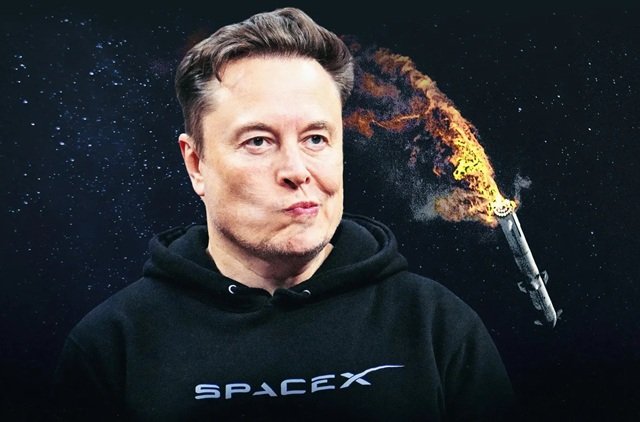
SpaceX has achieved a landmark in spaceflight by catching its Starship rocket in mid-air after an orbital flight, using two mechanical arms mounted on a 146-metre launch tower in southern Texas. The manoeuvre, completed at 22:20 German time on Saturday, demonstrated for the first time that a rocket capable of travelling into Earth’s orbit could return to its launch site in one piece and be recovered without visible damage. The achievement, reported by German newspaper Die Zeit, represents a major advance in reusable launch technology, while giving Elon Musk’s company a critical capability for its increasingly ambitious plans to expand its presence in orbit.
The Starship is the largest rocket ever developed and the most ambitious project undertaken by SpaceX. Even without fuel, the silver-coloured vehicle weighs 100 tonnes. Its successful recovery marks a significant departure from the conventional operation of rockets, which are generally discarded after completing their missions, falling into the sea or remaining uncontrolled in space. SpaceX has now demonstrated a recovery method that could allow the same spacecraft to be launched, landed and launched again, potentially transforming the economics of transporting cargo into orbit.
The achievement has implications extending beyond the development of reusable rockets. Starship is central to Musk’s ambition to establish a much larger commercial and technological presence in space, including an extraordinary proposal to deploy 1.1 million satellites in Earth’s orbit. That would increase the existing number of active satellites by approximately 70 times. The proposed network is intended to support several projects, including Starlink Direct-to-Cell, which aims to deliver internet connectivity directly to smartphones, and Starmind, a proposed vast computing facility in orbit. SpaceX also envisages using its satellite infrastructure to provide the US military with expanded capabilities in warfare and missile defence through the Golden Dome programme.
All these ambitions depend on the availability of a heavy-lift rocket capable of carrying enormous quantities of equipment into space repeatedly and at substantially reduced cost. Starship is designed to fulfil that requirement. Its successful recovery gives SpaceX an important technological advantage in pursuing a system through which satellite deployment and other orbital operations could become more routine.
The development programme began around a decade ago, when Musk announced plans for the rocket. Construction subsequently started in the south-eastern corner of Texas, close to the Gulf of Mexico. The site has since developed into Starbase, an extensive spaceport and rocket manufacturing complex that has produced around four dozen Starship prototypes. The project is estimated to have cost more than $15 billion so far.
The broader objective is to establish what amounts to a railway system into space, allowing cargo to be transported into orbit with something approaching the regularity of terrestrial freight operations. The main obstacle has been the difficulty of recovering rockets after launch. SpaceX had already addressed part of this challenge through its smaller Falcon 9 rocket, perfecting the recovery of its lower stages approximately 10 years ago. These sections, which provide propulsion during the first 70 to 90 kilometres of ascent before separating from the vehicle, can return to Earth and land vertically.
Recovering the upper stage presents a substantially greater engineering challenge. Spacecraft returning from orbit travel at tens of thousands of kilometres per hour, and their passage through the atmosphere generates temperatures of thousands of degrees Celsius through friction. The resulting forces can destroy delicate equipment, making a controlled return and recovery particularly difficult.
The United States previously attempted to develop reusable spacecraft through Nasa’s Space Shuttle programme during the 1970s and 1980s. The shuttles landed on runways like conventional aircraft, but required expendable rockets for launch. Two catastrophic accidents killed 14 astronauts, and the programme ultimately demonstrated the limitations of that approach.
Starship is intended to overcome these difficulties through a fully reusable launch system. Its development, however, has involved repeated setbacks. The first prototype lifted off from Starbase three and a half years ago, with early test flights ending in explosions. Subsequent trials produced improvements, followed by further failures. Technical problems have continued to affect both Starship and its Super Heavy booster, including repeated failures of individual engines.
A significant milestone came in September 2026, when the 14th test flight reached a stable Earth orbit and deployed Starlink satellites. SpaceX had already demonstrated its ability to recover the Super Heavy booster using the launch tower’s mechanical arms, nicknamed Mechazilla, during flights five, seven and eight. The latest achievement extended that recovery technique to the Starship itself after its return from orbit.
The operation involved considerably greater risks than recovering the booster. Having completed an orbital journey, Starship approached Starbase from the west, requiring it to cross Mexico during its return. A failure during the landing sequence could have sent heavy fragments towards populated areas. By comparison, the Super Heavy booster could be directed towards the Gulf of Mexico, where it would fall into the sea if recovery was unsuccessful. SpaceX used that option during the 15th flight, apparently because of technical problems.
Despite the risks, the successful recovery reflects Musk’s approach to development: pursuing the objective of a completely reusable rocket system as quickly as possible rather than prioritising conservative testing procedures. The result has generated enthusiasm among spaceflight supporters, who see possibilities for future Mars missions, scientific exploration and space telescopes that could be launched using Starship’s enormous carrying capacity.
However, Die Zeit’s science editor Robert Gast points to a potential divergence between the rocket’s original ambitions and Musk’s changing priorities. Rather than concentrating on Mars exploration and scientific missions, Musk now appears increasingly focused on developing super artificial intelligence. Even the Moon, where Nasa intends to establish a base with SpaceX’s assistance, appears to have become a secondary priority for the company, according to reports by US media.
Satellite deployment has instead emerged as the principal commercial objective. SpaceX wants to launch vast numbers of satellites using an entire fleet of Starship rockets. To support that ambition, a new Starbase is planned in Louisiana at an estimated cost of $100 billion. The proposed facility would have ten Mechazilla towers, compared with the two currently planned at the existing site, allowing rockets returning from space to be caught and recovered on a much larger scale.