Brazilian President Luiz Inácio Lula da Silva has secured an unprecedented fourth presidential election victory after a dramatic late campaign recovery, defeating Flávio Bolsonaro despite expectations of a stronger performance by the son of former president Jair Bolsonaro. The result marks a significant setback for Brazil’s right-wing movement, but Flávio Bolsonaro’s refusal to accept defeat has raised the prospect of renewed political confrontation over the legitimacy of the country’s democratic system.
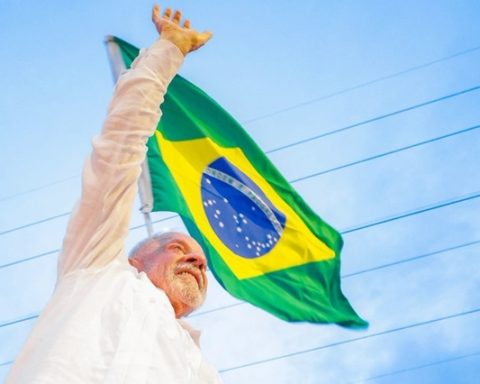
The final days of the campaign revealed a shift in voter sentiment. In Leblon, Rio de Janeiro’s wealthiest neighbourhood, supporters wearing red shirts appeared in increasing numbers to canvass for Lula. In Urca, an area associated with military garrisons and schools where Flávio Bolsonaro had appeared well positioned, younger and older supporters gathered in the streets to chant “Lula-la”, the familiar anthem of Brazil’s left. The change in atmosphere became evident during Lula’s final campaign events, including a rally along Copacabana beach, where the 80-year-old president stood above a crowd of supporters, raising a replica of the constitution and waving a Brazilian flag.
The election produced a striking turnaround during the count. Lula initially led by two percentage points, but Flávio Bolsonaro moved ahead as votes were tallied. Once approximately 30 per cent of the ballots had been counted, however, Lula’s figures began rising steadily. At around 70 per cent counted, the first polling institute declared the trend irreversible. Celebrations spread through São Paulo’s Avenida Paulista and other parts of the country, with supporters gathering late into the night. Lula’s victory made him the first Brazilian politician to be elected president four times.
In his first address after the result, Lula described the outcome as “a defeat for negationism and lies”. He criticised the influence of major technology companies in the campaign and called for stricter regulation of social media. The Meta group had suppressed posts from Lula’s campaign in the preceding weeks, reportedly attributing the action to technical problems. Lula argued that “crimes in the digital world” should be treated in the same way as “crimes in the real world”.
His campaign’s digital strategy played an important role in the late recovery. After Lula’s defeat in the first round of voting three weeks earlier, he entrusted his online campaign to André Janones, a 42-year-old congressman and influencer from Minas Gerais. Janones reorganised the campaign and established what was called “Lula’s army”, a network of supporters who approached undecided voters across the country. The network grew to 10 million people within days. Lula, who had previously boasted that he did not use a smartphone, began appearing in live videos with Janones, whom he called his digital “general”. Clips from the conversations were subsequently distributed on TikTok and YouTube, helping the campaign regain support in dozens of cities that had favoured Bolsonaro in the first round.
Digital campaigning was not the only factor behind Lula’s victory. Many undecided voters apparently became reluctant to support Flávio Bolsonaro because they regarded him as a threat to democracy. Although he presented himself as more moderate than his father and brothers, his conduct during two televised debates with Lula reinforced doubts among some voters. He insulted Lula by calling him the “nine-fingered man”, referring to the finger Lula lost in a workplace accident when he was young. One Bolsonaro supporter made a Hitler salute while voting, while others openly displayed racist attitudes.
Flávio Bolsonaro subsequently announced that he would not recognise Lula’s victory. He alleged that the Supreme Federal Court had favoured Lula by ordering polling stations across the country to remain open for an additional two hours. However, supporters of both candidates had sought extensions. Bolsonaro had pressed for longer voting hours in several conservative states in the south and south-east, where torrential rain had prevented some voters from reaching polling stations on time.
Lula’s campaign also alleged irregularities in the north-east, a stronghold of his supporters. In Salvador, the capital of Bahia, only 60 per cent of the bus fleet was reportedly operating, with allegations that transport operators sympathetic to Bolsonaro had ordered vehicles to be withheld. Similar tactics had been attempted by Bolsonaro supporters in the region four years earlier. The Superior Electoral Court subsequently declared that the election had been conducted correctly, undermining the basis of Flávio Bolsonaro’s challenge.
The result leaves Lula facing a difficult governing environment. Bolsonaro supporters control both the Chamber of Deputies and the Senate, where resistance obstructed numerous initiatives during Lula’s previous term. In his victory speech, Lula promised to govern for all Brazilians, saying: “Nobody has to like the elected president, but he was elected to govern for everyone.” He also pledged to change his governing style by involving the public more directly in decisions and giving digital communication a greater role.
The dispute could extend beyond Brazil. The prospect of challenges to Lula’s victory has raised uncertainty over the response of the United States administration, whose Secretary of State, Marco Rubio, had backed a Bolsonaro victory. Argentina’s president, Javier Milei, is also hostile to Lula. If regional governments refuse to recognise the result, the dispute could affect Mercosur, the South American economic bloc, and complicate its free-trade agreement with the European Union.
As reported by Der Spiegel, the election also comes amid signs that the right-wing political surge across Latin America may be losing momentum. Milei’s standing has weakened as Argentina’s economy has failed to recover as promised, while the presidents of Chile and Bolivia have seen their popularity fall. Colombia, meanwhile, has experienced a renewed escalation of guerrilla violence. Lula’s victory could strengthen the region’s left, but his immediate challenge remains governing a divided Brazil while his defeated rival continues to contest the election result.