Rescuers in eastern Afghanistan are digging through rubble with shovels and bare hands after a powerful earthquake flattened homes late Sunday night, killing at least 1,411 people and injuring more than 3,100, according to the latest update from the Taliban government.
The quake, measured at magnitude 6.0, struck Kunar province and surrounding areas, triggering landslides that blocked mountain roads and buried entire villages. “People are using shovels and even their bare hands to dig through the debris,” said Ehsanullah Ehsan, head of disaster management in Kunar, the worst-hit province.
Over 5,400 houses have been destroyed, most of them traditional mud-and-stone structures that crumbled instantly under the force of the tremor. The Afghan Red Crescent Society said entire neighborhoods were wiped out in seconds as walls collapsed and roofs caved in.
In remote villages, families clawed through rubble to search for survivors. “There are still a few remote villages, mostly in mountainous areas, where dead bodies or survivors are believed to be trapped under the rubble,” Ehsan added.
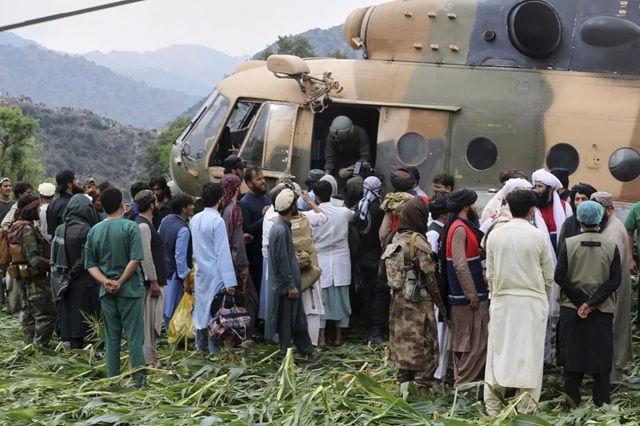
The Taliban government dispatched helicopters to evacuate the wounded, while dozens of commando forces were airdropped into inaccessible areas, Deputy Government Spokesman Hamdullah Fitrat said.
The earthquake hit hardest in Nurgal, Chawkay, Wadir, and Shomash districts of Kunar, but strong tremors were also felt in Nangarhar and Laghman provinces, in Kabul some 124 miles from the epicenter, and across the border in Pakistan, including Islamabad.
Afghanistan lies along a seismic fault where the Indian and Eurasian tectonic plates collide, making it one of Asia’s most earthquake-prone countries. The disaster is the second major quake to hit the country in less than two years; in October 2023, a 6.3-magnitude quake killed about 1,500 people in western Afghanistan.
The latest tragedy deepens the hardship of a nation already facing mass deportations of Afghans from Pakistan and Iran, a fragile healthcare system, soaring unemployment, and widespread food insecurity. The United Nations estimates that more than half of Afghanistan’s 42 million people are in need of humanitarian aid, but relief agencies warn that international funding is dwindling as winter approaches.