In Dubai, fortunes are being created at an unprecedented pace as new talent and capital flow into the city’s vibrant economy. Yet, according to Bloomberg, many of the largest individual wealth gains are being driven by some of the region’s longest-standing investors—particularly Indian entrepreneurs who have leveraged deep-rooted cultural and historical ties between South Asia and the Gulf. These business leaders are reshaping Dubai’s retail gold sector, transforming a fragmented marketplace into sprawling empires of luxury showrooms and vertically integrated supply chains.
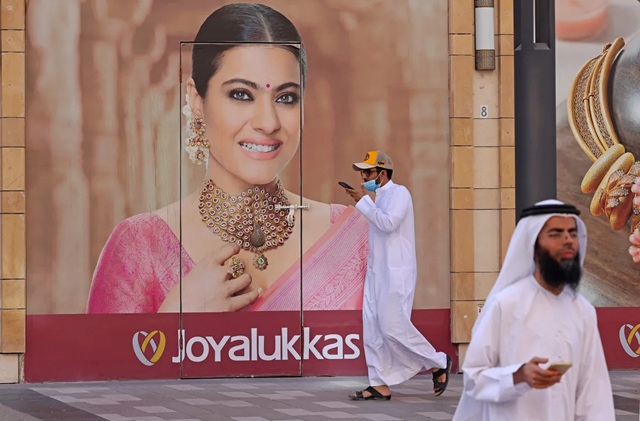
From the bustling Gold Souk to upscale malls, brands such as Malabar Gold & Diamonds, Joyalukkas India Ltd., and Kalyan Jewellers India Ltd.—all owned by some of India’s wealthiest families—now dominate Dubai’s jewelry landscape. Bloomberg’s analysis reveals that the founders of these chains have accumulated a combined net worth of $9.5 billion, as reflected in the Bloomberg Billionaires Index, which is tracking their fortunes for the first time. Dubai’s reputation as a global gold shopping hub, fueled by a growing South Asian diaspora and tourist influx, has enabled these businesses to scale rapidly and expand their market share.
The UAE’s long-standing connection with India is reflected in migration patterns as well. In 2023, the UAE hosted 7.2 million Indian nationals—more than any other Middle Eastern country—according to government data cited by Bloomberg. Over 3.5 million Indians live in the UAE, according to India’s Ministry of External Affairs. These communities have helped shape Dubai’s gold-buying habits, with jewelry purchases driven by weddings, religious celebrations, and investment needs. However, Bloomberg reports that recent changes in India’s trade policies have introduced new challenges. The reduction of import duties on gold last year narrowed the price advantage of buying in Dubai, resulting in a 16% year-on-year decline in jewelry demand by tonnage during the second quarter, as documented by the World Gold Council.
Despite the slowdown, Indian jewelers remain confident. “Most of our customers are Indian, followed by other South Asians and some native Arabs,” said Ramesh Kalyanaraman, executive director at Kalyan Jewellers, in an interview highlighted by Bloomberg. The company, which entered the Gulf market in 2013, operates 36 stores and reported a 22% jump in revenue from the Middle East in the year ending March 2025, reaching $369 million. Kalyan is also exploring expanding its manufacturing footprint in Dubai to hedge against potential tariffs from the United States.
Joyalukkas, which began as a modest shop in Kerala, India, and expanded its first UAE showroom in 1988, now operates 50 stores across the Middle East, including 28 in the UAE. Its chairman, Joy Alukkas, reflected on the growth, telling Bloomberg, “When I came to Dubai in 1986, I saw possibility where others saw limits.” Malabar Gold & Diamonds, with its roots in spice trading, opened its first Gulf outlet in 2008 and today runs 67 stores in the UAE and additional locations across Saudi Arabia, Oman, Qatar, Bahrain, and Kuwait.
The sector is also witnessing significant consolidation. This summer, Bloomberg reported that Titan Co., part of the Tata Group, agreed to acquire a controlling stake in Damas International’s jewelry business across the Gulf, marking one of the largest strategic moves in the region’s retail jewelry space.
While import duties in India have reduced the gap in pricing, Malabar Gold’s spokesperson told Bloomberg that consumer perception continues to favor Dubai’s gold market. “Many Indians still perceive the UAE as a destination where they can buy gold of assured quality,” the spokesperson noted. Similarly, Kalyan Jewellers is seeing sustained demand from clients drawn by trust and long-standing relationships. Moreover, these companies are diversifying operations to mitigate regional risks, with Malabar recently launching Mojawhraty, a new retail concept designed to cater to Arab clients.
The long-term outlook for gold remains positive. According to Bloomberg’s reporting based on data from the World Gold Council, the UAE recorded the world’s highest per capita gold demand last year, at 4.4 grams. Jewelry is increasingly bought not only for investment or savings but also as part of lifestyle choices, with consumers purchasing gold multiple times a year depending on occasions. “Jewelry used to be a yearly shopping, but now it’s a three or four types of shopping in a year,” said Kalyanaraman, highlighting changing consumer behavior.
Experts advise jewellers to continue innovating. Andrew Naylor, head of Middle East and Public Policy at the World Gold Council, told Bloomberg, “Jewellers should continue innovating in terms of design to appeal to a broader demographic and the wide range of nationalities residing or visiting the UAE and the region.”
As Dubai’s gold market evolves, Indian entrepreneurs remain at its core—expanding, adapting, and navigating shifting global trade dynamics while crafting new paths for wealth creation in one of the world’s most lucrative luxury sectors.