For years, offshore trusts offered China’s wealthiest individuals a sophisticated way to protect assets, plan succession and, in some cases, reduce their tax exposure. Now, that once-familiar route into the grey zones of international wealth management is rapidly becoming more difficult.
For Sarah Wang, a Shanghai-based tax lawyer specialising in offshore trust structures, the change is already visible among her clients. Most of her high-net-worth and ultra-high-net-worth clients have paused their plans.
“Some clients were midway through establishing offshore trusts, but now they have put their plans on hold following the new regulatory developments,” she said. “Others weighing up similar structures are also shelving their plans for the time being.”
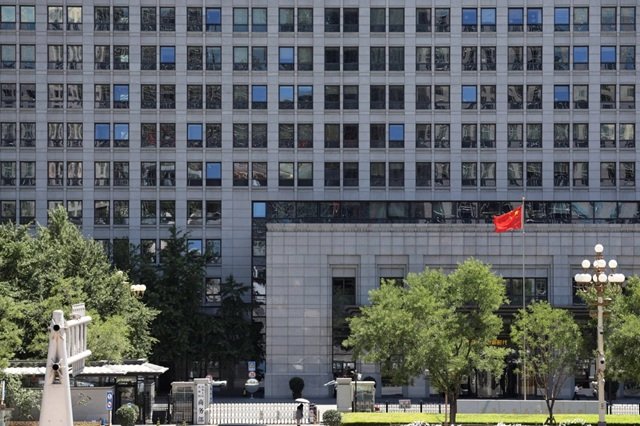
The immediate trigger was a set of rules unveiled by the Ministry of Finance on July 24, establishing, for the first time, clear provisions governing individual income tax liabilities on offshore trusts. The measures arrive after months of intensified enforcement aimed at tax avoidance among wealthy individuals, including undeclared offshore income, as well as top online influencers.
The new framework leaves substantially less room for ambiguity. It applies a uniform 20 per cent rate across every stage of a trust’s life cycle: when assets are transferred into the trust, on annual gains generated through asset appreciation and when the trust is eventually wound up.
The rules also extend to individuals who have changed their nationality if most of their income is generated within the mainland.
“Previously, the law merely required that anyone who has offshore trusts should pay tax, but it lacked detailed implementing provisions. This update fills the regulatory void,” said Ge Yuyu, a professor at the Shanghai National Accounting Institute.
For Beijing, the measures appear to form part of a longer-term effort to expand the tax base rather than simply an attempt to raise money quickly. Ge said mounting fiscal pressure made broadening the tax base necessary, while targeting high-net-worth individuals also aligned with the country’s goal of common prosperity.
The consequences are potentially substantial for people who have already placed significant assets offshore.
The inheritance dispute surrounding the family of Zong Qinghou, the billionaire founder of Chinese soft-drink giant Wahaha Group who died in 2024, offered a glimpse of the scale of wealth that can sit beyond the mainland. Three of his children born out of wedlock sought to freeze an offshore trust worth US$1.8 billion in Hong Kong.
Hong Kong court filings showed that Zong Qinghou had signed a letter of entrustment dated February 2, 2024, appointing his daughter Kelly Zong Fuli to act as settlor to establish three offshore family trusts for the children.
If a court ultimately validates the existence of those trusts, the new finance ministry rules could impose individual income tax when assets are transferred into them. Wang estimated that the potential bill could reach US$360 million. Where trusts hold financial assets, annual gains generated by those assets would also face a 20 per cent levy.
“The regulations are stringent, perhaps too stringent,” Wang said. She said the ministry’s announcement had delivered a heavy blow to the offshore trust industry, reducing its appeal as a vehicle for tax planning.
Trustees themselves are becoming more cautious. Wang said several overseas trustees she had spoken with were adopting a wait-and-see approach, while some were considering stricter Know-Your-Client procedures for Chinese clients, particularly regarding the source of funds.
“It is expected that establishing offshore trusts will become more complicated for mainland individuals, with substantially more paperwork required,” Wang said. “I don’t expect to see any new offshore trust formations over the coming months.”
The traditional offshore destinations for Chinese investors have included the British Virgin Islands, the Cayman Islands and Bermuda. He Yingxin, an official at the Sichuan branch of the State Administration of Foreign Exchange, wrote in 2023 that their international recognition, established legal systems and flexible trust structures had made them attractive locations for offshore trust formation.
There are no official statistics measuring the total volume of offshore trusts established by Chinese investors. Lawyers and financial industry practitioners, however, said the structures remained popular among wealthy individuals over the past two years because of their potential for asset protection, wealth succession and tax planning.
That last function is now under particular scrutiny.
The authorities have also created an opportunity for existing trust holders to regularise their affairs. Individuals who transferred assets into offshore trusts between 2023 and 2025 will have a 90-day window to make the relevant declarations to tax authorities and settle outstanding liabilities without late-payment penalties.
The wider enforcement campaign predates the new trust regulations. Since last year, mainland citizens have been called upon to self-declare overseas capital income dating back to 2022. Offshore stock earnings are subject to a 20 per cent tax on capital gains and dividends, alongside potential late fees. During the first five months of 2026, taxpayers reporting overseas income settled roughly 13 billion yuan (US$1.93 billion) in additional taxes.
International information-sharing has also made offshore wealth more visible. China committed to adopting the Common Reporting Standard, an agreement among tax authorities designed to prevent tax evasion, in 2014 and began its first round of exchanges in September 2018. The system has facilitated the exchange of information concerning offshore assets, including trusts.
The authorities’ attention to wealthy individuals is not new. He Yingxin has argued that entrepreneurs who accumulate wealth with the backing of national resources, including banking loans, preferential policies and domestic market demand, should not be able to move that wealth offshore to avoid domestic tax obligations.
He cited Haidilao as an example, noting that although the restaurant chain was founded in Sichuan province in 1994 and 87.6 per cent of its revenue in 2022 came from the mainland, its owner and his wife were Singaporean nationals and assets had been moved offshore.
Tax scrutiny has since widened. Jason Zhao, an insurance agent at Shanghai-based Manulife-Sinochem Life Insurance, said several clients had received calls from tax authorities asking them to declare dividends from overseas insurance policies.
“Tax officials didn’t ask my clients to pay back taxes – it was just a declaration requirement for now,” Zhao said.
The growing focus on personal income tax also reflects the government’s broader fiscal pressures. A professor with close ties to the State Taxation Administration, who requested anonymity, described individual income tax as a natural policy choice because other major sources of additional revenue were constrained by the sluggish economy, weak auto demand and the prolonged property market slump.
Personal income tax revenues reached more than 898 billion yuan in the first half of 2026, an increase of 13.1 per cent year on year, making it China’s third-largest tax category among 18. The State Taxation Administration attributed the increase to a buoyant capital market, fast-growing sectors such as technology and stronger oversight of high-income individuals.
The distribution of the burden is also striking. Since 2024, the top 10 per cent of earners by annual income have contributed just over 90 per cent of all personal income tax declared and paid.
Yet the new rules have raised questions about whether enforcement has gone too far.
Li Xin, a lawyer at Shenzhen-based DeHeng Law Offices, argued in a report released in late July that the regulations appear to require taxation of gains that exist only on paper. His example involved stocks worth 100 million yuan transferred into an offshore trust that doubled in value without the shares being sold.
“Under China’s Individual Income Tax Law, taxation on income from asset transfers hinges on two conditions: transfer of asset ownership and realisation of proceeds,” Li wrote. “Yet the new finance ministry regulations mandate levying tax on paper gains … This clearly exceeds the scope of its legal mandate.”
The distinction has become particularly contentious because on the mainland both on-paper and actual capital gains from freely tradeable shares are currently exempt from taxation, while cross-border investment gains are subject to annual tax levies.
“Onshore and offshore investments are subject to differential tax treatment. I don’t think that’s fair,” Wang said.
For wealthy individuals, however, the direction of travel is becoming increasingly difficult to ignore. Lawyers and financial practitioners said their clients had yet to settle on alternatives to offshore trusts and were instead adopting a cautious approach.
The authorities, meanwhile, say compliance is improving. Wang Shiyu of the State Taxation Administration said 99.95 per cent of taxpayers ordered to settle outstanding liabilities had filed their declarations, adding that taxpayers had shown markedly stronger awareness of tax compliance.
“There is no legitimate tax avoidance. Any tax avoidance constitutes tax evasion,” Ge said.
For one entrepreneur awaiting a listing on the tech-focused ChiNext board, the calculation is now straightforward.
“There appears to be little room for tax avoidance. Any attempt may lead to retroactive tax collection later. I want to stay out of the headlines, so law-abiding tax payment makes the most sense for me,” he said.
The message from Beijing is increasingly clear: offshore structures may still serve purposes such as asset protection and succession, but their usefulness as a means of reducing Chinese tax liabilities is being steadily narrowed. For the country’s wealthiest individuals, the era in which offshore trusts could comfortably occupy a regulatory grey zone may be coming to an end.