The UK government has concluded that Israel’s military actions in Gaza do not meet the criteria for genocide, marking a significant shift in the country’s stance, according to a letter obtained from The Times UK. The letter, written by David Lammy when he was serving as foreign secretary, states that although Israel’s bombing campaign is “utterly appalling,” the government’s assessment finds no evidence of specific intent to destroy a national, ethnic, racial, or religious group, which is required under the Genocide Convention.
This is the first occasion on which the UK government has explicitly ruled out genocide in relation to Israel’s actions in Gaza. Until recently, the government had maintained that determining genocide was a matter for judicial bodies, not for national governments.
In the letter addressed to Sarah Champion, chair of the international development committee, Lammy explained that the Foreign Office’s review concluded that Israel was not acting with genocidal intent. He wrote: “As per the Genocide Convention, the crime of genocide occurs only where there is specific ‘intent to destroy, in whole or in part, a national, ethnic, racial or religious group’. The government has not concluded that Israel is acting with that intent.”
The letter was sent before Lammy’s reassignment as justice secretary and deputy prime minister in a recent cabinet reshuffle.
Criticism Amid Humanitarian Concerns
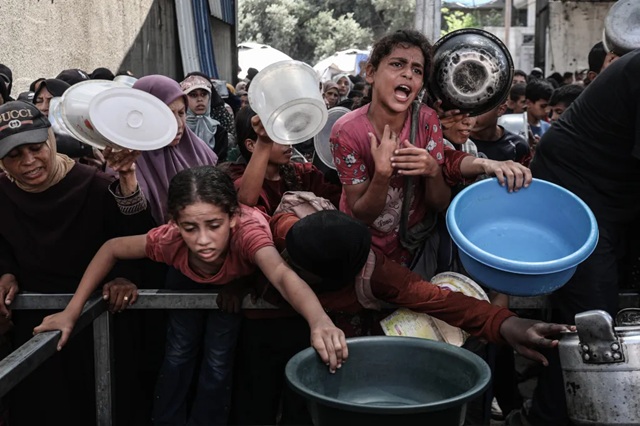
Despite the legal assessment, Lammy expressed deep concern over the humanitarian toll of Israel’s campaign, citing the “high number of civilian casualties, including women and children,” and describing the destruction as “extensive.” He urged Israel to “do much more to prevent and alleviate the suffering that this conflict is causing.”
The letter was prompted by Champion’s inquiry into how the UK’s continued supply of British-made components for F-35 fighter jets — used by Israel — aligns with the government’s obligation to prevent genocide.
Last September, the UK suspended 30 arms export licences to Israel over concerns about the misuse of weapons in Gaza. However, it exempted the supply of parts for the F-35 jets, citing its involvement in a NATO defence programme deemed essential for international security.
Rising Tensions and Political Pressure
The issue arises during a critical period of diplomatic engagement for Prime Minister Sir Keir Starmer, who is expected to formally recognise the state of Palestine later this month unless Israel agrees to specific conditions. Starmer recently met with Mahmoud Abbas, president of the Palestinian Authority, and is scheduled to host Israeli President Isaac Herzog later this week.
Tensions remain high following a deadly terror attack in Jerusalem on Monday, where six civilians were killed in a shooting during rush hour — one of the deadliest incidents in recent years.
Calls from the Arts Community
The situation has drawn sharp reactions from global civil society. Over 1,300 entertainment industry professionals, including actors Olivia Colman, Aimee Lou Wood, Susan Sarandon, and Mark Ruffalo, signed a pledge to boycott Israeli film institutions accused of complicity in “genocide and apartheid against the Palestinian people.” The campaign, launched by Film Workers for Palestine, references the International Court of Justice’s findings that there is a “plausible risk of genocide in Gaza.”