Editor’s Note: The following excerpts are taken from an article originally published by the author on his official LinkedIn page.
The operation “Summit of Fire” was carried out by Israel as an offshore mission aimed at decapitating the Hamas leadership based in Doha, Qatar, on September 9, 2025. While the Mossad traditionally holds primary responsibility for overseas operations, this particular mission was orchestrated by Shin Bet in Tel Aviv and executed by the Israeli Air Force (IAF). The operation received additional support from the Intelligence Department of the Israeli Defense Forces (IDF). A total of fifteen IAF fighter jets flew 1,800 kilometers to deliver twelve precision-guided bombs. The air-to-ground missiles struck their intended target within seconds of one another. Aerial refueling was conducted, and all pilots returned safely from the mission.
Following the attack, Israel issued a statement asserting that the IDF conducted a “precise strike targeting the senior leadership of the Hamas terrorist organization,” whom they held “directly responsible for the brutal October 7 massacre.” The Israeli Prime Minister’s Office, on the same day, clarified that the operation was “a completely independent Israeli operation,” stating, “Israel initiated it, Israel executed it, and Israel takes full responsibility.” Over the past three years, Israel has increasingly normalized extraterritorial military actions against its adversaries. Since the Hamas-led massacre of October 7, 2023, Israel has launched attacks against targets in Gaza, the West Bank, Lebanon, Syria, Iraq, Iran, Yemen, and Qatar.
The Hamas leaders targeted in Qatar represented nearly all of the remaining leadership structure of the organization. The individuals included Khalil al-Hayya, the head of Hamas in Gaza; Zaher Jabarin, head of Hamas in the West Bank; Khaled Meshaal, head of Hamas abroad; Nizar Awda, a member of the Political Bureau; Tahar Nunu, a member of the Political Bureau responsible for public relations; Hossam Badran, also a member of the Political Bureau; Mohammed Darwish, chairman of Hamas’ Shura Council; and Mousa Abu Marzouk, deputy chairman of the Political Bureau. Israel signaled that should any of these figures survive the attack, they would be pursued and eliminated in due course as part of the policy that “punishment should follow crime.”
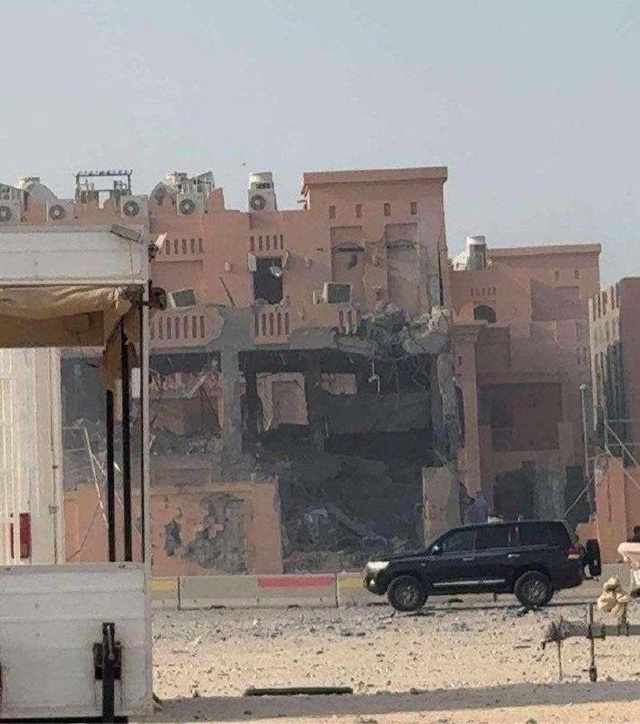
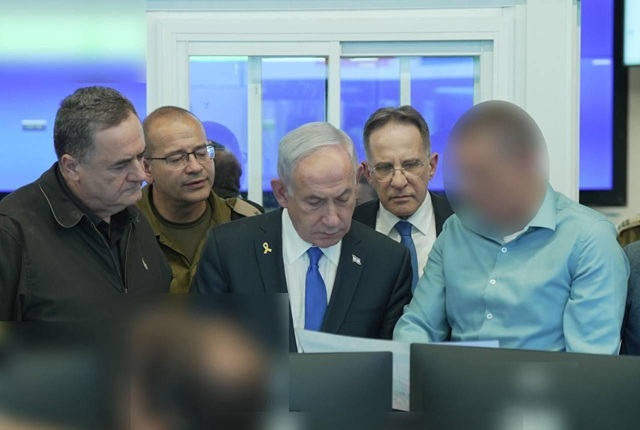
By targeting Hamas leadership in Qatar, Israel broadened its military campaign across the Middle East, extending its reach into the Gulf Arab state where Hamas has long maintained a base of operations. During the strike, Prime Minister Benjamin Netanyahu, Defense Minister Israel Katz, acting Shin Bet chief “Mem,” IDF Intelligence Directorate chief Major General Shlomi Binder, Military Secretary to the Prime Minister Major General Roman Gofman, and Netanyahu’s chief of staff Tzachi Braverman were present at Shin Bet’s command center. A joint statement from Netanyahu and Katz issued after the operation detailed the rationale behind the mission. It declared that, “Yesterday, following the deadly attacks in Jerusalem and Gaza, Prime Minister Netanyahu instructed all security agencies to prepare for the possibility of eliminating Hamas leaders. The Defense Minister fully supported this proposal.” The statement further explained that, “In light of an operational opportunity and after consultation with all heads of the security system, the Prime Minister and Defense Minister decided to carry out the directive given last night to the IDF and Shin Bet, and they did so precisely and optimally.” They believed the action was justified given that “this Hamas leadership initiated and organized the October 7 massacre and has continued to launch murderous actions against the State of Israel and its citizens since, including taking responsibility for the murder of our citizens in yesterday’s attack in Jerusalem.”

Following the attack, Netanyahu ordered ministers to refrain from giving interviews or engaging in activity on social media until further notice. Qatar announced it would suspend its mediation efforts for a peace deal until further notice. Two days prior to the operation, U.S. President Donald J. Trump had issued a stern warning titled “This is my last warning, there will not be another one,” stating, “Everyone wants the hostages HOME. Everyone wants this war to end! The Israelis have accepted my terms. It is time for Hamas to accept as well. I have warned Hamas about the consequences of not accepting. This is my last warning, there will not be another one!” Additionally, Speaker of the U.S. House of Representatives Mike Johnson asserted, “Hamas must be destroyed.”
This operation marked the first time since the Entebbe raid that Israel openly attacked a country not formally declared as an enemy. However, in recent weeks, several Israeli lawmakers have attempted to designate Qatar as an enemy state. The broader implications of this operation are significant, as Israel’s strike on Hamas’s leadership in Qatar represents a turning point in its fight against the organization. The attack has effectively closed the door to negotiations, with the likelihood that hostages will not be released alive. Israel, along with Western and Arab governments, had repeatedly urged Hamas to release the hostages, but Hamas’s ideology remained rooted in exploiting them for its survival. The removal of the Hamas leadership is expected to lead to a full-scale IDF campaign to destroy Gaza. Given Hamas’s ongoing hostility, the probability of hostages being released or Hamas disarming remains slim. If hostages are killed, Israel may move to annex both Gaza and the West Bank.
In confronting terrorism, Israel’s approach has been to aggressively hunt and eliminate threats while prioritizing national security over broader humanitarian concerns. Though this method has drawn criticism domestically and internationally, Israel has demonstrated exceptional expertise in executing decapitation operations. Its counter-terrorism model is now being studied by other governments facing similar threats. While Israel’s focus on eliminating terrorists has proven operationally successful, its humanitarian efforts have sparked controversy. Despite this, Israel’s approach to counter-terrorism is likely to be adopted by many governments in the coming years, even if debates about its ethical implications continue.