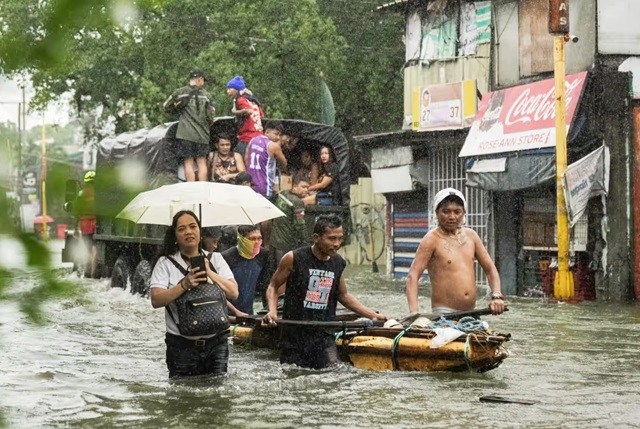
Flood control projects across the Philippines, intended to protect communities from increasingly severe typhoons, are now at the center of a major corruption scandal, according to reporting by Nikkei Asia.
Maritess Alvaro, 52, a resident on the banks of the Angat River near Metro Manila, had been anticipating a long-delayed flood control project near her home. “We’d been praying that a project like this would start in our area,” Alvaro told Nikkei Asia. “We rejoiced when the project started.” Though construction was promised in 2019, it only began in August this year, highlighting delays that have frustrated residents nationwide.
The Philippines, hit by an average of 20 typhoons annually, recently endured three storms between July and August, causing roughly 16.51 billion pesos ($290 million) in infrastructure damage and 3.16 billion pesos in agricultural losses. Amid these disasters, concerns over graft have intensified. The country ranked 114th out of 180 nations in Transparency International’s latest Corruption Perceptions Index, with the Marcos family widely viewed as part of the entrenched elite.
The massive flood control initiative, launched under former President Rodrigo Duterte and continued by President Ferdinand Marcos Jr., has seen nearly 10,000 structures completed since July 2022, with 5,700 more under construction. However, allegations of billions of pesos in kickbacks to contractors and politicians prompted Marcos to order investigations during his national address in late July. Lawmakers in both the House of Representatives and Senate have launched parallel probes.
Marcos has proposed slashing next year’s flood control budget by 250.8 billion pesos and establishing an independent investigation commission within the Department of Public Works and Highways, which oversees public bidding for such projects. “The huge amount of money… being received by some people who have no right to pocket that money—they don’t even hide it,” Marcos said on a recent podcast, admitting the scandal has caused him “sleepless nights.”
Public anger has manifested in large-scale protests. On Sunday, about 2,500 people joined a peaceful anticorruption march in Quezon City, with activists calling for a larger demonstration on September 21. Business leaders have also condemned the scandal, with the Philippine Chamber of Commerce and Industry labeling it “tantamount to economic sabotage.” George Barcelon, the group’s chairman, told Nikkei that taxpayer money is being lost while crucial budgets for education, health, and tourism are being cut.
The scandal has ensnared prominent figures, including Cezarah Discaya, a construction magnate whose companies have participated in flood project bids since 2016, and Paolo Duterte, son of former President Rodrigo Duterte, accused of allegedly receiving 51 billion pesos in kickbacks. Both parties have denied wrongdoing.
Political analysts warn that the unresolved corruption crisis could deter investment in the Philippines. “If these scandals remain unresolved, then investors who are averse to high transaction costs will turn away from the Philippines,” said Anthony Lawrence Borja, associate professor at De La Salle University in Manila.