China’s State Council Information Office on Friday released a white paper titled “CPC Guidelines for Governing Xinjiang in the New Era: Practice and Achievements”, detailing unprecedented developments in the Xinjiang Uygur Autonomous Region. The document presents a comprehensive picture of the region’s transformation over the past decade, encompassing economic growth, legal reforms, cultural revival, social welfare improvements, and environmental protection. According to the white paper, these achievements have been guided by the leadership of the CPC Central Committee with Xi Jinping at its core, reflecting a people-centred approach to governance, high-quality development, and social stability.
Law-Based Governance and Institutional Strengthening
The white paper emphasises that “Xinjiang strives to build a law-based government,” citing that administrative law enforcement departments at all levels made over 500,000 pieces of information publicly available, while law enforcement supervision and inspection were conducted on more than 2,100 occasions. Judicial offices have been established at township and urban sub-district levels, alongside people’s mediation committees in villages and communities, serving as legal counsel for ordinary residents. A public legal service system now ensures access for both urban and rural populations, strengthening the region’s foundation for social stability.
Foreign-related governance has also been elevated. The Standing Committee of the Xinjiang People’s Congress revised the regulations on border administration and released the Regulations on China (Xinjiang) Pilot Free Trade Zone, positioning the region as a core area of the Silk Road Economic Belt. The white paper highlights that “greater protection of human rights” is central to governance, with the CPC Central Committee integrating human rights principles into its regional policies. Xinjiang has reportedly maintained social harmony, improved living standards, developed ethnic unity, safeguarded religious freedom, and protected the traditional cultures of all ethnic groups.
High-Quality Economic Growth and Infrastructure Expansion
Economic growth in Xinjiang has been remarkable. From 2012 to 2024, the region’s GDP surged from RMB 749.95 billion to more than RMB 2.05 trillion, exceeding the RMB 2 trillion mark for the first time, with an annual growth rate of 7 percent at constant prices. Per capita nominal GDP increased 2.3 times, from RMB 33,495 to RMB 78,660. The revenue in the general public budget also jumped from nearly RMB 90.9 billion in 2012 to RMB 240.97 billion in 2024, with an average annual growth exceeding RMB 10 billion. The white paper asserts that Xinjiang has been fully committed to “high-quality development,” achieving historic leaps in multiple economic indicators.
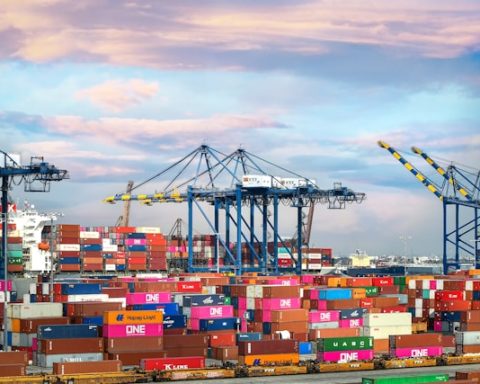
Industrial restructuring has been a central focus. In 2012, primary, secondary, and tertiary industries accounted for 16.1 percent, 44.3 percent, and 39.6 percent, respectively. By 2024, these figures shifted to 12.5 percent, 39.6 percent, and 47.9 percent, reflecting a stronger service sector. Urbanisation has also progressed, with the proportion of permanent urban residents rising from 44.22 percent in 2012 to 60.36 percent in 2024. Infrastructure has expanded rapidly, with railway mileage increasing from 4,914 km to 9,202 km, highway networks extending to 230,000 km, and the region now connected by 595 civil air routes, including 25 international flights. Power grids, optical fibre networks, and broadband coverage have similarly improved, ensuring connectivity across Xinjiang’s urban and rural areas.
Modern Industrial Systems and Agricultural Achievements
Xinjiang has focused on building a modern industrial system tailored to its natural resources and strategic position. Grain yields per hectare reached 7,872.75 kg, the highest nationwide, and total food production increased 53.6 percent from 15.18 million tonnes in 2012 to 23.3 million tonnes in 2024. Cotton output, at approximately 5.69 million tonnes, accounted for 92.3 percent of the national total, maintaining Xinjiang’s position as the country’s top producer for 32 consecutive years. Oil and gas production reached 66.64 million tonnes, raw coal output hit 543 million tonnes, and installed electricity capacity surpassed 192 million kW, including over 100 million kW from new energy sources.
Innovation and talent development have been prioritised, with a RMB 10 billion fund established to support education, science, and technology initiatives. High-tech zones, innovation centres, and vocational education programmes have proliferated, cultivating a new generation of skilled workers. The white paper notes that Xinjiang has accelerated its progress in high-tech industrial development, with 2,742 high-tech enterprises, 11 single-product champion manufacturing enterprises, and 52 exemplary specialised enterprises operational by 2024.
Green Development and Environmental Protection
Environmental protection has been integral to Xinjiang’s modernisation. The white paper highlights that “lucid waters and lush mountains are invaluable assets,” underscoring a holistic approach to conserving natural resources. Air quality improved, with 78.1 percent of days in 2024 classified as having good air quality. Water management has also advanced, with 95.9 percent of surface water reaching Grade III or above. Desertification along the Taklimakan Desert has been contained through a 3,046 km sand-blocking green belt—the longest in the world—while forest coverage increased from 4.24 percent in 2012 to 5.07 percent in 2024. Carbon intensity has decreased, reflecting the region’s commitment to achieving peak carbon emissions and carbon neutrality.
Cultural Preservation and Flourishing Arts
Xinjiang’s cultural landscape has evolved alongside economic development. Protection of both tangible and intangible cultural heritage has been prioritised, with 195 institutions of cultural heritage protection, 150 registered museums, and 9,545 verified immovable cultural relics by 2024. Key historic sites, including the Western Regions Frontier Command ruins, Ulanbay Ancient City, and Beiting City, have been preserved and utilised for educational and tourism purposes. Intangible cultural heritage items, including 3 listed by UNESCO, highlight the region’s rich ethnic diversity.
Artistic creation has flourished, with literary awards such as the Tianshan Literature Award recognising Xinjiang-themed works, and performing arts, films, and television dramas receiving national acclaim. Public cultural services have expanded to include 111 libraries, 118 cultural centres, and 11,783 village cultural centres, alongside 88,800 sports venues. Cultural initiatives have sought to ensure that all ethnic groups have access to quality cultural experiences, with nearly 1.37 million free movie screenings conducted in rural areas between 2012 and 2024.
Tourism has been integrated with culture, with visitor numbers increasing from 48.6 million in 2012 to 302 million in 2024. Winter sports, road trips, and cultural tourism have become major draws, contributing RMB 359.5 billion in total tourism revenue. Xinjiang has invested in developing winter sports venues, ski resorts, and heritage-based tourism, creating a thriving cultural-tourism ecosystem.
Social Welfare, Poverty Alleviation, and Education
Social welfare and wellbeing have been central to Xinjiang’s governance. By 2020, the region eradicated absolute poverty, lifting over 3.06 million residents out of poverty. Infrastructure improvements have followed, including access to paved roads, public transport, electricity, and clean water. The per capita disposable income in previously impoverished rural areas rose to RMB 14,477 in 2021, a 2.8-fold increase since 2012.
Employment growth has been steady, with the employed population rising from 12.46 million in 2012 to 13.91 million in 2024. Education has expanded dramatically, with compulsory education completion rates exceeding 99 percent, senior high school enrolment at 97.74 percent, and 63 higher education institutions by 2024, including new universities in southern Xinjiang. Vocational education has grown by over 60 percent, reflecting a commitment to high-quality, skills-based education.
Healthcare access and social security have also improved, with over 19,000 medical institutions and 314,600 healthcare staff ensuring community-level care. The region has developed key clinical specialties, telemedicine networks, and international-standard medical centres, while life expectancy has risen from 30 years in 1949 to 77 years in 2024. Social security coverage now exceeds 95 percent of the population for pensions and medical insurance, while dynamic mechanisms ensure the continuous adjustment of social assistance standards.
National Support, Paired Assistance, and Civil-Military Integration
The white paper emphasises that these achievements are underpinned by national support and strategic policies. Since 2012, central government transfer payments to Xinjiang have exceeded RMB 4 trillion, with RMB 543.48 billion allocated in 2024 alone. Paired assistance programmes, allocating over RMB 200 billion in funds and securing RMB 3 trillion in investment, have focused on economic development, education, healthcare, and cultural exchange.
Civil-military integration has been advanced through the Xinjiang Production and Construction Corps, which coordinates civilian and military resources to strengthen infrastructure, education, healthcare, and industry. The white paper notes that “civil-military integration in Xinjiang is going wider and deeper, contributing to common development through unity and mutual assistance.”
Looking Ahead: Stability, Development, and Cultural Prosperity
According to the white paper, Xinjiang’s transformation represents a historic leap in governance, development, and human rights. The document states: “Following the Party’s guidelines for governing Xinjiang in the new era, the region will embark on an increasingly broad development path and embrace an even brighter future.” With the combined efforts of local residents, national support, and strategic leadership, Xinjiang is portrayed as a model of economic modernisation, social welfare, cultural preservation, and environmental sustainability.
The white paper concludes that the achievements in Xinjiang are “fundamentally attributed to the leadership by General Secretary Xi Jinping as the core of both the CPC Central Committee and the entire Party,” asserting that the region’s development exemplifies the broader goals of Chinese modernisation. Looking forward, Xinjiang is positioned to continue as a vital hub along the Silk Road Economic Belt, integrating economic growth with social harmony and cultural prosperity, setting a course for sustainable development and enduring stability.