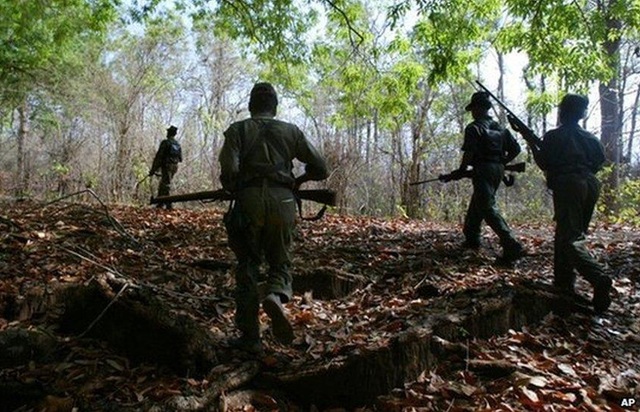
On September 18, 2025, a 35-year-old female Communist Party of India-Maoist (CPI-Maoist) cadre, Buski Nuppo, with an INR 500,000 bounty on her head, was killed in an encounter with Security Forces (SFs) in the hilly forest area between the Gufdi and Permapara villages under the Gadiras Police Station limits in Sukma District of the Bastar Division in Chhattisgarh. SFs also recovered a range of items from the scene, including a .315 bore rifle, five cartridges, a wireless set, eight detonators, a 10-meter-long Cordex wire, four gelatine rods, gunpowder, a radio, Maoist literature, and other materials. Nuppo, part of the Malangir Area Committee, was wanted in connection with nine criminal cases spanning Sukma and Dantewada districts. She had been evading arrest, with the state government offering an INR 500,000 reward for information leading to her capture.
Elsewhere, on the same day, two wanted women CPI-Maoist cadres, Sumitra aka Sunita Veladi (38) and Lalita aka Laddo aka Sandhya Korsa (34), who carried a combined bounty of INR 1.4 million, were shot dead by five C-60 commando teams and a Central Reserve Police Force (CRPF) battalion, who cordoned off a guerrilla hideout in the dense Modaske jungles in the Etapalli tehsil (revenue unit) of the Gadchiroli District in Maharashtra. When the gunfire receded, along with the bodies of the two elite woman Maoists, SFs recovered an AK-47 rifle, a pistol, 37 live rounds, two walkie-talkies and sundry insurgent gear. Sumitra, from Madvei village of the Aheri tehsil, the Gatta Local Organisational Squad (LOS) ‘commander’, had been involved in 14 encounters and 12 murders, including the killing of a top C-60 commando, Mahesh Nagulkar. Lalita, hailing from Neltola in Chhattisgarh’s Kanker District, was a People’s Liberation Guerrilla Army (PLGA) ‘assistant commander’, with eight encounters, four murders, one charge of arson, among other cases, against her.
On September 17, 2025, at least two CPI-Maoist cadres were killed by SFs in an encounter in Bijapur District in the Bastar Division of Chhattisgarh. During the subsequent search operation, the bodies of the two Maoists, one .303 rifle, one barrel grenade launcher [BGL], explosives and other material, were recovered from the encounter site.
These incidents reflect the steady attrition of Maoist cadres and the strengthening of SFs in the remaining Left Wing Extremism (LWE)-affected areas due to ongoing anti-Naxalite operations.
According to partial data compiled by the South Asia Terrorism Portal (SATP), at least 317 Naxalites have been killed across the country in the current year, so far (data till September 21, 2025). During the corresponding period of 2024, 202 Naxalites had been killed. Through 2024, a total of 296 Naxalites were killed across the country, and another 56 had been killed in 2023. Significantly, at least 861 Naxalites have been killed since January 21, 2024, when Union Home Minister (UHM) Amit Shah asserted that the country would be freed of the menace of Naxalism.
On May 21, 2025, in a major tactical blow to the CPI-Maoist, Namballa Keshava Rao aka Basavaraju aka Ganganna aka Krishna aka Vijay aka Prakash (70), the ‘general secretary’ of the party (the highest executive post), a ‘Politburo member’, a ‘CC’ member, and a Central Military Commission (CMC) member, was killed along with 26 fellow Maoist cadres, in an encounter with SFs in the dense jungles between the Abujhmadh Forest and the Indravati National Park of the Narayanpur District in the Bastar Division of Chhattisgarh. As the ‘general secretary’, Basavaraju had embodied both the military-strategic and ideological coherence of the Maoists. His elimination was more than a tactical victory for the SFs and marked the breakdown of centralized command of the CPI-Maoist.
Earlier, SAIR had noted that on November 5, 2018, disconcerted by the weakening movement, the Maoists replaced Muppala Lakshmana Rao aka Ganapathy (71), the former ‘general secretary’ of the CPI-Maoist, with his then ‘second-in-command’, Basavaraju, who had a reputation for greater proclivity to violence than Ganapathy, as he was an expert in explosives and military techniques, had a good network with arms traders, and had been heading the CPI-Maoist’s ‘military wing’, PLGA, since its inception on December 2, 2000.
Following the elimination of Basavaraju, and with only three ‘politburo’ members and 17 ‘CC’ members still active, the Maoist hierarchy has shrunk drastically, exposing internal fragility and reducing the leadership’s ability to coordinate operations across surviving fragments of the so-called Red Corridor. At this juncture speculation has been rife regarding who will be heading the party, and two names have made the rounds – Mallojula Venugopal aka Abhay aka Bhupati aka Master aka Sonu (69), and Thippari Tirupathi aka Devuji aka Devji aka Deoji aka Sanjiv aka Sanjeev aka Chetan aka Ramesh aka Kumma aka Shankar aka Sheshu aka Jagan aka Sudharshan aka Devanna (60). However, after more than three long months, ending all speculation, most open media reports on September 9, 2025, indicated that Thippari Tirupathi aka Devuji, had been made the ‘general secretary’ of the CPI-Maoist. Police sources believe Tirupathi’s appointment was finalised at a recent meeting in Bastar. Describing Devji as a key strategist, a senior Telangana Police official privy to the development disclosed, “It (there was a meeting) appears so… and a decision was taken. It is all tactics and strategies with which they (Maoists) choose (their leader).”
Tirupathi hails from Korutla town, Ambedkar Nagar, in the erstwhile Karimnagar District of Telangana, has been the party’s ‘politburo’ member and led the ‘CMC’. Reports noted that Tirupathi, who carries a reward of INR 10 million on his head, was instrumental in creating the first armed platoon of the PLGA. Tirupathi’s name is also in the National Investigation Agency’s (NIA) most wanted list, with a bounty of INR 1 million. He is believed to have masterminded the April 6, 2010, Chintalnad-Tadmetla massacre in which 76 SF personnel were killed, and the March 15, 2007, Rani Badla massacre in which 55 policemen – including 16 personnel of the Chhattisgarh Armed Force (CAF) and 39 Special Police Officers (SPOs) – were killed and another 12 injured. Tirupathi’s appointment is historic as, for the first time, a Dalit would lead a movement long dominated by leaders from non-Dalit backgrounds. Symbolically, this represents an attempt to diversify representation and potentially re-energize recruitment among marginalized communities. However, such symbolic gains are unlikely to translate into operational strength, given the large attrition of cadres, declining ideological appeal, and the consolidation of SFs across the erstwhile ‘heartland’ territories of Maoist domination.
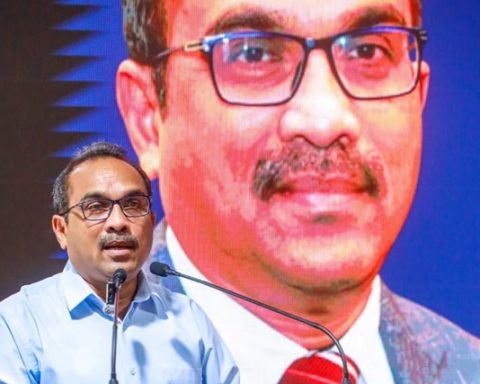
Commenting on the news of Thippari Tirupathi being appointed as the ‘general secretary’ of the CPI-Maoist, and noting that this was a a formal leadership change, not necessarily an immediate organisational transformation, Bastar Range Inspector General of Police (IGP) Sundarraj Pattilingam thus asserted, “It will hardly make any difference to the Maoist outfit who will head it since the outlawed organization is now collapsing and inching toward extinction.”
In another notable development, Madvi Hidma aka Santosh, the youngest ‘CC’ member of the CPI-Maoist and ‘commander’ of the PLGA’s 1st Battalion, has been appointed ‘secretary’ of the Dandakaranya Special Zonal Committee (DKSZC), considered the most powerful Maoist formation. Hidma, hailing from Puvarti village in Sukma District, is the first Naxalite cadre from Bastar to be elevated to the position. During his Police interrogation, Jorige Nagaraju aka Kamlesh, a Maoist ‘CC’ member who surrendered in the Vijayawada District of Andhra Pradesh on July 26, 2025, disclosed that it was initially thought that Ramachandra Reddy aka Srinivas, the former ‘head’ of the ‘Mobile Academic Political Organisation School’, would be given the charge of the DKSZC. But due to his advanced age and health issues, he was not given the responsibility. The name of another Telangana leader, Takkallapally Vasudeva Rao aka Asanna, was also discussed. In the end, however, Hidma was reportedly appointed as DKSZC ‘secretary’, one of the most powerful decision-making bodies in the party.
Hidma’s elevation highlights two trends: a shift from Telugu dominance to tribal leadership, particularly empowering Koya fighters, and a prioritization of military skills over ideological command. Hidma’s guerrilla reputation suggests that military resilience will be emphasized, particularly in Dandakaranya – a former Maoist stronghold spanning territories in Chhattisgarh, Odisha, Maharashtra, and Telangana. Yet this internal reorganisation risks deepening factionalism: tribal cadres may welcome Hidma’s leadership, but sidelined Telugu leaders, perceiving a loss of influence, could destabilise organisational cohesion at a time when unity is most desired.
Signs of fracture are already in evidence. On September 16, 2025, a statement, issued by Maoist leader and official ‘spokesperson’ of the CPI-Maoist’s ‘central committee (CC)’, Abhay aka Mallojula Venugopal Rao, offered a temporary suspension of armed struggle for one month and invited conditional peace talks with the Centre, asking that jailed leaders be allowed to participate and that security operations be suspended while consultations took place. The communique/letter, titled ‘Temporarily abandoning the armed struggle’, was purportedly written on August 25 and made public on September 16. The press release included Abhay’s latest photograph, which sources said was meant to establish authenticity and build confidence with authorities, should video calls be used to hold discussions. By September 19, 2025, the security agencies as well as the Police forces were convinced that the September 16 statement was authentic, after the statement’s audio version was confirmed by multiple surrendered or arrested Maoists who identified it to be that of ‘Abhay’. In a reply on the development, on the same day, IGP Sundarraj Pattilingam said that the government’s response to the CPI-Maoist appeal will have to “come from the highest level”, that is, the Centre, with the decision likely to be taken by the Prime Minister and Home Minister, and added,
Till such a decision is taken, counter-Naxal forces are continuing their operations against Reds and their hideouts as before. There is no direction to the forces to scale down their onslaught against Maoists in their ‘core’ areas.
Despite Abhay’s temporary suspension of armed struggle for one month and invitation for conditional peace talks with the Centre, the Maoists have already orchestrated at least three violent incidents against civilians since September 16.
On September 18, 2025, a 25-year-old youth, identified as Devendra Yadav, was allegedly abducted and killed by CPI-Maoist cadres on suspicion of being a ‘police informer’, in the Balaghat District of Madhya Pradesh.
On September 18, 2025, CPI-Maoist cadres of the Malangir Area Committee killed Bandi Korram, a resident of Nilawaya village towards the north of the Potali Central Armed Forces camp under the Aranpur Police Station limits in Dantewada District in the Bastar division of Chhattisgarh. Korram was dragged out and killed on suspicion of being an ‘informer’.
On the same day, CPI-Maoist cadres hacked a villager, Dashru Ram Oyam (36), to death after accusing him of being a ‘police informer’, at Benchram village under Jangla Police Station limits in the Bijapur District of the Bastar Division in Chhattisgarh.
According to the SATP database, the Maoists have killed at least 44 civilians in LWE-related incidents across the country this year, so far (all data till September 21, 2025). A total of 4,126 civilians have been killed since March 6, 2000.
Crucially, on September 18, 2025, CPI-Maoist party leaders responded to the announcement of the ‘cessation of armed struggle’ by Abhay, declaring that the statement by Abhay was “personal”, and that they and the party had “no connection” with it. The Maoist party leaders added that they had been putting forward conditional proposals for peace talks since March this year. They demanded that the government’s Operation Kagar (also called Operation Black Forest) be stopped and talks be held in a peaceful atmosphere. Further, the ‘central’ and ‘state committee’ members were surrendering due to health reasons, and not under SF pressure. They further stated that giving an email address to express their views on the peace talks was pointless, that it would have been better if those who make such statements had taken the party’s permission, and that Abhay’s unilateral announcement was damaging to the party. The party leaders warned that announcing a ceasefire without holding any discussions within the party was a “serious” move.
Out of the blue, however, on September 20, 2025, Chhattisgarh Deputy Chief Minister Vijay Sharma announced that the government was willing to ‘positively consider’ the CPI-Maoist offer to lay down arms and start peace negotiations, but that the outfit must immediately stop civilian killings and remove Improvised Explosive Devices (IEDs) it had planted across its areas of influence. Sharma declared,
The CPI(Maoist) letter issued by its spokesperson Abhay was written on Aug 15 but issued a month later. But even after Aug 15, there have been killings of two shikshadoots (temporary, visiting teachers), on Aug 27 in Bijapur and on Aug 29 in Sukma. On Sept 2, two more civilians were killed by Maoists in Sukma. … The final call on CPI-Maoist’s peace offer will be taken by the top political leadership, comprising the prime minister and home minister, after careful consideration and due consultation with all the stakeholders. … We are ready to welcome Maoists with open arms if they choose to come forward, including starting with a video call, and lay down arms; we will ensure their rehabilitation and reintegration into the mainstream.
Adding to the offer from the Deputy Chief Minister, IGP Sundarraj Pattilingam noted that it would take Maoists no more than a week to deactivate the IEDs – laid across ‘core areas’ in the Dandakaranya region and on the Bihar-Jharkhand border – if such a directive was issued by the top leadership.
This can only add to the public dissonance at the top levels of Maoist leadership. The party has suffered a succession of high-profile surrenders in Chhattisgarh, Jharkhand, Odisha and Telangana that expose internal disillusionment, ethical and strategic rifts and weakening morale. On September 15, 2025, for instance, Janasi aka Bachela Matami, a senior Maoist leader with a bounty of INR 800,000 on her head, surrendered before the Police in Gariabandh District of Chhattisgarh. She began her career in the Maoist ranks handling press and propaganda, later climbing the hierarchy to serve as a ‘zonal committee (ZC)’ member, ‘deputy commander’, ‘commander’, and most recently, as the ‘secretary’ of the Nagari area committee. She was the wife of slain Maoist ‘commander’ Satyam Gawade, a senior divisional committee member (DVCM), who was killed in an encounter in 2014. Despite Gawade’s death, Janasi remained active in the organization and led multiple violent operations, particularly after taking over as ‘area secretary’ in 2022. During her surrender, however, Janasi reportedly cited disillusionment with the organization’s weakening ideology, increasing pressure from intensified security operations, and personal loneliness following her husband’s death, as key reasons for laying down arms. Similarly, on September 13, 2025, Pothula Padmavathi aka Kalpana aka Mynakka aka Mainabai aka Sujathakka (62), a ‘CC’ member, Secretariat Member, South Sub-Zonal Bureau Secretary and in charge of Janatana Sarkar (People’s Government of the Maoists) under the DKSZC, who had a reward of INR 2.5 million on her head, surrendered before the Director General of Police (DGP) in Hyderabad, Telangana. Sujathakka, hailed from Jogulamba Gadwal, and was the wife of slain Maoist leader Mallojula Koteshwar Rao aka Kishanji, who served as a ‘CC’ member and Secretary of the West Bengal State Committee, and was killed in an exchange of fire with SFs in West Midnapore, West Bengal, on November 24, 2011. In May 2025, she decided to leave the organization, citing health issues and expressed her desire to live peacefully with her family and avail of rehabilitation benefits.
Significantly, 1,146 Naxalites (666 in Chhattisgarh, 390 in Telangana, 37 in Andhra Pradesh, 24 in Maharashtra, 15 in Jharkhand, eight in Karnataka, four in Odisha, and two in Bihar) have surrendered in the current year, 2025, in addition to another 475 Naxalites (332 in Chhattisgarh, 45 in Andhra Pradesh, 30 in Telangana, 26 in Jharkhand, 21 in Odisha, 19 in Maharashtra, one each in Bihar and Kerala) in 2024. A total of 18,372 Naxalites (7,318 in Odisha, 5,138 in Chhattisgarh, 3,902 in Andhra Pradesh, 720 in Telangana, 444 in Bihar, 390 in Jharkhand, 336 in Maharashtra, 66 in West Bengal, 21 in Karnataka, 15 in Madhya Pradesh, 13 in Assam, four in Uttar Pradesh, three in Tamil Nadu and two in Kerala) have surrendered across the country since March 6, 2000.
Moreover, the group’s geographical influence has contracted sharply with a shrinking presence in Andhra Pradesh, Bihar, Jharkhand, and Telangana – and activities now confined to just 18 districts, and only six of these [Chhattisgarh (Bijapur, Kanker, Narayanpur, and Sukma), Jharkhand (West Singhbhum), and Maharashtra (Gadchiroli)] in the ‘highly affected’ category. Recruitment pipelines are drying up, further undermining sustainability.
According to the SATP database, 317 Maoists have been killed, 374 arrested by SFs, and 1,146 have surrendered in LWE-related incidents across the country in the current year, so far (all data till September 21, 2025). Since March 6, 2000, 4,928 Maoists have been killed, 17,085 arrested by SFs, and 18,372 have surrendered across the country.
Moreover, the Centre’s declared ‘zero-tolerance’ policy and deadline of March 31, 2026, for eliminating Naxalism implies continued concentration of intelligence, joint operations and development-plus-security approaches, raising the cost of any major incident, and significantly diminishing the possibilities of any Maoist resurgence.
Though not backed by the Maoist central leadership, Abhay’s one-month ceasefire offer is simultaneously an admission of the pressure under which the rebels are functioning, as well as an attempt at political reinvention. The appointment of Thippari Tirupathi as ‘general secretary’, combined with Madvi Hidma’s operational elevation, may perhaps temporarily strengthen the Maoists’ capacity to mount localized, high-impact operations, signalling a military resilience that could produce episodic violence (which could be politically and humanly costly), rather than a reconstituted, nationwide force, harnessing the socio-economic grievances that have long fuelled insurgency – land dispossession, inequality, and tribal marginalisation – and which have remained unresolved. This raises the spectre of future localized insurgencies or splinter groups, if the CPI-Maoist central leadership weakens irreversibly. A lapse into sheer criminality also remains a possibility. The structural constraints, significant cadre attrition, arrests, surrenders and sustained SF pressure highlighted in SATP data, make any sizeable revival unlikely in the foreseeable future.