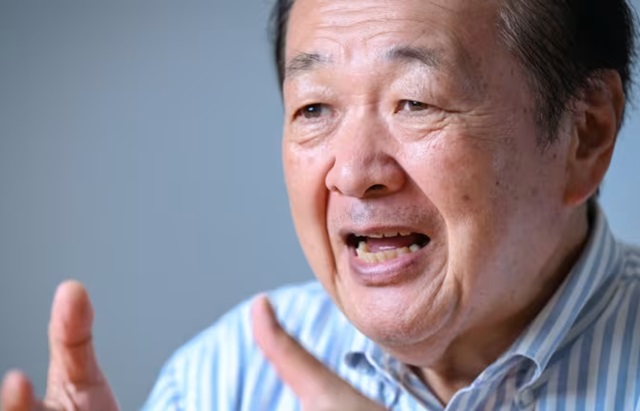
A Japanese man who spent six years in prison in China on espionage charges has warned that ordinary citizens risk detention if they come into contact with Japan’s intelligence services. Speaking with Nikkei, former youth exchange leader Hideji Suzuki said his arrest stemmed from what he once thought were harmless meetings with Japan’s Public Security Intelligence Agency (PSIA).
Suzuki, who headed a Japan-China youth exchange association, was convicted in 2019 of violating China’s anti-espionage law. He denied ever gathering intelligence for the PSIA but admitted to occasional meetings with an agency official in Japan, where he was given small sums of money for transportation expenses. “Looking back, my contact with the PSIA directly led to my arrest,” he told Nikkei. “I regret it.”
Suzuki was detained in Beijing in 2016 by China’s Ministry of State Security and later sentenced after months under surveillance. Authorities determined he had “endangered China’s national security as an agent of a Japanese intelligence agency.” He was released in 2022 and returned to Japan.
According to Suzuki, the trigger for his detention was a discussion he had with a senior Chinese Foreign Ministry official about reports surrounding the 2013 execution of Jang Song Thaek, a close aide to late North Korean leader Kim Jong Il. Chinese authorities reportedly linked that conversation to his contact with the PSIA and concluded he was a spy.
Suzuki’s case underscores the risks for the roughly 100,000 Japanese nationals living in China. He noted that the PSIA often approaches Japan-based scholars, businesspeople, and other individuals with expertise on China. “Approaching every person who is knowledgeable about China like this raises the risk of Japanese being detained,” he warned, also questioning the agency’s information security. During interrogations, he was shown photos that included his PSIA contact.
China enacted its first anti-espionage law in 2014 and expanded it in 2023 to cover a broader range of activities, including the theft of documents, data, or materials deemed relevant to national security. To date, at least 17 Japanese nationals have been detained on suspicion of espionage, with 12 formally arrested.
Suzuki also criticized Japan’s government response, contrasting it with Canada and Australia, where leaders actively intervened to secure the release of citizens detained in China. “Ultimately, unless the leader of the country gets involved, no one will be released,” he said.
In July, Japan’s Foreign Ministry issued an advisory outlining behaviors to avoid to reduce the risk of being accused of spying. But Suzuki warned such steps may not be enough: “No matter how careful you are, the Chinese authorities can interpret things however they want.” He urged Tokyo to establish a dedicated section within the Foreign Ministry to handle cases of Japanese nationals detained in China and called on the PSIA to take moral responsibility for the risks it creates.