A high-stakes rivalry is quietly unfolding beneath the world’s oceans, where vast networks of subsea cables carry nearly all global internet traffic, linking billions of people, trillions in financial transactions, and critical AI infrastructure. The U.S. and China are increasingly jockeying for control over these lifelines, exposing vulnerabilities that have long gone largely unnoticed by the public.
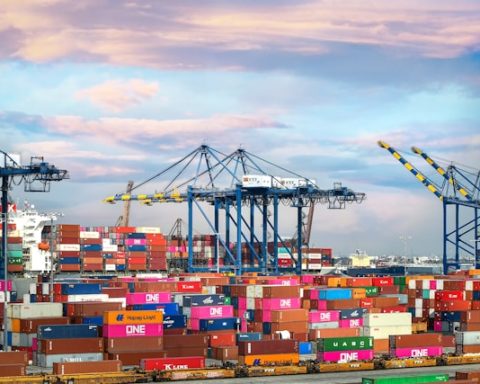
The stakes were starkly illustrated in February, when the cargo ship Hong Tai 58 entered a restricted zone off Taiwan’s southwest coast. Anchoring for more than two days, its chain scraped the seabed, severing communication cables connecting the mainland with nearby islands. Taiwan says it suffers seven to eight cable breaks each year, most “linked to China,” while Beijing insists these are accidents. The incident led to the unprecedented imprisonment of the ship’s Chinese captain, highlighting the rising tension surrounding these underwater networks.
Protecting undersea cables has grown increasingly urgent. Nearly all international internet traffic—including AI computation, military coordination, and $10 trillion in daily financial transactions—flows through fiber-optic lines laid decades ago for cooperation, not conflict. “Governments are years — and I mean decades — behind the curve,” says retired British Royal Navy commodore John Aitken.
Two major cable projects underscore the strategic rivalry. The China-backed PEACE cable, operational in 2024, bypasses India and stops in Africa, while the U.S.-backed SEA-ME-WE‑6, expected online in 2026, connects through India and Gulf economies. Both stretch to Europe, reflecting the ambitions of their backers. Earlier this year, the PEACE cable was mysteriously severed near the Gulf of Suez, disrupting internet traffic until repaired three weeks later.
Most of the world’s subsea cables are manufactured and installed by four firms: China’s HMN Technologies, U.S.-based SubCom, France’s Alcatel Submarine Networks, and Japan’s Nippon Electric Company. Historically, cables were built by consortia of telecom firms to share costs, but tech giants now dominate the landscape. Meta, Google, Microsoft, and Amazon account for over 70% of used subsea capacity, funding private networks to secure bandwidth for AI, cloud services, and data-heavy applications. Meta’s Project Waterworth, for example, will create the world’s longest submarine cable at 50,000 kilometers.
Geopolitics adds another layer of tension. The U.S. has restricted Chinese participation in cable projects deemed security threats, while Beijing has extended financial incentives and cheaper construction bids to gain influence over strategically located countries. “The duel largely mirrors what we see in other areas of the global economy,” says Matthew Bloxham, analyst at Bloomberg Intelligence.
Security challenges persist. Subsea cables are vulnerable to accidents, fishing and anchoring mishaps, and sabotage. In Europe, incidents near the Baltic Sea and Red Sea have caused significant damage, underscoring the potential for hybrid “grey zone” operations. NATO and European nations are deploying AI, drones, and submersible robots to monitor and repair cables, while China invests in undersea sensors dubbed the “Underwater Great Wall” in the South China Sea.
Analysts warn that concentration of cable ownership in a few tech giants poses new risks. The Australian Strategic Policy Institute cautions that centralizing data under “hyperscalers” increases the chance of a single point of failure. Satellite networks, such as Starlink, provide backups but cannot fully replace the capacity of undersea systems.
“In the Second World War, we bombed the hell out of roads and bridges, and in a coming conflict we shouldn’t be surprised if these cables become targets,” Aitken notes.
With $15.4 billion projected to be spent on cable systems by 2028, up from $900 million in 2023, and AI fueling surging data demands, the race to secure and control the ocean’s hidden arteries has become a defining front in 21st-century geopolitics, according to Bloomberg.